CM Sukhu Launches Zero-Tolerance Drive Against Chitta in HP
Synopsis
Himachal Pradesh CM Sukhvinder Singh Sukhu announced a zero-tolerance drive against chitta on June 5, 2026, highlighting a first-of-its-kind panchayat-level drug assessment that classifies villages into red, yellow, and green categories for targeted enforcement.
Key Takeaways
CM Sukhvinder Singh Sukhu declared a mass movement against chitta (synthetic drugs) on June 5, 2026 .
The state government's policy is explicitly zero tolerance toward chitta trafficking and abuse.
Himachal Pradesh claims to be the first state to conduct drug-prevalence assessments at the panchayat level , identifying both traffickers and addicts.
Panchayats have been classified into red, yellow, and green categories based on drug prevalence data.
Red-category panchayats are subject to stricter enforcement, with the government targeting chitta mafias directly.
Youth, women, and children are active participants in the campaign, framing it as a community-driven movement.
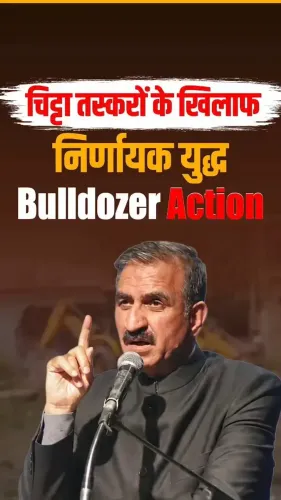
Himachal Pradesh Chief Minister Sukhvinder Singh Sukhu on Friday, June 5, 2026, declared that his government has built a broad-based mass movement against chitta (synthetic drugs, primarily heroin), with active participation from youth, women, and children across the state. Speaking through a post on X, Sukhu underlined that the campaign has drawn unprecedented support from all sections of society.
Context
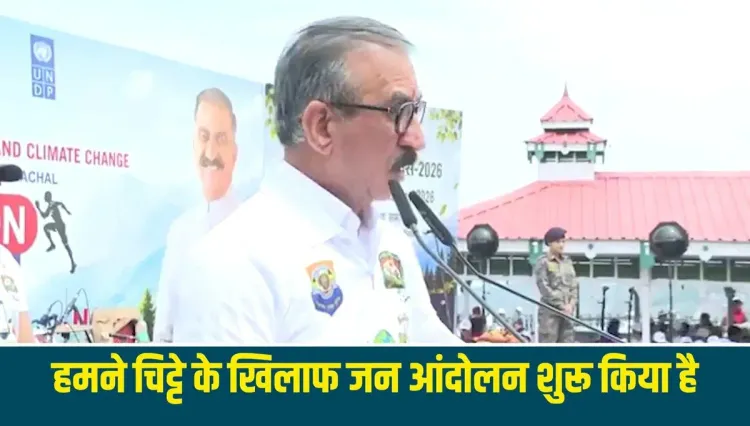
In the post, Sukhu stated: 'हमारी सरकार ने चिट्टे के खिलाफ व्यापक जन आंदोलन खड़ा किया है' — 'Our government has built a comprehensive mass movement against chitta.' He added that the active participation of youth, women, and children has turned it into a people's campaign. The Chief Minister reiterated that his government's policy is one of zero tolerance toward synthetic drugs.
Himachal Pradesh, a northern Himalayan state, has faced growing pressure from drug trafficking routes that run through its border districts. Synthetic drug abuse, particularly chitta, has spread into rural and semi-urban pockets, prompting the state government to escalate enforcement and community outreach.
Policy Backdrop
The most notable institutional step cited by Sukhu is the classification of panchayats into red, yellow, and green categories based on ground-level assessments of drug prevalence. According to the Chief Minister, Himachal Pradesh is the first state in the country to conduct drug-situation assessments at the panchayat level, identifying both traffickers and addicts through local bodies. This claim, while made by the Chief Minister, remains officially unverified by an independent authority.
The color-coded framework draws on a model familiar from public health and disaster-response systems, adapting it to narcotics enforcement. Panchayati Raj institutions — village-level elected bodies — have been tasked with conducting the surveys that feed into this classification. The approach aligns with a broader national shift toward decentralised, data-driven anti-narcotics strategies seen in several Indian states.
At the central level, the Narcotic Drugs and Psychotropic Substances Act was amended in 2014 to increase penalties for trafficking and strengthen state enforcement mechanisms, providing the legal scaffolding for aggressive state-level action.
Stakeholders and Impact
Panchayats flagged in the red category — those with higher drug prevalence — are facing stricter enforcement measures, with Sukhu stating that the backbone of chitta mafias is being broken in these areas. Rural youth are both the primary demographic at risk and a key mobilisation force in the demand-reduction campaign.
Women's groups and community volunteers have been drawn into the movement as active participants rather than passive beneficiaries, a design choice that mirrors successful community-policing models elsewhere in India. For drug-dependent individuals identified through panchayat surveys, the framework also implies a pathway toward rehabilitation, though specific programme details were not outlined in the post.
What's Next
The effectiveness of the red-yellow-green model will be tested by enforcement outcomes and rehabilitation rates in high-prevalence panchayats over the coming months. Observers will watch whether the Himachal Pradesh state assembly's next session allocates dedicated budgetary support to scale the programme and whether the panchayat-level data is made publicly accessible for accountability. If results are demonstrable, the model could attract attention from other hill states grappling with similar trafficking corridors.
Point of View
Data-led governance at the grassroots. By tying enforcement intensity to a color-coded classification system, the government creates a visible accountability framework that is difficult for local officials to ignore. Politically, the campaign also serves Congress's interest in projecting a decisive, welfare-oriented administration ahead of future electoral cycles in a state where drug abuse has become a salient voter concern. The key test, however, is whether the classification exercise translates into measurable declines in drug availability and addiction rates, or remains primarily a communication exercise.
NationPress
20 Oct 2026
Frequently Asked Questions
What is chitta and why is it a problem in Himachal Pradesh?
Chitta is a street name for synthetic drugs, primarily heroin or heroin mixed with other substances, that has become widely abused in Himachal Pradesh. The state's geography — with mountain passes and border districts — makes it vulnerable to drug trafficking routes, and chitta use has spread significantly among rural youth.
What is the red-yellow-green panchayat classification for drugs in Himachal Pradesh?
Himachal Pradesh has classified its panchayats into red, yellow, and green categories based on surveys assessing drug prevalence, identifying both traffickers and addicts at the village level. Red-category panchayats have the highest drug prevalence and face the strictest enforcement action.
Is Himachal Pradesh the first state to do panchayat-level drug assessment?
Chief Minister Sukhu has claimed that Himachal Pradesh is the first state in India to conduct panchayat-level drug-situation assessments. This claim has been made by the state government but has not been independently verified by a central authority.
What is CM Sukhu's policy on drugs in Himachal Pradesh?
CM Sukhvinder Singh Sukhu has stated that his government follows a zero-tolerance policy toward chitta and drug trafficking, combining strict enforcement against mafias with community mobilisation involving youth, women, and children.
How are panchayats involved in Himachal Pradesh's anti-drug campaign?
Panchayati Raj institutions — elected village-level bodies — have been tasked with conducting surveys to identify drug traffickers and addicts in their areas. The survey data is used to classify each panchayat and determine the level of enforcement intervention required.