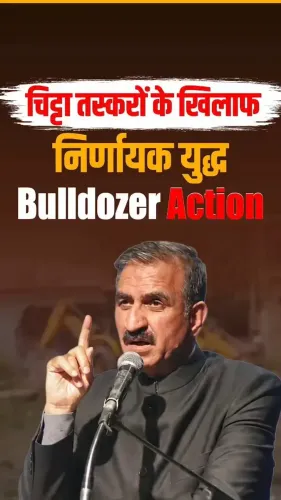
CM Sukhu Vows Decisive Crackdown on Chitta Drug Trade in HP

Synopsis
Himachal Pradesh Chief Minister Sukhvinder Singh Sukhu on 6 June 2026 declared that a decisive crackdown on the chitta drug trade is ongoing, with every network endangering youth being brought under strict legal action, as the state pursues a vision of a safe, clean and prosperous Himachal Pradesh.
Key Takeaways
CM Sukhvinder Singh Sukhu reaffirmed on 6 June 2026 that a decisive crackdown on the chitta drug trade in Himachal Pradesh is actively underway.
Every network and individual endangering the future of the state's youth is being brought within the ambit of the law and subjected to strict action.
The government's stated goal is to build a 'safe, clean and prosperous Himachal Pradesh' while protecting nature, culture and social values.
Enforcement is anchored in the Narcotic Drugs and Psychotropic Substances (NDPS) Act, 1985 , which empowers state police to prosecute traffickers with stringent sentences.
Observers are watching for updated seizure data from Himachal Pradesh Police and potential legislative proposals in the next assembly session.
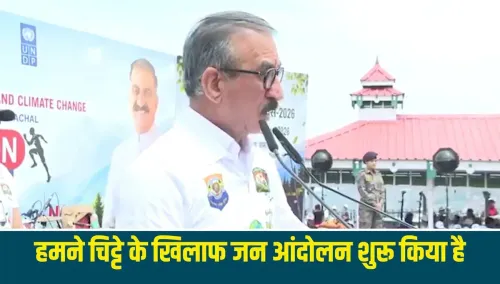
Himachal Pradesh Chief Minister Sukhvinder Singh Sukhu on Saturday, 6 June 2026, reaffirmed his government's resolve to deliver a decisive blow to the chitta (heroin-based synthetic drug) trade in the state, pledging that every network and individual endangering the future of the youth would be brought within the ambit of the law and face strict action.
Posting on X, CM Sukhu wrote in Hindi: 'चिट्टे के कारोबार पर निर्णायक प्रहार जारी है।' ('A decisive strike against the chitta trade is ongoing.') He added that every system and element playing with the future of youth is being brought under the law and stringent action is being taken. The post also outlined a broader civilisational vision: 'Our goal is to build a safe, clean and prosperous Himachal Pradesh while protecting nature, culture and social values. Until this goal is achieved, neither our resolve will stop, nor will our efforts.'
Context
Chitta — a colloquial term used in Himachal Pradesh and neighbouring states for a white powder substance typically comprising heroin or pharmaceutical opioids — has emerged as one of the most acute narcotics crises facing the hill state over the past decade. The drug has penetrated rural and semi-urban areas, disproportionately affecting young men and women in their teens and twenties. CM Sukhu, who took office in December 2022, has repeatedly identified the chitta menace as a governance priority since assuming charge.
Policy Backdrop
Enforcement against narcotics trafficking in Himachal Pradesh is anchored in the Narcotic Drugs and Psychotropic Substances (NDPS) Act, 1985, which empowers state police to conduct raids, seize contraband, and prosecute traffickers with stringent minimum sentences. The state government has periodically directed district police superintendents to intensify operations, particularly along transit corridors that connect Himachal Pradesh to neighbouring states and international supply chains. CM Sukhu's administration has framed anti-narcotics enforcement as inseparable from its broader agenda of protecting the state's natural environment and cultural heritage — a dual-track approach that mirrors comparable drives in other Himalayan and border states grappling with substance abuse alongside tourism pressures.
Stakeholders and Impact
The primary stakeholders in this drive are Himachal Pradesh's youth population, state police personnel, and local communities whose social fabric has been strained by addiction-related crime. Families in districts such as Kangra, Kullu, Mandi and Shimla have repeatedly flagged the drug's corrosive impact on household economies and public safety. Civil society organisations working in rehabilitation have long called for enforcement to be paired with treatment infrastructure, underscoring that supply-side action alone is insufficient without demand-reduction measures.
What's Next
Observers will watch for updated narcotics seizure data from the Himachal Pradesh Police and any related legislative proposals in the forthcoming state assembly session. The Sukhu government's ability to demonstrate measurable reductions in chitta availability and trafficking arrests will be a key political and administrative test. A sustained crackdown, if backed by rehabilitation spending and inter-state coordination, could set a replicable model for other hill states confronting similar narcotics challenges.
Point of View
Culture and social values, the administration is constructing a governance identity that appeals simultaneously to law-and-order voters and to the state's eco-culturally conscious middle class. The framing mirrors a broader trend among Himalayan state governments that treat drug enforcement as both a welfare imperative and a political differentiator. Whether the rhetoric translates into measurable outcomes — seizure volumes, conviction rates, rehabilitation beds — will determine its long-term credibility.
NationPress
24 Sept 2026
Frequently Asked Questions
What is chitta and why is it a problem in Himachal Pradesh?
Chitta is a colloquial term in Himachal Pradesh for a white powder narcotic, typically heroin or a pharmaceutical opioid blend, that has severely affected the state's youth over the past decade, leading to widespread addiction, crime and family distress.
What action is the Himachal Pradesh government taking against the chitta trade?
The Sukhu government is conducting ongoing enforcement operations under the NDPS Act, 1985, targeting trafficking networks and individuals, with CM Sukhu pledging that all those endangering youth will face strict legal action.
Who is Sukhvinder Singh Sukhu?
Sukhvinder Singh Sukhu is the Chief Minister of Himachal Pradesh and an Indian National Congress leader who assumed office in December 2022.
What law governs drug enforcement in Himachal Pradesh?
The Narcotic Drugs and Psychotropic Substances (NDPS) Act, 1985 is the primary statute empowering state police in Himachal Pradesh to raid, seize contraband and prosecute drug traffickers.
What is the Himachal Pradesh government's broader vision alongside the drug crackdown?
CM Sukhu has articulated a vision of building a safe, clean and prosperous Himachal Pradesh by protecting the state's natural environment, culture and social values alongside the anti-narcotics drive.