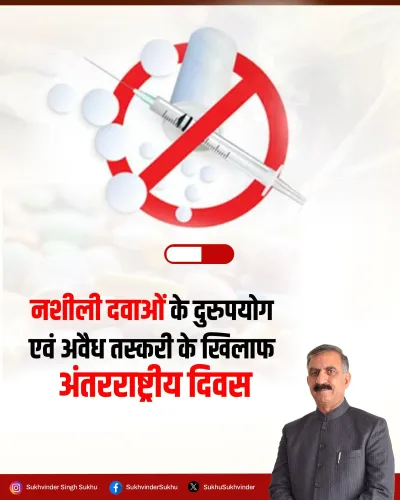
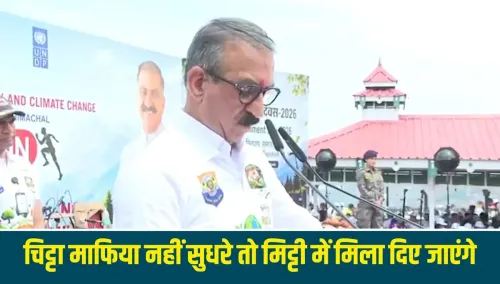
CM Sukhu Vows to Break Chitta Mafia in HP Panchayats
Synopsis
Chief Minister Sukhvinder Singh Sukhu has announced targeted enforcement against the chitta mafia in Himachal Pradesh panchayats with high drug prevalence, signalling a firm state-level crackdown on rural narcotics networks under the NDPS Act framework.
Key Takeaways
CM Sukhvinder Singh Sukhu declared on June 5, 2026 that strict action is under way in Himachal Pradesh panchayats with high drug prevalence.
The statement specifically targets the chitta mafia — local networks distributing heroin and synthetic drugs in rural areas.
Enforcement draws on the NDPS Act, 1985 , with state police as the primary implementing agency, often in coordination with the Narcotics Control Bureau .
Rural youth and panchayat bodies are the key stakeholders in both the problem and the response.
Observers will watch for district-wise crime data and expansion of de-addiction centres in identified panchayats as indicators of follow-through.
The Chief Minister's Office of Himachal Pradesh posted on Friday, June 5, 2026, quoting Chief Minister Thakur Sukhvinder Singh Sukhu announcing a firm crackdown on drug networks in panchayats with high narcotics prevalence, with a specific focus on dismantling the chitta mafia operating in rural areas.
In the post, CM Sukhu stated: 'Jinpanchayaton mein nashe ka prachalanadhik hai, wahan sakhtkadamuthaye ja rahe hain aur chitta mafiyon ki kamar todi ja rahi hai.' — ('In panchayats where drug use is more prevalent, strict steps are being taken and the chitta mafia is being broken.')
Context
Himachal Pradesh, a northern Himalayan state with a widespread rural panchayat governance structure, has faced recurring concerns over the spread of synthetic drugs and heroin — colloquially known as chitta — in select districts. The term 'chitta mafia' refers to local narcotics distribution networks that have embedded themselves in parts of the state's rural fabric. CM Sukhu, who has headed the Congress government in the state since December 2022, has periodically signalled administrative resolve on the issue.Policy Backdrop
Anti-narcotics enforcement in India operates primarily under the Narcotic Drugs and Psychotropic Substances (NDPS) Act, 1985, which provides state governments with wide powers to pursue trafficking networks. State police forces often coordinate with central agencies such as the Narcotics Control Bureau (NCB) during intensified operations. Himachal Pradesh's approach — targeting supply chains at the panchayat level — mirrors similar drives undertaken by other hill and border states, where geography and limited surveillance infrastructure have historically allowed localised drug networks to operate.Stakeholders and Impact
Rural youth represent the most directly affected demographic, with substance abuse linked to long-term economic and social consequences in panchayat communities. Panchayat bodies themselves are being implicitly positioned as frontline units in identifying and reporting high-prevalence areas, while state police carry the enforcement mandate. A successful disruption of supply chains could reduce availability of synthetic drugs at the grassroots level, though sustained impact typically depends on parallel investment in de-addiction and rehabilitation infrastructure.What's Next
Policy watchers will look for the release of district-wise narcotics crime data and any announced expansion of government-run de-addiction centres in the identified panchayats. The statement signals that the Sukhu administration intends to frame anti-drug enforcement as a visible governance priority ahead of any forthcoming administrative review cycles. If enforcement actions are followed by measurable reductions in drug-related cases, the government is likely to highlight those outcomes as a demonstration of its law-and-order credentials in the state.Point of View
Not merely a social welfare concern. By naming the 'chitta mafia' directly and anchoring action at the panchayat level, the administration is attempting to project granular administrative reach into the state's most localised governance units. This fits a broader pattern among state governments in India of using targeted enforcement rhetoric to demonstrate responsiveness to grassroots concerns, particularly in states where youth unemployment and drug abuse intersect. The real test will be whether enforcement announcements translate into verifiable reductions in narcotics availability and a corresponding expansion of rehabilitation services.
NationPress
21 Oct 2026
Frequently Asked Questions
What is chitta and why is it a problem in Himachal Pradesh?
'Chitta' is a colloquial term in Himachal Pradesh for heroin and synthetic drugs distributed by local narcotics networks. It has become a concern in select rural panchayats, particularly affecting young people, and has prompted repeated government enforcement drives.
What action is CM Sukhu taking against the chitta mafia?
CM Sukhvinder Singh Sukhu announced on June 5, 2026, that strict steps are being taken in panchayats with high drug prevalence and that the chitta mafia is being targeted to dismantle its operations.
Which law governs anti-drug action in Himachal Pradesh?
The Narcotic Drugs and Psychotropic Substances (NDPS) Act, 1985, is the primary legal framework enabling state police and central agencies to act against drug trafficking networks in Himachal Pradesh and across India.
Who are the main stakeholders in Himachal Pradesh's anti-drug drive?
The main stakeholders are rural youth most exposed to drug abuse, panchayat bodies serving as local governance units, and state police as the primary enforcement agency, sometimes working alongside the Narcotics Control Bureau.
What should we watch for after CM Sukhu's anti-drug announcement?
Key indicators to watch include the release of district-wise narcotics crime data, details of specific enforcement actions, and any government announcements expanding de-addiction centres in panchayats identified as high-prevalence areas.