CM Sukhu calls on panchayat reps to lead drug-free HP drive
Synopsis
Chief Minister Sukhvinder Singh Sukhu has called on newly elected panchayat representatives in Himachal Pradesh to drive the state's drug-free, safe, and self-reliant mission, prioritising public service, transparency, and accountability at the grassroots level.
Key Takeaways
CM Thakur Sukhvinder Singh Sukhu issued the statement via the official Chief Minister's Office X account on 18 June 2026 .
Panchayat-level elected representatives have been asked to give new momentum to Himachal Pradesh's drug-free, safety, and self-reliance campaigns.
The directive emphasises public service, transparency, and accountability as the top priorities for grassroots leaders.
The approach builds on a post- 73rd Amendment model of using elected local bodies as frontline agents for social reform.
Concrete follow-up steps — training, guidelines, and review mechanisms — for the newly inducted panchayat members are yet to be announced.
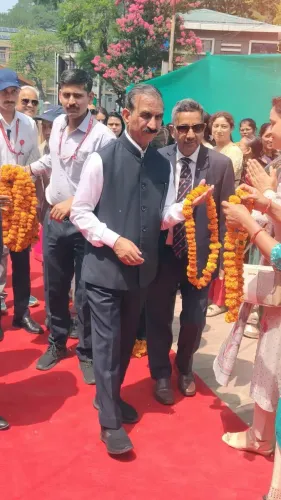
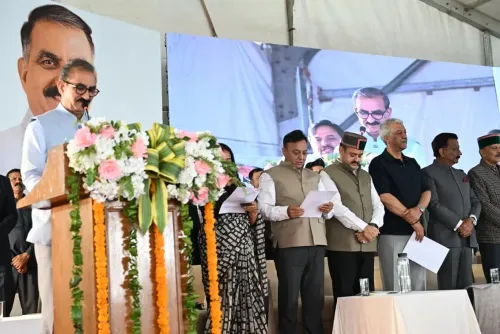
The Chief Minister's Office of Himachal Pradesh shared a message from Chief Minister Thakur Sukhvinder Singh Sukhu on Thursday, 18 June 2026, calling on newly elected panchayat representatives to spearhead the state's campaigns for a drug-free, safe, and self-reliant Himachal Pradesh.
Context
In his statement, CM Sukhu said that panchayat-level elected representatives would give fresh momentum to the mission of making the state 'नशामुक्त, सुरक्षित और आत्मनिर्भर' ('drug-free, safe and self-reliant'). He added that these representatives would live up to people's expectations by giving the highest priority to public service, transparency, and accountability.
The message follows what appears to be a fresh round of panchayat elections or inductions in the state, through which a new cohort of grassroots leaders has entered office. The Chief Minister's statement frames their mandate squarely around social reform and local governance quality.
Policy Backdrop
Himachal Pradesh has, since the early 2020s, placed anti-drug campaigns and economic self-reliance at the centre of its governance agenda under the Congress government that took office in December 2022. The state has repeatedly invoked the 73rd Constitutional Amendment's vision of empowered local bodies as the delivery mechanism for these priorities.
Following the 2021-22 panchayat elections, the state expanded the role of elected village and block councils in executing welfare and social-reform programmes. The current directive continues that trajectory, asking elected representatives at the Panchayati Raj tier to act as frontline agents of change rather than passive conduits for scheme funds.
Across several Himalayan and northern Indian states, panchayat bodies have increasingly been tasked with translating state-level priorities on substance abuse, public safety, and local economic development into village-level action — a pattern that Himachal Pradesh's approach closely mirrors.
Stakeholders and Impact
The primary stakeholders are the panchayat representatives themselves — sarpanches, ward members, and block-level councillors — who are now formally expected to champion drug-de-addiction outreach and economic self-reliance initiatives within their jurisdictions. Rural communities across the state's 12 districts stand to be most directly affected by how effectively these representatives translate the mandate.
Civil society groups working on de-addiction and rural livelihoods in Himachal Pradesh are likely to watch whether the government backs the political messaging with training programmes, resource allocation, or formal guidelines for the newly inducted panchayat members.
What's Next
The immediate question is whether the state government will follow up with concrete operational support — orientation workshops, performance benchmarks, or dedicated funding lines — to equip panchayat representatives for the roles CM Sukhu has outlined. Review meetings on drug-free and self-reliance targets at the block and district level would be the logical next step.
The broader implication is that Himachal Pradesh is doubling down on a model where grassroots democratic institutions, not just administrative machinery, are held responsible for social outcomes — a test of how far the post-73rd Amendment devolution promise can be stretched in practice.
Point of View
The Congress government in Shimla is distributing both the ownership and the accountability for flagship social campaigns downward. This is consistent with a broader pattern among opposition-ruled states of using grassroots democratic institutions to demonstrate governance credibility ahead of future electoral cycles. The emphasis on transparency and accountability also serves as an implicit contrast with rival political narratives about governance quality in the hill state. Whether the rhetoric translates into measurable outcomes will depend on the administrative and financial support the state actually extends to these local bodies.
NationPress
25 Sept 2026
Frequently Asked Questions
What did CM Sukhvinder Singh Sukhu say about panchayat representatives?
CM Sukhu said that panchayat-level elected representatives would give fresh momentum to making Himachal Pradesh drug-free, safe, and self-reliant, and that they would uphold public service, transparency, and accountability as their top priorities.
What is Himachal Pradesh's drug-free campaign?
Himachal Pradesh has been running a state-wide campaign to combat substance abuse, with the government directing elected local bodies and administrative machinery to implement de-addiction outreach at the village level.
What role do panchayat representatives play in Himachal Pradesh governance?
Under the 73rd Constitutional Amendment framework, panchayat representatives in Himachal Pradesh are responsible for local planning, service delivery, and implementing state welfare and social-reform schemes at the village and block level.
When did Sukhvinder Singh Sukhu become Chief Minister of Himachal Pradesh?
Sukhvinder Singh Sukhu became Chief Minister of Himachal Pradesh in December 2022, heading the Congress government in the state.
How is Himachal Pradesh making villages self-reliant?
The state government has been promoting economic self-reliance through grassroots governance, asking panchayat representatives to spearhead local livelihood and development initiatives alongside social-reform campaigns.