CM Sukhu: Saving Youth from Drugs Is HP Govt's Top Priority
Synopsis
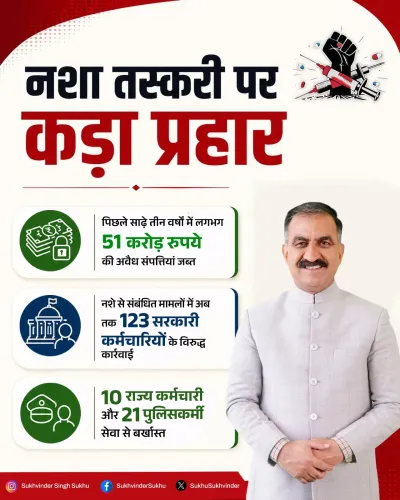
Chief Minister Sukhvinder Singh Sukhu declared on October 25, 2026 that rescuing Himachal Pradesh's youth from drug addiction and securing their future is his government's foremost priority, reaffirming a welfare agenda amid the state's well-documented vulnerability to substance abuse.
Key Takeaways
CM Thakur Sukhvinder Singh Sukhu declared combating drug addiction among youth the highest priority of the Himachal Pradesh government.
The statement was posted by the Chief Minister's Office of Himachal Pradesh on October 25, 2026 .
Himachal Pradesh's geography and tourism economy have historically made it vulnerable to drug trafficking and youth substance abuse.
The national Nasha Mukt Bharat Abhiyan , launched in 2020 , provides the federal framework within which state-level efforts operate.
Sukhu has led a Congress government in Himachal Pradesh since December 2022 , consistently centering youth welfare in his governance pitch.
Observers are watching for concrete follow-through: new de-addiction centres, budget allocations, and district-level awareness programmes.
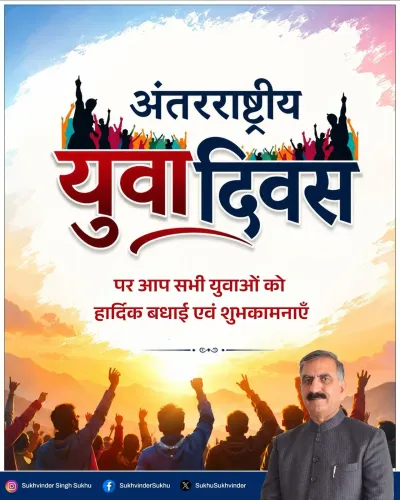
Protecting the next generation from the grip of substance abuse is not a footnote in Himachal Pradesh's governance agenda — it is the headline. On Sunday, October 25, 2026, the Chief Minister's Office of Himachal Pradesh posted a direct declaration from Chief Minister Thakur Sukhvinder Singh Sukhu, making the government's intent unambiguous.
The statement, issued in Hindi, reads: 'Yuva peedhi ko nashe ki giraft se bachana aur unhe surakshit bhavisya pradaan karna hamari sarkar ki sarvochch prathmikta hai.' — 'Saving the younger generation from the grip of addiction and providing them a secure future is the highest priority of our government.'
Why Himachal, Why Now
Himachal Pradesh occupies a distinctive and difficult position on India's drug map. Its mountain geography, porous borders, and dependence on tourism have historically made the state vulnerable to drug trafficking and substance abuse, particularly among young people. State governments here have repeatedly had to square development ambitions against a social crisis that quietly hollows out communities.
At the national level, the Nasha Mukt Bharat Abhiyan, launched in 2020, set the template — demand reduction, community awareness, rehabilitation — but implementation has varied sharply across states. Himachal's periodic policy statements on the issue reflect both genuine concern and the pressure on state administrations to be seen acting on a problem that resonates viscerally with voters.
Sukhu's Congress Government and the Welfare Frame
Chief Minister Sukhu, who has led a Congress government in Shimla since December 2022, has consistently framed youth welfare as a pillar of his administration. Positioning anti-drug efforts as the 'highest priority' — sarvochch prathmikta — is a deliberate escalation of that framing: it signals intent at the top, even as on-the-ground delivery through de-addiction centres, school outreach, and enforcement depends on follow-through in budgets and district-level programmes.
Statements of this kind from Chief Ministers typically arrive ahead of budget cycles, programme launches, or in response to district-level incidents that surface in the public domain. The sharpness of Sukhu's phrasing suggests the issue is gaining political and social urgency in the state.
The real test will arrive with the numbers — how many new rehabilitation facilities, how much dedicated spending, how many awareness drives reach the valleys and hilltop schools where the crisis is lived every day.
Point of View
Competing for visibility on a topic that carries real electoral weight with families and first-time voters. The statement's weight will ultimately be judged not by its language, but by the de-addiction infrastructure and enforcement actions that follow.
NationPress
25 Oct 2026
Frequently Asked Questions
What did CM Sukhu say about drug addiction in Himachal Pradesh?
Chief Minister Sukhvinder Singh Sukhu stated that saving the younger generation from the grip of addiction and providing them a secure future is the highest priority of his government, in a post on October 25, 2026.
What is the Nasha Mukt Bharat Abhiyan?
The Nasha Mukt Bharat Abhiyan is a national campaign launched in 2020 aimed at reducing drug demand and raising awareness among youth across India, within which state governments like Himachal Pradesh operate their own anti-drug programmes.
Why is drug abuse a concern in Himachal Pradesh specifically?
Himachal Pradesh's mountainous geography, proximity to drug-trafficking routes, and dependence on tourism have historically made it more vulnerable to substance abuse, particularly among young people in remote and semi-urban areas.
When did Sukhvinder Singh Sukhu become Chief Minister of Himachal Pradesh?
Thakur Sukhvinder Singh Sukhu became Chief Minister of Himachal Pradesh in December 2022, leading a Congress government in the state.
What concrete steps is the Himachal Pradesh government expected to take on drug abuse?
While no specific schemes were announced in the October 25 statement, observers are watching for new de-addiction centre rollouts, dedicated budget allocations, and expanded school and community awareness drives across the state.