Giriraj Singh hails PM Modi's Varanasi garment unit launch
Synopsis
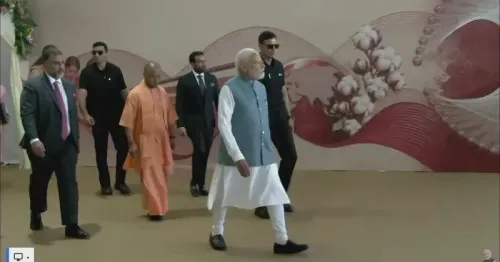
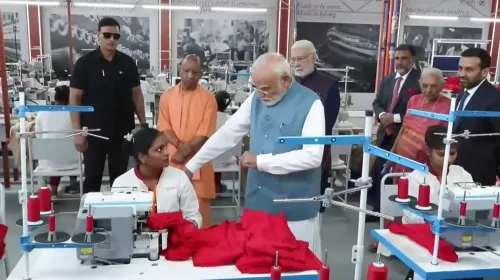
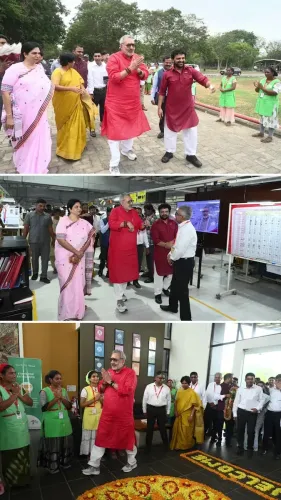
PM Modi inaugurated Arvind Mill's new Garment Manufacturing Facility in Varanasi on 25 October 2026. Textiles Minister Giriraj Singh called it a key step for the sector's expansion and women's economic empowerment in eastern Uttar Pradesh.
Key Takeaways
PM Modi inaugurated Arvind Mill's new Garment Manufacturing Facility Unit in Varanasi on 25 October 2026 .
Union Textiles Minister Giriraj Singh described the launch as a significant step for textile industry expansion and women's empowerment.
The unit is expected to create formal employment opportunities for local women in eastern Uttar Pradesh.
Varanasi has been receiving targeted textile infrastructure investment since 2014 , when it became PM Modi's Lok Sabha constituency.
The inauguration aligns with central schemes including the PM MITRA parks and PLI for textiles , aimed at boosting India's global export share.
Arvind Limited , the Ahmedabad-based garment major, is the company behind the new facility.
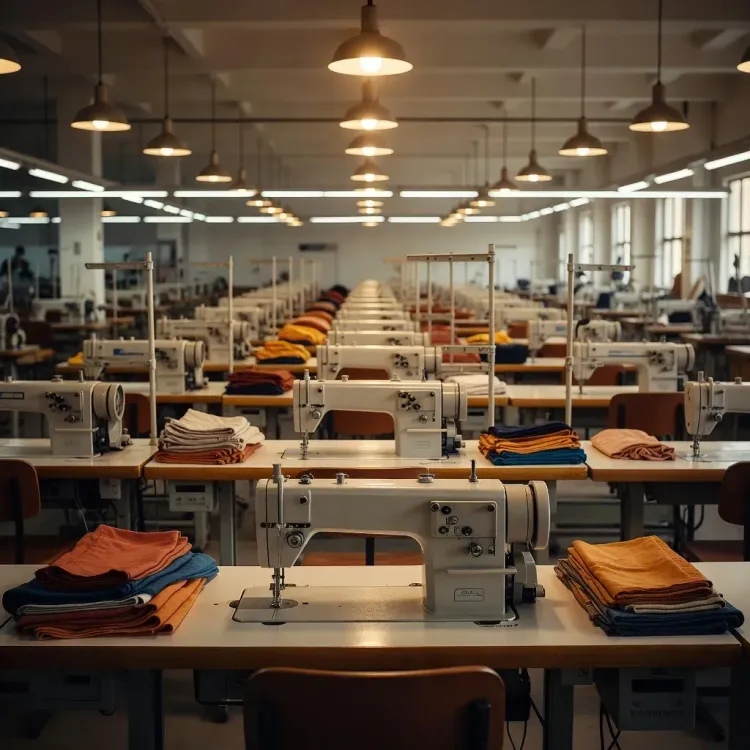
A new garment manufacturing facility in Varanasi — inaugurated by Prime Minister Narendra Modi — is drawing attention as a concrete marker of India's push to expand its textile footprint in the Ganga Belt. Union Textiles Minister Giriraj Singh called the launch of Arvind Mill's new Garment Manufacturing Facility Unit a significant step toward both industrial expansion and women's economic empowerment, posting his remarks on X on Sunday, 25 October 2026.
In his post, Singh wrote: 'माननीय प्रधानमंत्री श्री @narendramodi जी द्वारा वाराणसी में अरविंद मिल की नई Garment Manufacturing facility Unit का उद्घाटन वस्त्र उद्योग के विस्तार और महिला सशक्तीकरण की दिशा में महत्वपूर्ण कदम है।' — translating as: 'The inauguration of the new Garment Manufacturing Facility Unit of Arvind Mill in Varanasi by the Honourable Prime Minister is an important step toward the expansion of the textile industry and women's empowerment.' Singh added that the unit would generate employment for local women and give 'new momentum' to their participation and economic empowerment in the textile sector.
Arvind Mill's Varanasi footprint and what the unit means
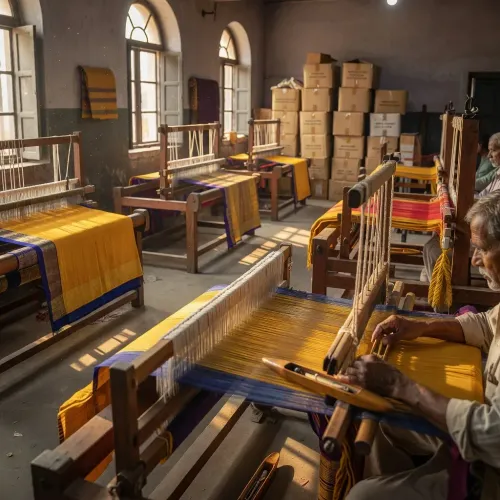
Arvind Limited, the Ahmedabad-based textile and garment major with operations spread across India, has now planted its manufacturing flag in one of the country's most storied weaving cities. Varanasi carries a centuries-old handloom identity — Banarasi silk is globally recognised — but the city has also been receiving targeted industrial infrastructure investment since 2014, when it became Prime Minister Modi's own Lok Sabha constituency. Adding a large-format garment manufacturing unit to that landscape shifts the conversation from artisanal craft to organised formal employment at scale.
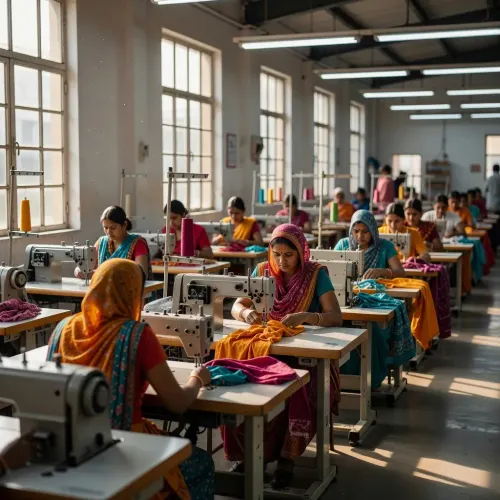
Women workers are explicitly named as the primary beneficiaries. Eastern Uttar Pradesh has been the focus of several skill and livelihood programmes aimed at women in the textile value chain, and a large garment unit creates structured, factory-floor jobs — a distinct upgrade from piece-rate home work that has historically characterised the region's textile labour.
The policy architecture behind the inauguration
The move sits within a larger policy frame. The Union Cabinet approved the PM MITRA (Mega Integrated Textile Region and Apparel) parks scheme to build integrated textile manufacturing clusters that pull spinning, weaving, processing, and garment-making under one roof. Separately, the Production Linked Incentive (PLI) scheme for textiles has been nudging manufacturers to invest in man-made fibre and technical textiles. Both instruments share the same north star: raise India's share of global textile and apparel exports, currently well below its potential given the country's raw-material base and labour pool.
Varanasi as a location is not incidental. It sits in the heart of eastern UP — a region successive governments have identified as having underutilised labour and textile heritage. A formal garment unit here tests whether industrial policy can layer on top of, rather than displace, the handloom ecosystem.
Employment numbers and the road to export competitiveness
Textiles is one of India's largest employment generators after agriculture, and garment manufacturing is its most labour-intensive segment. Every new unit of meaningful scale has the potential to draw thousands of workers — predominantly women — into formal payrolls with provident fund and health cover, a shift that compounds into household income gains over years. The specific employment target for this Arvind facility has not been publicly confirmed, but the minister's emphasis on 'new momentum' signals that the government views this inauguration as a data point in a much larger jobs story it intends to tell.
Watch this space: employment and output numbers from the unit over the next two to three quarters will be the real test of whether the Varanasi garment cluster can punch at export scale — or remains a well-photographed ribbon-cutting.
Point of View
Then tie them to social messaging — here, women's employment — that travels beyond the factory gate. For the Textiles Ministry under Giriraj Singh, the Arvind facility offers a tangible, photographable proof-point for the PM MITRA and PLI frameworks, which have faced scrutiny over slow disbursal. The real test, however, is whether formal garment employment at scale can actually take root in eastern UP's fragmented, artisan-oriented textile economy — or whether this remains a headline unit in a sea of informal piece-work.
NationPress
25 Oct 2026
Frequently Asked Questions
What is the Arvind Mill garment unit inaugurated in Varanasi?
It is a new large-format Garment Manufacturing Facility Unit set up by Arvind Limited, an Ahmedabad-based textile major, in Varanasi. Prime Minister Narendra Modi inaugurated the unit on 25 October 2026.
What is the PM MITRA scheme and how does it relate to this inauguration?
PM MITRA (Mega Integrated Textile Region and Apparel) is a Union Cabinet-approved scheme to build integrated textile manufacturing clusters in India. The Varanasi garment unit aligns with this broader policy push to expand organised textile production and boost export competitiveness.
How will the Varanasi garment unit benefit women?
Union Textiles Minister Giriraj Singh stated that the facility will provide employment opportunities for local women and give new momentum to their participation and economic empowerment in the textile industry.
Why is Varanasi significant for India's textile sector?
Varanasi has a centuries-old handloom and weaving heritage, most famously Banarasi silk. Since 2014, when it became PM Modi's Lok Sabha constituency, it has received targeted industrial and infrastructure investment, making it a focal point for textile sector development in eastern Uttar Pradesh.
Who is Giriraj Singh and why did he comment on this inauguration?
Giriraj Singh is a senior BJP leader, Lok Sabha MP from Begusarai in Bihar, and currently India's Union Minister of Textiles. He posted his remarks because the inauguration directly falls within his ministry's mandate of expanding textile manufacturing and women's employment in India.