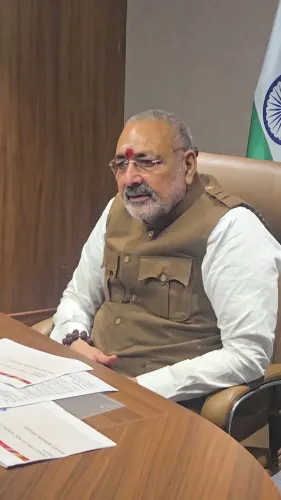
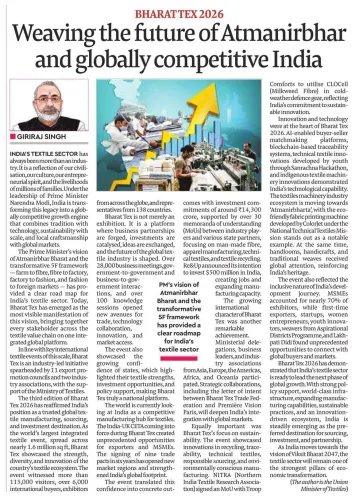
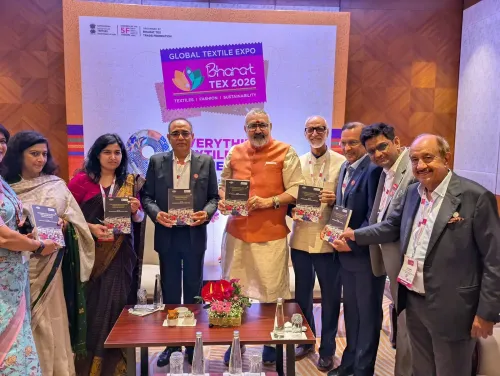
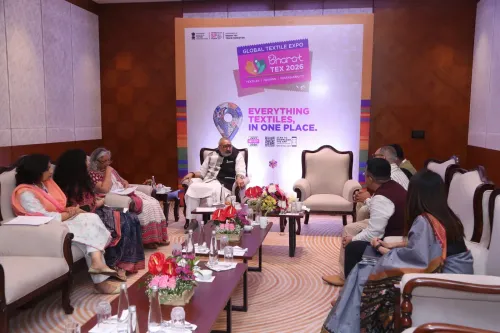
Giriraj Singh visits Brandix Apparel City in Visakhapatnam
Synopsis
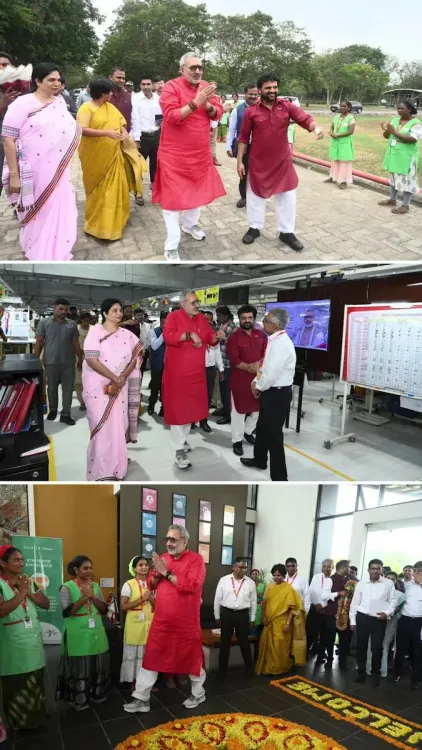
Union Textiles Minister Giriraj Singh visited the 1,000-acre Brandix India Apparel City in Visakhapatnam on 30 May 2026, highlighting its women workforce, export-ready production, and role in advancing Make in India and Aatmanirbhar Bharat goals.
Key Takeaways
Giriraj Singh , Union Textiles Minister, visited Brandix India Apparel City in Visakhapatnam on 30 May 2026 .
The facility spans 1,000 acres and functions as an integrated garment manufacturing and supply-chain hub.
The minister observed thousands of women workers and modern manufacturing units geared towards foreign exports.
Singh linked such clusters to employment generation, women's empowerment, and the Make in India initiative.
The visit connects to India's broader policy push under Aatmanirbhar Bharat and the Viksit Bharat vision for export-led industrial growth.
Policy watchers will track whether the visit leads to updates in the National Textile Policy or production-linked incentive schemes.
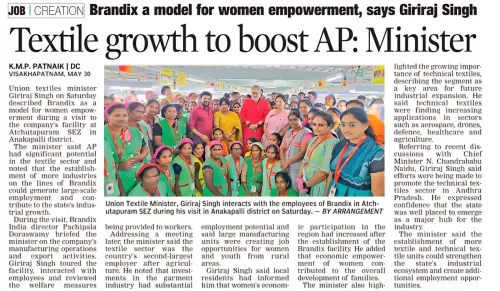
Union Textiles Minister Giriraj Singh on Saturday, 30 May 2026 visited Brandix India Apparel City in Visakhapatnam, touring the facility's manufacturing units, workforce, and export-oriented production lines. The minister described the 1,000-acre integrated garment manufacturing and supply-chain hub as a prime example of India's global capabilities in the textiles sector.
Context
Posting on X after the visit, Singh wrote: 'आज विशाखापट्टनम स्थित Brandix India Apparel City का दौरा किया' ('Today I visited Brandix India Apparel City in Visakhapatnam'). He noted that the cluster, spread across 1,000 acres, is an 'outstanding example of India's global capability in the textiles sector.' The minister specifically observed thousands of women workers employed at the facility, modern manufacturing units, and production arrangements geared towards foreign exports.
Singh added that such industrial clusters are giving 'new momentum' to employment generation, women's empowerment, and the Make in India initiative. The visit underlines the Union government's focus on showcasing operational, export-linked textile infrastructure as evidence of progress under its manufacturing push.
Policy Backdrop
Brandix India Apparel City is one of the largest integrated apparel manufacturing zones in South Asia, situated in Visakhapatnam, Andhra Pradesh — a city with well-established port and industrial infrastructure that makes it strategically suited for export-oriented production. The facility consolidates spinning, weaving, garmenting, and logistics within a single campus, embodying the supply-chain integration model successive governments have pursued.
India's Make in India initiative, launched in September 2014, identified textiles as a priority sector for boosting domestic manufacturing and export competitiveness. The earlier Scheme for Integrated Textile Parks, introduced in 2005, laid the groundwork for world-class cluster infrastructure of the kind visible at Brandix. More recently, the Aatmanirbhar Bharat campaign has reinforced the push to reduce import dependence and scale up indigenous production across the value chain.
Stakeholders and Impact
The most direct beneficiaries of clusters like Brandix India Apparel City are the thousands of women workers employed on the shop floor — a demographic that has historically formed the backbone of India's garment manufacturing workforce. Ministerial attention to women's employment at such facilities signals continued political emphasis on linking industrial policy with gender inclusion goals.
Textile exporters and apparel manufacturers stand to benefit from the visibility such high-profile visits generate, potentially accelerating policy support, infrastructure upgrades, or buyer confidence. Visakhapatnam's port connectivity further positions the cluster as a competitive node for fulfilling international orders, particularly from buyers seeking alternatives to other Asian manufacturing hubs.
What's Next
Attention will now turn to whether the minister's visit translates into specific policy announcements — such as updates to the National Textile Policy, enhanced production-linked incentive allocations, or new targets under Make in India for the apparel segment. Quarterly textile and apparel export figures will serve as a key metric to gauge whether integrated clusters like Brandix are moving the needle on India's global market share. The government's broader ambition under Viksit Bharat frames such industrial visits as part of a longer arc toward making India a dominant force in global apparel supply chains by the end of this decade.
Point of View
The minister frames industrial clusters not just as economic infrastructure but as vehicles for social empowerment, a framing that carries electoral resonance. The visit also reflects a pattern of senior ministers touring operational facilities to demonstrate tangible progress on long-standing schemes, countering criticism that flagship programmes remain aspirational. Whether concrete policy follow-through — on incentives, export targets, or labour welfare — accompanies the optics will determine the visit's lasting significance.
NationPress
19 Sept 2026
Frequently Asked Questions
What is Brandix India Apparel City in Visakhapatnam?
Brandix India Apparel City is a 1,000-acre integrated garment manufacturing and supply-chain facility located in Visakhapatnam, Andhra Pradesh, designed to consolidate apparel production and export operations under one campus.
Why did Giriraj Singh visit Brandix India Apparel City?
Union Textiles Minister Giriraj Singh visited the facility on 30 May 2026 to review its manufacturing operations, women's workforce, and export capabilities, and to highlight its role in advancing Make in India and Aatmanirbhar Bharat goals.
How does Brandix India Apparel City support women's employment?
The facility employs thousands of women workers on its shop floor, making it a significant source of formal employment for women in the Visakhapatnam region and a model for gender-inclusive industrial growth in the textiles sector.
What is the Make in India initiative and how does it relate to textiles?
Make in India is a national manufacturing initiative launched in September 2014 to boost domestic production and exports; textiles is one of its priority sectors, with integrated apparel clusters like Brandix serving as flagship examples of its objectives.
What policy developments should be watched after this visit?
Observers will monitor potential updates to the National Textile Policy, changes to production-linked incentive schemes for apparel, and quarterly textile export data to assess whether clusters like Brandix are improving India's global market share.