Giriraj Singh marks 5 years of PM GatiShakti's infra push
Synopsis
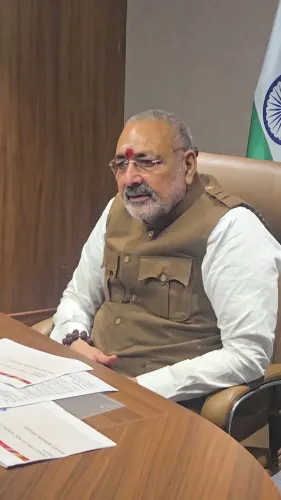
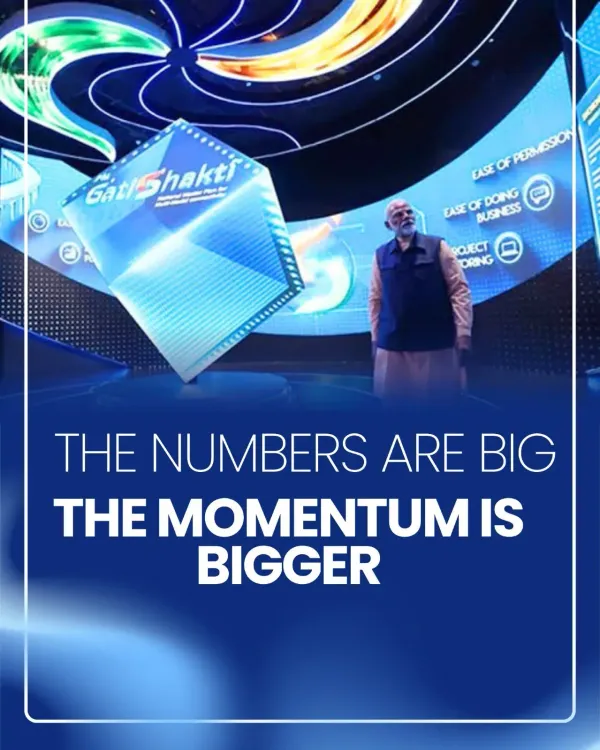
Union Textiles Minister Giriraj Singh marked five years of PM GatiShakti on October 14, 2026, crediting the national master plan with integrating ministries, advancing railway expansion and building modern cargo terminals as part of India's Viksit Bharat vision.
Key Takeaways
PM GatiShakti was launched by Prime Minister Narendra Modi in October 2021 to end siloed infrastructure planning across central ministries.
The initiative brings multiple ministries, digital technology and transport networks onto a single geospatial platform for coordinated project execution.
Indian Railways expansion and development of modern cargo terminals are highlighted as key outcomes of the scheme's five-year run.
GatiShakti builds on the National Infrastructure Pipeline announced in 2019 with a ₹111 lakh crore outlay for 2020-2025.
The National Logistics Policy (2022) complements GatiShakti by targeting a reduction in India's logistics cost as a share of GDP.
Singh frames integrated infrastructure development as central to the Viksit Bharat 2047 vision of a developed India.
Five years after its launch, PM GatiShakti is reshaping how India builds — and Union Textiles Minister Giriraj Singh used Wednesday, October 14, 2026 to mark that milestone, crediting the initiative with giving fresh direction to the country's infrastructure development and logistics efficiency.
Posting on X in Hindi, Singh wrote: 'PM गतिशक्ति ने बीते 5 वर्षों में भारत के बुनियादी ढांचे के विकास और लॉजिस्टिक्स दक्षता को नई दिशा दी है' — 'PM GatiShakti has given a new direction to India's infrastructure development and logistics efficiency over the past five years.' He highlighted how bringing multiple ministries, digital technology and transport networks onto a single platform has accelerated project planning, railway expansion and the development of modern cargo terminals.
From siloed projects to a single national canvas
Before PM GatiShakti, India's infrastructure ambitions were routinely undermined by a familiar dysfunction: roads ending where railways began, ports unconnected to freight corridors, and ministries planning in parallel rather than in concert. Prime Minister Narendra Modi launched the PM GatiShakti National Master Plan in October 2021 to break exactly that pattern — a digital platform that overlaid the project pipelines of more than a dozen central ministries onto a single geospatial canvas.
The initiative drew directly from the ambition of the National Infrastructure Pipeline, announced in 2019 with a ₹111 lakh crore outlay for projects through 2025. Where the Pipeline set the spending target, GatiShakti provided the coordination architecture — ensuring that a new rail line, a national highway and a logistics park in the same corridor could be planned, sequenced and executed together rather than in collision.
Railways and cargo terminals at the centre of the push
Indian Railways has been among the most visible beneficiaries. Dedicated freight corridors — long delayed by land-acquisition and coordination bottlenecks — gained momentum as the GatiShakti portal allowed planners to map conflicts and resolve them before construction began, not during it. Modern cargo terminals, designed to plug rail freight directly into industrial clusters, have also been a priority focus area under the scheme.
Singh's post connects this infrastructure push to the broader Viksit Bharat 2047 vision, arguing that 'integrated development' is the engine that will deliver on India's promise of a developed economy by its centenary of independence. That framing is deliberate: lowering India's logistics costs — persistently high compared to global peers — is seen as a structural prerequisite for manufacturing competitiveness, not a secondary concern.
National Logistics Policy and what comes next
GatiShakti has not operated alone. The National Logistics Policy, unveiled in 2022, layered a last-mile and warehousing framework on top of the master plan's connectivity spine, targeting a reduction in India's logistics cost as a share of GDP. Together, these initiatives represent the most sustained central-government push on supply-chain efficiency in recent memory.
The next concrete test comes with Union Budget allocations for GatiShakti-linked projects, where the scale of commitment will signal how much political capital the government continues to invest in the programme's second phase. For logistics operators, infrastructure developers and exporters watching closely, the numbers in that document will speak louder than any anniversary post.
Point of View
A framing the ruling party has consistently used to broaden the political appeal of administrative reform. With logistics costs remaining a structural drag on Indian manufacturing competitiveness, the anniversary also serves as a pressure point: stakeholders and opposition alike will now scrutinise upcoming budget allocations to see whether the political rhetoric translates into sustained capital commitment. The post's reach across a senior cabinet minister's handle — beyond his core Textiles brief — underlines how GatiShakti has become a whole-of-government brand, not a single-ministry story.
NationPress
14 Oct 2026
Frequently Asked Questions
What is PM GatiShakti and when was it launched?
PM GatiShakti is a National Master Plan launched by Prime Minister Narendra Modi in October 2021 to integrate infrastructure planning across multiple central ministries using a shared digital geospatial platform, ending decades of siloed project execution.
What has PM GatiShakti achieved in five years?
According to the government, PM GatiShakti has improved coordination across ministries, accelerated railway expansion, and supported the development of modern cargo terminals by placing transport networks and project pipelines on a single digital platform.
How does PM GatiShakti relate to Viksit Bharat 2047?
PM GatiShakti is positioned as a foundational pillar of the Viksit Bharat 2047 vision, linking physical connectivity and lower logistics costs directly to India's goal of becoming a fully developed economy by the centenary of its independence.
What is the National Logistics Policy and how does it connect to GatiShakti?
The National Logistics Policy, announced in 2022, complements PM GatiShakti by targeting a reduction in India's logistics costs as a share of GDP, adding a last-mile warehousing and supply-chain framework to GatiShakti's broader connectivity spine.
Why did Giriraj Singh post about PM GatiShakti?
Union Textiles Minister Giriraj Singh marked the five-year milestone of PM GatiShakti on October 14, 2026, highlighting its role in transforming infrastructure development and logistics efficiency as part of India's integrated development agenda.