CM Sai's Office Ties Navratri to Women's Health Push
Synopsis
The Chief Minister's Office of Chhattisgarh marked Navratri's Kushmanda day on October 14, 2026 by linking the festival's spirit of vitality to CM Vishnu Deo Sai's government healthcare push for women — positioning maternal wellbeing as a cornerstone of the state's development story.
Key Takeaways
The Chief Minister's Office of Chhattisgarh posted a Navratri Day 4 message on October 14, 2026 connecting Maa Kushmanda 's blessings to women's healthcare progress.
Chief Minister Vishnu Deo Sai (in office since December 2023 ) is credited in the post for governance that is improving lives of 'mothers and sisters.' The message uses the #महतारी_का_सम्मान and #शक्ति_वंदन hashtags, reinforcing the Chhattisgarhi cultural identity alongside the BJP's women-welfare branding.
No specific health scheme or data point is cited; the post is a campaign-style affirmation tied to the nine-day festival calendar.
The 'developed Chhattisgarh' framing mirrors the national Viksit Bharat vocabulary, embedding state messaging within the Centre's broader narrative.
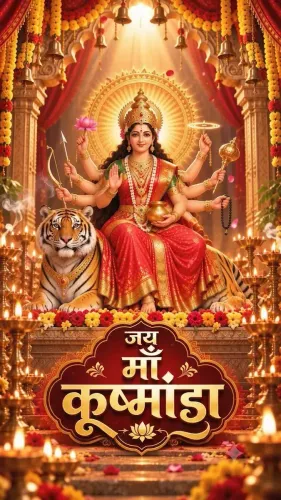
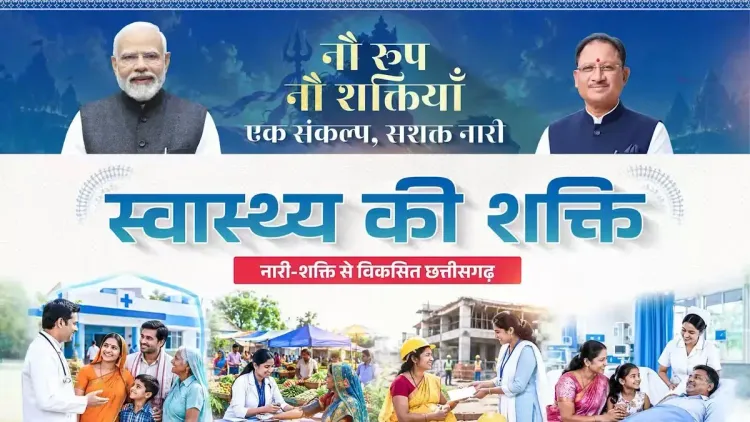
On the fourth day of Navratri 2026 — dedicated to Maa Kushmanda, the goddess who radiates life and light — the Chief Minister's Office of Chhattisgarh posted a pointed message on Wednesday, October 14: that the blessing of the mother goddess is finding earthly expression in improved healthcare for the state's women and mothers.
The post, shared in Hindi, translates as: 'The blessings of Maa Kushmanda — a belief in the healthy life of womanhood. Under the leadership of Vishnu Bhaiya, the health services of the good-governance government are bringing positive change, rising confidence, and happiness to the lives of mothers and sisters. A strong step towards a healthy womanhood, an empowered family, and a developed Chhattisgarh.' The hashtags — #शक्ति_वंदन ('worship of Shakti'), #महतारी_का_सम्मान ('honour of the mother') — amplified the dual devotional-political register.
Vishnu Deo Sai's welfare branding and the Navratri moment
Chief Minister Vishnu Deo Sai, who took office in December 2023 as the BJP's choice to lead Chhattisgarh, is publicly addressed as 'Vishnu Bhaiya' — an affectionate framing that the party and his office deploy to project approachability and grassroots connection. The CMO's post leans into that persona: governance framed not as policy machinery but as a collective elder brother's care for the household's women.
The timing is deliberate. Navratri — the nine-night festival celebrating the nine forms of the goddess — has become a recurring communications calendar fixture for the Chhattisgarh government under the current administration, with each day's deity mapped onto a welfare theme. Kushmanda, the fourth avatar, is associated with energy and creation, making her a natural hook for health messaging.
Maternal health as the state's signature women's welfare metric
The post's core claim — that healthcare delivery is producing 'positive change' in the lives of mothers and sisters — sits within a broader pattern of the state government positioning maternal and women's health as a flagship governance achievement. The 'developed Chhattisgarh' formulation echoes the national Viksit Bharat (Developed India) language, grounding state-level messaging in the Centre's overarching vocabulary.
No specific scheme, statistic, or event is cited in the post itself. The video attachment suggests a produced communication campaign rather than a news announcement. The message is tonal and directional: health services are working, women are benefiting, and the Navratri moment sanctifies the commitment.
Point of View
Navratri offers nine consecutive days to map each goddess form onto a welfare theme, building cumulative brand equity around women's empowerment at minimal cost. The 'Vishnu Bhaiya' framing deliberately softens top-down policy language into familial intimacy — a studied contrast to bureaucratic communication. Cumulatively, this calendar-based messaging strategy positions the BJP's Chhattisgarh government as the steward of both cultural continuity and modern social delivery.
NationPress
14 Oct 2026
Frequently Asked Questions
What did the Chhattisgarh CMO post on Navratri Day 4 in 2026?
The Chief Minister's Office of Chhattisgarh posted a message on October 14, 2026 invoking the blessings of Maa Kushmanda and crediting CM Vishnu Deo Sai's government healthcare services for bringing positive change to the lives of women and mothers in the state.
Who is Vishnu Bhaiya in Chhattisgarh politics?
'Vishnu Bhaiya' is the affectionate public name for Vishnu Deo Sai, the Chief Minister of Chhattisgarh since December 2023 and a senior BJP leader from the state.
What is the significance of Maa Kushmanda in Navratri?
Maa Kushmanda is worshipped on the fourth day of Navratri and is associated with the energy of creation and vitality, making her a symbolic fit for health and wellness themes in government messaging.
What does 'Mahtari ka Samman' mean in Chhattisgarh government communications?
'Mahtari ka Samman' translates to 'honour of the mother' and is a recurring hashtag and theme in Chhattisgarh government messaging that frames women's welfare schemes as respect for motherhood.
What is the Chhattisgarh government's focus on women's health in 2026?
The Chhattisgarh government under CM Vishnu Deo Sai has consistently framed maternal and women's healthcare as a priority governance theme, though specific scheme details were not cited in this particular post.