CM Sukhu Renews Chitta-Mukt Himachal Pledge at Dharamshala
Synopsis
Himachal Pradesh CM Sukhvinder Singh Sukhu met newly elected local body representatives in Dharamshala on 19 June 2026, calling the dialogue inspiring and pledging to accelerate the state's Chitta-Mukt Himachal anti-drug mission through grassroots governance partnerships.
Key Takeaways
CM Sukhvinder Singh Sukhu held a dialogue with newly elected local body representatives in Dharamshala on 19 June 2026 .
The meeting was centred on reinforcing the Chitta-Mukt Himachal (Drug-Free Himachal) campaign, a flagship priority of the state government since December 2022 .
Newly elected representatives formally accepted their responsibilities toward public service and the anti-drug mission.
The state government is pursuing a dual goal of making Himachal Pradesh both drug-free and self-reliant ( aatmanirbhar ).
Local self-governance bodies — panchayats and urban local bodies — are being integrated as active partners in the narcotics eradication drive under the 73rd Constitutional Amendment framework.
Follow-up coordination and possible expansion of de-addiction infrastructure are expected next steps.
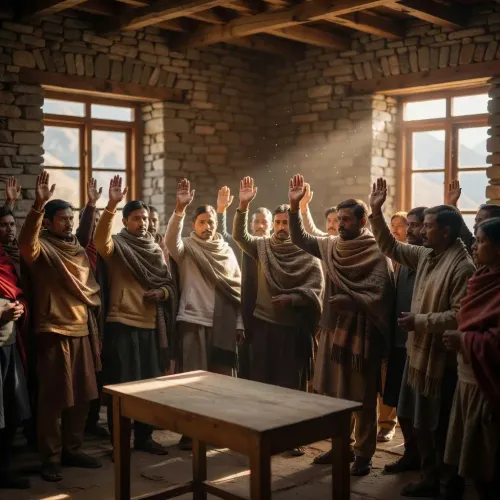
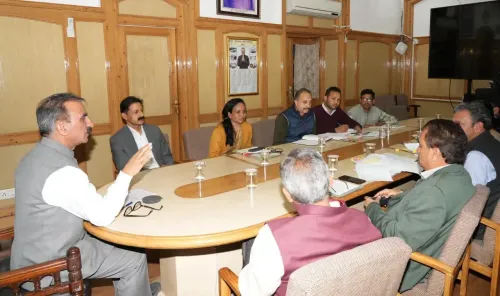
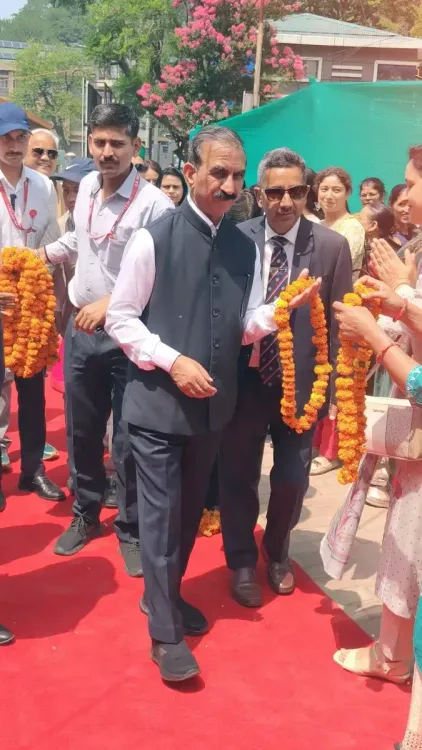
Himachal Pradesh Chief Minister Sukhvinder Singh Sukhu on Friday, 19 June 2026, met newly elected local body representatives in Dharamshala, describing the dialogue as deeply inspiring and reaffirming the state government's commitment to making Himachal Pradesh free of chitta (synthetic drugs) and self-reliant.
Context
Posting on X, CM Sukhu wrote that the interaction with newly elected representatives in Dharamshala was 'atyanth prernadayi' ('extremely inspiring') and gave fresh momentum to the 'Chitta-Mukt Himachal' ('Drug-Free Himachal') resolve. He noted that the newly elected representatives accepted their responsibilities with 'unwavering dedication to public service.' The post signals an active effort to rope in grassroots elected bodies as partners in the state's anti-narcotics agenda.
Dharamshala, headquartered in Kangra district, is a key administrative and political venue in the hill state and frequently hosts government consultations with local leadership across the region.
Policy Backdrop
The Chitta-Mukt Himachal campaign has been a flagship priority of the Himachal Pradesh Congress government since it took office in December 2022. Chitta — a locally used term for heroin and synthetic opioids — has posed a significant public health and law-enforcement challenge across several districts of the state in recent years.
The constitutional framework established by the 73rd Amendment (1992) and subsequent state panchayat legislation empowers local self-governance bodies — panchayats and urban local bodies — to participate actively in social welfare and community awareness programmes. The state government's approach of integrating newly elected representatives into the drug-free mission draws directly on this framework.
Across northern India, states facing narcotics challenges have increasingly involved elected local representatives in awareness drives, community surveillance and rehabilitation outreach to extend the reach of anti-drug efforts well beyond conventional police action. Himachal Pradesh's model mirrors similar strategies adopted in neighbouring states.
Stakeholders and Impact
The primary beneficiaries of a strengthened Chitta-Mukt Himachal drive are youth, rural communities and drug-affected families across the state's twelve districts. Newly elected panchayat and urban local body members are positioned as frontline ambassadors — identifying vulnerable individuals, facilitating rehabilitation referrals and building social pressure against drug networks at the village level.
For the state government, enlisting local representatives adds a layer of democratic accountability to what has until now been largely a police-and-administration-led campaign. It also aligns with the broader self-reliance goal CM Sukhu has articulated for Himachal Pradesh, framing drug eradication as inseparable from economic and social development.
What's Next
Observers will watch for follow-up coordination meetings between the state government and the newly elected local body representatives, as well as any formal announcements on expanded de-addiction centre networks or new community monitoring mechanisms. The Dharamshala dialogue could serve as a template for similar consultations in other districts, deepening the grassroots architecture of the Chitta-Mukt Himachal mission.
If the state succeeds in institutionalising this partnership between elected local bodies and the administration, it could offer a replicable model for other hill states grappling with synthetic drug abuse — and strengthen CM Sukhu's political positioning ahead of future electoral cycles.
Point of View
Socially resonant mandate from day one of their terms. This mirrors a broader national pattern where state governments facing intractable narcotics problems have turned to panchayati raj institutions as force multipliers. The success of this model will depend on whether the state follows through with resources, training and monitoring mechanisms — or whether the Dharamshala dialogue remains a symbolic gesture.
NationPress
19 Sept 2026
Frequently Asked Questions
What is the Chitta-Mukt Himachal campaign?
The Chitta-Mukt Himachal campaign is a state government anti-narcotics initiative launched after the Congress government took office in December 2022, aimed at eliminating synthetic drugs — locally called 'chitta' — through law enforcement, community awareness and rehabilitation efforts across Himachal Pradesh.
Why did CM Sukhu meet local body representatives in Dharamshala?
CM Sukhvinder Singh Sukhu met newly elected local body representatives in Dharamshala on 19 June 2026 to reinforce the Chitta-Mukt Himachal mission by enlisting grassroots elected officials as active partners in the state's drug-free and self-reliance agenda.
What is 'chitta' and why is it a problem in Himachal Pradesh?
'Chitta' is a local term for heroin and synthetic opioids that has become a significant public health and law-enforcement challenge in several districts of Himachal Pradesh, particularly affecting youth and rural communities in recent years.
How do panchayats help in fighting drug abuse in Himachal Pradesh?
Under the framework of the 73rd Constitutional Amendment, panchayats and urban local bodies can participate in social welfare and awareness programmes. In Himachal Pradesh, they are being used to identify vulnerable individuals, facilitate rehabilitation referrals and build community pressure against drug networks at the village level.
What are the next steps after the Dharamshala dialogue on Chitta-Mukt Himachal?
Observers expect follow-up coordination meetings between the state government and newly elected local representatives, along with possible announcements on expanding de-addiction centres and establishing community monitoring mechanisms across Himachal Pradesh's districts.