CM Sukhu Warns Chitta Mafia: 174 Traffickers Jailed, Rs 51 Cr Seized

Synopsis
Himachal Pradesh Chief Minister Sukhvinder Singh Sukhu has warned the chitta mafia of elimination, citing 174 traffickers jailed, Rs 51 crore seized, and 17 properties demolished since his Congress government took office in December 2022.
Key Takeaways
174 chitta traffickers have been imprisoned under the Sukhu government's anti-narcotics drive since December 2022 .
Illegal assets worth Rs 51 crore have been seized from drug trafficking networks in Himachal Pradesh .
66 suspected properties have been identified through financial investigations into drug trafficking cases.
Properties linked to drug mafia operatives have been demolished in 17 cases .
The PIT-NDPS Act of 1988 has been strictly enforced, with the CM claiming the previous BJP government had failed to implement it.
CM Sukhu pledged the crackdown will continue 'with the same resolve' going forward.
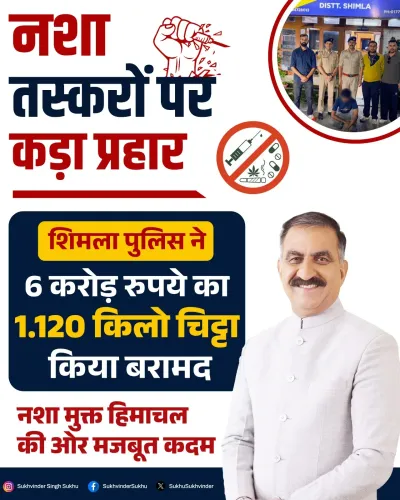
Himachal Pradesh Chief Minister Sukhvinder Singh Sukhu issued a stern warning to drug traffickers on Friday, June 5, 2026, declaring that the 'chitta mafia' — slang for synthetic drug networks — would be 'wiped out' if they failed to mend their ways. The statement, posted on his official X account, accompanied a detailed account of anti-narcotics enforcement actions taken over the past three-and-a-half years of the Congress government in the state.
Context
In his post, CM Sukhu warned: 'Agar chitta mafia nahi sudhar, toh unhe mitti mein mila diya jaega' ('If the chitta mafia does not reform, they will be buried in the dust'). He framed the crackdown as a decisive battle his government has waged since taking office in December 2022, contrasting it with what he described as the failure of the previous BJP government to enforce the Prevention of Illicit Traffic in Narcotic Drugs and Psychotropic Substances (PIT-NDPS) Act.
'Chitta' is a street name for heroin and other white-powder synthetic drugs that have become a serious public health and law-and-order concern across Himachal Pradesh and neighbouring Punjab. The state's geographic proximity to cross-border drug supply routes from the Golden Crescent region makes it particularly vulnerable.
Policy Backdrop
The PIT-NDPS Act of 1988 is a central legislation that authorises preventive detention of persons involved in illicit narcotic trafficking, allowing authorities to detain suspects without trial to disrupt supply networks. It supplements the primary Narcotic Drugs and Psychotropic Substances (NDPS) Act of 1985, which provides the overarching legal framework for drug control across India.
CM Sukhu stated that his government has strictly enforced the PIT-NDPS Act to target trafficker networks — an enforcement posture he claims was absent under the prior administration. Several northern Indian states, including Punjab, have similarly intensified use of preventive detention and financial investigations under central drug laws to dismantle trafficking operations at their economic roots.
Enforcement Figures
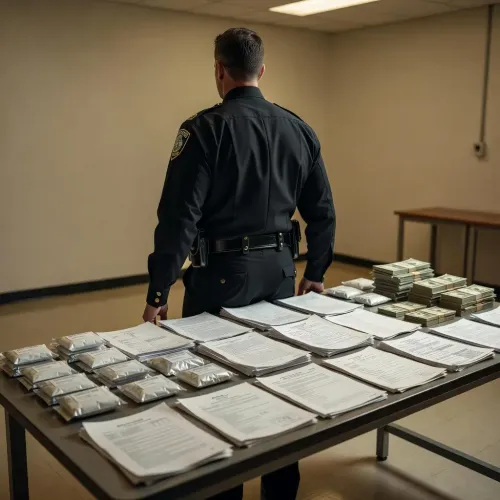
The post cited a series of specific actions claimed by the state government since December 2022. According to CM Sukhu, 174 chitta traffickers have been sent to jail, and illegal assets worth Rs 51 crore have been seized. Financial investigations into drug trafficking cases have been pursued as a dedicated campaign, with 66 suspected properties identified.
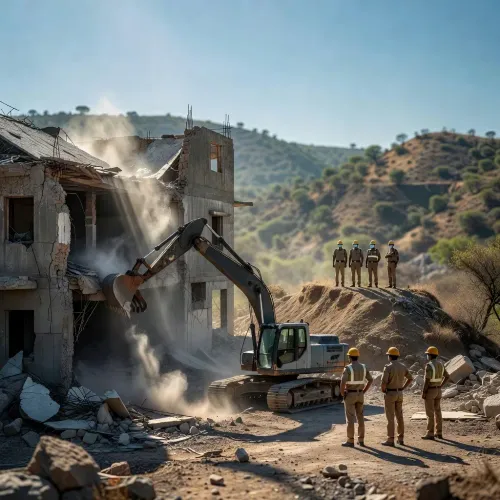
In 17 cases, the illegal properties of drug mafia operatives have been demolished — a tactic that signals a shift from mere arrests toward dismantling the economic infrastructure of organised drug crime. The emphasis on financial probes and demolitions mirrors enforcement approaches adopted in other states confronting entrenched trafficking networks.
Stakeholders and Impact
The primary stakeholders in this crackdown are Himachal Pradesh's youth, who have been disproportionately affected by synthetic drug abuse, and the state police, which is the operational arm of the enforcement drive. Drug traffickers and their networks face escalating legal and financial pressure under the current policy regime.
The demolition of properties and financial seizures are intended to deter not only active traffickers but also those who profit from or enable the trade. Civil society groups and families of affected youth have long demanded stronger state action on chitta proliferation in the hill state.
What's Next
CM Sukhu concluded his post with an unambiguous pledge: 'Our action against drug dealers will continue with the same resolve going forward.' Further updates on property attachments and financial investigations are expected to be reported during upcoming state assembly sessions or government review meetings.
The government's sustained public communication on anti-narcotics enforcement also carries a clear political dimension ahead of future electoral cycles, positioning the Congress administration as decisively tougher on drug crime than its predecessor in Himachal Pradesh.
Point of View
Moving beyond arrest tallies toward dismantling the economic underpinnings of trafficking networks. This approach aligns with a broader national pattern in which state governments in northern India have leveraged central drug laws to demonstrate muscular law-and-order credentials. Whether the figures cited translate into lasting disruption of supply chains or remain primarily a political communication exercise will be tested by ground-level outcomes in the months ahead.
NationPress
20 Oct 2026
Frequently Asked Questions
What is chitta and why is it a problem in Himachal Pradesh?
'Chitta' is a street name for heroin and synthetic white-powder drugs that have become widespread in Himachal Pradesh and Punjab, fuelled by cross-border supply routes from the Golden Crescent region. The drug has caused significant public health and social harm, particularly among youth in the hill state.
What is the PIT-NDPS Act and how is it being used in Himachal Pradesh?
The Prevention of Illicit Traffic in Narcotic Drugs and Psychotropic Substances (PIT-NDPS) Act of 1988 is a central law that allows preventive detention of drug traffickers to disrupt supply networks. CM Sukhu states his government has strictly enforced it since December 2022, claiming the previous BJP government had failed to do so.
How many drug traffickers have been jailed by the Sukhu government?
According to CM Sukhu's post on June 5, 2026, his government has sent 174 chitta traffickers to jail since taking office in December 2022.
How much illegal property has been seized from drug traffickers in Himachal Pradesh?
CM Sukhu stated that illegal assets worth Rs 51 crore have been seized, 66 suspected properties identified, and properties demolished in 17 cases as part of the state's anti-narcotics financial investigation campaign.
What did CM Sukhu say about the chitta mafia on June 5, 2026?
CM Sukhu issued a direct warning that if the chitta mafia did not reform, they would be 'wiped out' (mitti mein mila diya jaega). He pledged that the government's action against drug dealers would continue with the same resolve going forward.