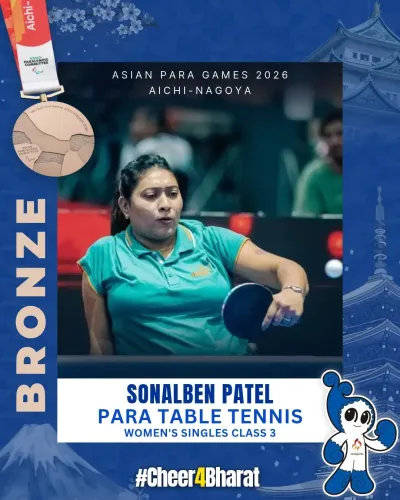
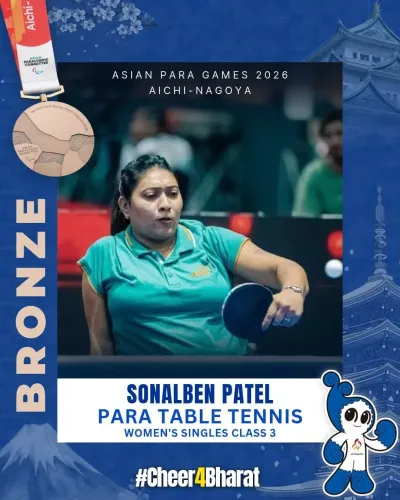
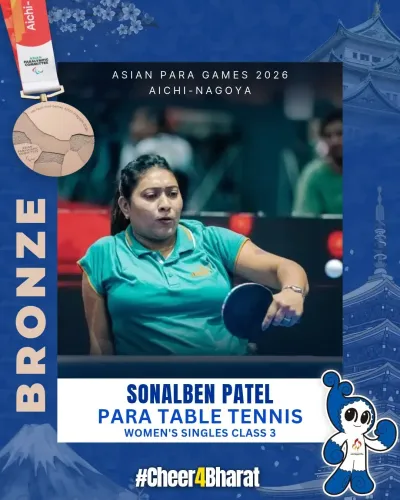
Nadda hails Sonalben Patel's bronze at Asian Para Games 2026
Synopsis
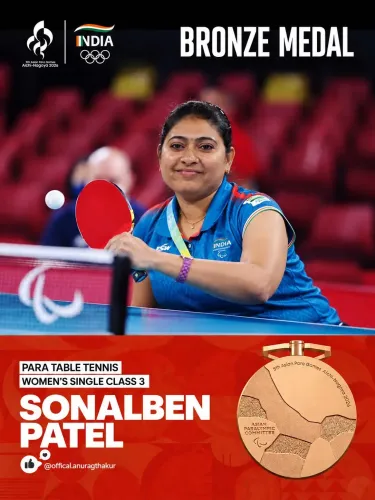
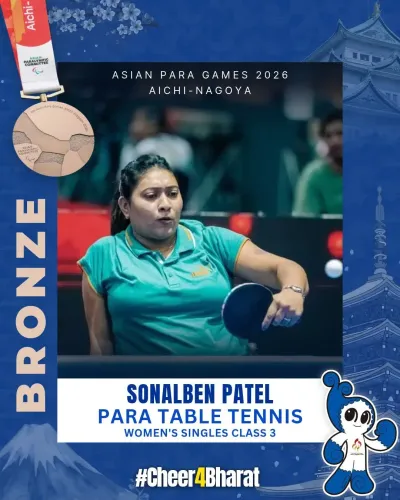
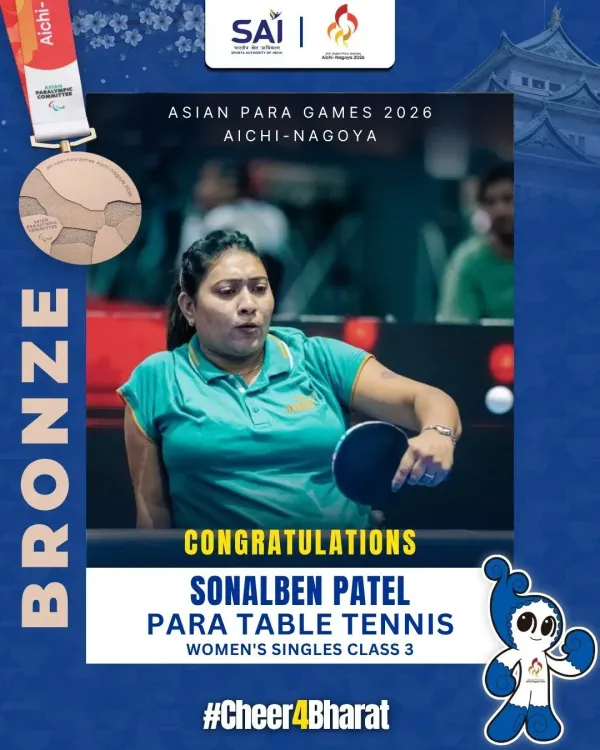
Union Health Minister J. P. Nadda praised para table-tennis player Sonalben Patel for winning bronze in Women's Singles Class 3 at the Asian Para Games 2026, calling her journey from hardship to medallist 'truly inspiring.'
Key Takeaways
Sonalben Patel (WR-3) won the bronze medal in Women's Singles Class 3 para table tennis at the Asian Para Games 2026 .
Union Health Minister J.
Nadda publicly congratulated her on X on October 20, 2026 .
Nadda described her victory as 'dominant' and her personal journey as 'truly inspiring.' The Class 3 category covers wheelchair-using athletes with significant trunk and arm impairment.
The Asian Para Games are held every four years and are a key qualifier for the global Paralympic stage.
Senior government acknowledgement of para-sport medals is an increasingly consistent practice in India.
A bronze medal and a journey that refused to quit — Union Health Minister J. P. Nadda took to X on Tuesday, October 20, 2026, to congratulate para-table-tennis player Sonalben Patel on clinching a podium finish in the Women's Singles Class 3 event at the Asian Para Games 2026.
Nadda described Patel's victory as 'dominant' and her path to the podium as 'truly inspiring', noting her journey from 'overcoming challenges to becoming an Asian Para Games medallist.' The classification WR-3 beside her name places her in the wheelchair-user category for table tennis — a discipline that demands extraordinary upper-body control, razor-sharp reflexes, and relentless mental composure.
Who is Sonalben Patel?
Sonalben Patel competes in the Class 3 category of para table tennis, which is designated for athletes with significant impairment of trunk and arm function who compete from a wheelchair. Her medal at the Asian Para Games is among the most prestigious achievements available to a para-athlete in the Asian regional calendar.
Why Asian Para Games recognition matters
The Asian Para Games are held every four years under the auspices of the Asian Paralympic Committee, serving as both a qualifying platform and a statement of regional sporting excellence for athletes with disabilities. A podium finish here carries substantial weight — it signals readiness for the global Paralympic stage and elevates the athlete's profile in the national sports support ecosystem.
Indian ministers have increasingly made a public practice of acknowledging para-sport medals on social media, a shift that advocates say helps normalise para-athletics in mainstream public discourse. When a cabinet minister calls out a win by name and category, it nudges institutional attention — and potentially funding pipelines — toward athletes who have historically operated in the margins of national recognition.
The wider push for para-sport visibility
India's para-sports contingent has grown steadily in depth and medal-winning capacity over successive Asian Para Games cycles. Official congratulations from senior government figures, while ceremonial in form, serve a secondary function: they signal to sports bodies, sponsors, and state governments that para achievement is considered nationally consequential. For an athlete like Sonalben Patel, that public acknowledgement — broadcast to millions — is itself a form of infrastructure.
The bronze medal adds another name to the roll of Indian para-athletes who have turned personal adversity into continental silverware. Sonalben Patel's story at the 2026 Asian Para Games is now part of that ledger — and the government has made sure the country is watching.
Point of View
It pushes para-athletics into the same public-recognition tier as able-bodied sport. For an athlete in a niche classification like WR-3 table tennis, this visibility can translate into sponsorship interest, state-government support, and stronger selection consideration for future events. The consistency of such messaging across BJP leadership suggests a deliberate communication strategy around India's para-sports identity, particularly in the build-up to future Paralympic cycles.
NationPress
20 Oct 2026
Frequently Asked Questions
Who is Sonalben Patel and what medal did she win?
Sonalben Patel is an Indian para table-tennis player who won the bronze medal in the Women's Singles Class 3 event at the Asian Para Games 2026. She competes in the WR-3 wheelchair category.
What is the Asian Para Games?
The Asian Para Games is a multi-sport competition for athletes with disabilities from across Asia, held every four years under the Asian Paralympic Committee. It is one of the most prestigious regional events for para-athletes.
What does Class 3 mean in para table tennis?
Class 3 in para table tennis is a wheelchair classification for athletes who have significant impairment affecting trunk stability and arm function, requiring them to compete seated in a wheelchair.
Why did JP Nadda congratulate Sonalben Patel?
Union Health Minister J. P. Nadda posted on X to publicly recognise Sonalben Patel's bronze medal at the Asian Para Games 2026, calling her journey from hardship to the podium truly inspiring.
How does the government support para-athletes in India?
Beyond funding schemes, senior Indian government officials routinely acknowledge para-sport achievements on social media, elevating athletes' national profiles and signalling institutional support for para-athletics.