White House Touts 'Trump Effect' as US Manufacturing Revival

Synopsis
The White House declared American manufacturing 'is back,' invoking the 'Trump Effect' in a high-energy post on October 20, 2026. The claim builds on tariff and tax policies dating to Trump's first term, with upcoming BLS data set to verify the assertion.
Key Takeaways
The White House officially claimed on October 20, 2026 that American manufacturing has revived, attributing it to the 'Trump Effect.' The administration's manufacturing push is rooted in the Tax Cuts and Jobs Act (2017) and sweeping tariffs on steel, aluminium, and Chinese goods (2018–2019) .
Protectionism and deregulation remain the two central levers of the America First industrial strategy.
Specific 2026 manufacturing data underpinning the claim has not been independently verified at time of publication.
Upcoming Bureau of Labor Statistics reports on manufacturing employment and output will be the key measure of whether the revival is real and sustained.
A genuine US manufacturing resurgence carries implications for Indian exporters and foreign investment competition under PLI schemes.
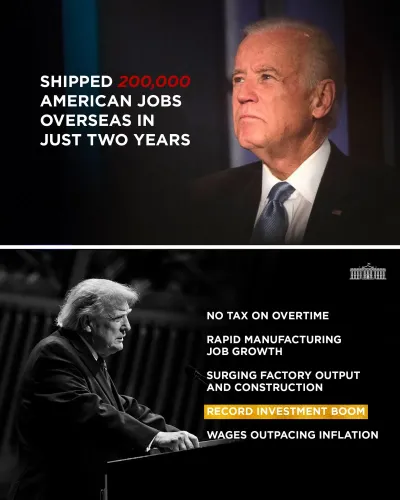
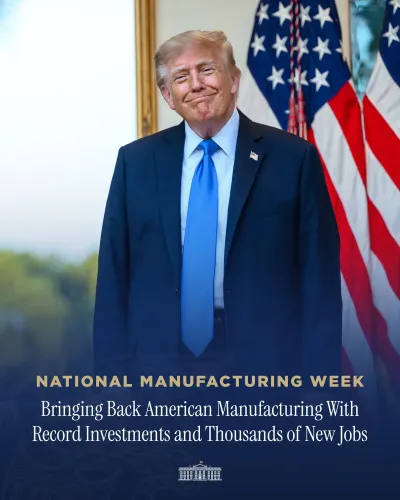
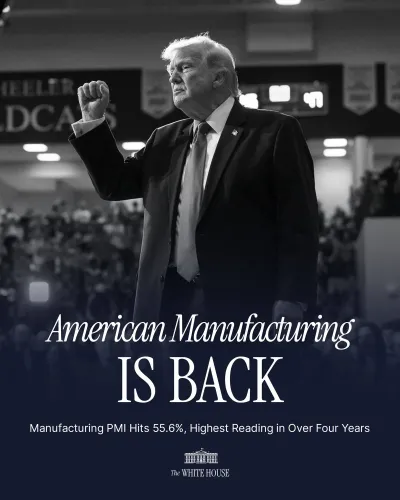
The White House on Tuesday, October 20, 2026 fired a sharp, boosterish signal across its official communications: American manufacturing, it declared, is back — and it is crediting what it calls the 'Trump Effect' for the turnaround.
A Familiar Playbook, a Renewed Claim
The post is short and combative by design — rockets, a bold slogan, a two-word verdict. But it sits atop a policy architecture that has been years in the making. The current administration's push to reshore industrial production traces its roots to the first Trump term (2017–2021), when the Tax Cuts and Jobs Act was passed with provisions explicitly aimed at encouraging companies to bring manufacturing operations back to American soil.
That legislative push was followed by a sweeping tariff offensive: levies on steel and aluminum and a broader wave of duties on Chinese goods imposed between 2018 and 2019, designed to make imported manufactured products less price-competitive against domestically made alternatives. The argument, then as now, is that removing the cost advantage of offshore production forces investment back into US factories and puts manufacturing workers back on the floor.
What the 'America First' Industrial Thesis Rests On
The protectionist-and-deregulation combination has been the administration's consistent two-lever answer to a decades-long structural decline in American manufacturing employment driven by globalisation. Officials have repeatedly tied public announcements to employment data windows — a pattern that suggests this post, too, may be pegged to an upcoming or recent economic data release, though specific 2026 figures have not been independently confirmed at publication.
The Bureau of Labor Statistics' manufacturing employment and output reports remain the definitive scorecards. Whether any resurgence in factory activity is broad-based, durable, or concentrated in specific sectors — semiconductors, steel, electric vehicles, defence supply chains — is precisely what those numbers will need to show.
Why India Is Watching
For Indian businesses and policymakers, a genuine American manufacturing revival carries direct implications. India's export-oriented sectors — pharmaceuticals, textiles, auto components, and IT-enabled manufacturing services — compete for the same global investment flows. A sustained reshoring wave in the United States would sharpen the competition for multinational capital, even as India's own Production Linked Incentive schemes are designed to attract exactly that investment.
The claim may be a political beat-up ahead of data, or it may be the leading edge of a genuine industrial shift. The next manufacturing jobs report will tell the story the White House wants the world to believe is already written.
Point of View
If real, would validate a decade of protectionist orthodoxy dismissed by mainstream trade economists. The announcement fits a well-worn White House pattern of front-running data releases with political messaging, making the timing of the next BLS report as significant as the report itself. For India, the subtext is consequential: if American industrial policy is successfully pulling investment back onshore, the global competition for manufacturing capital intensifies precisely when New Delhi is betting heavily on PLI-driven factory growth. The post is combative confidence — but confidence is not confirmation.
NationPress
20 Oct 2026
Frequently Asked Questions
What is the 'Trump Effect' on American manufacturing?
The White House uses 'Trump Effect' to describe the claimed revival of US manufacturing it attributes to protectionist trade policies — including tariffs on steel, aluminium, and Chinese goods — and tax incentives introduced during the Trump administration to encourage companies to bring production back to the United States.
How did Trump's tariffs affect US manufacturing jobs?
Tariffs imposed between 2018 and 2019 on steel, aluminium, and a broad range of Chinese imports were designed to raise the cost of competing imported goods and make domestic production more competitive, with the goal of sustaining and growing US factory employment. Their long-term impact on net job creation remains debated among economists.
Is American manufacturing actually growing in 2026?
The White House claimed on October 20, 2026 that American manufacturing is back, but specific 2026 output and employment statistics have not been independently verified. Bureau of Labor Statistics reports on manufacturing employment and output will provide the definitive picture.
What was the Tax Cuts and Jobs Act's role in US manufacturing?
The Tax Cuts and Jobs Act, enacted in 2017, included provisions intended to encourage US companies to repatriate manufacturing operations from abroad by altering the tax treatment of offshore profits and domestic capital investment, making it more financially attractive to produce goods within the United States.
How does a US manufacturing revival affect India?
A sustained American manufacturing resurgence could intensify global competition for multinational investment, directly affecting Indian sectors such as pharmaceuticals, textiles, auto components, and electronics that compete for the same capital flows India's Production Linked Incentive schemes are designed to attract.