Rajnath Singh: GST Is Conviction, Not Compulsion
Synopsis
Union Defence Minister Rajnath Singh declared on October 20 that landmark reforms like GST represent India's 'conviction' in nation-building, contrasting today's tech-driven empowerment with a time when basic mobile access was considered a major achievement.
Key Takeaways
Union Defence Minister Rajnath Singh posted on X on October 20, 2026 asserting India is progressing with 'unprecedented confidence.' He framed GST and structural reforms as expressions of national 'conviction,' not compulsions forced by circumstance.
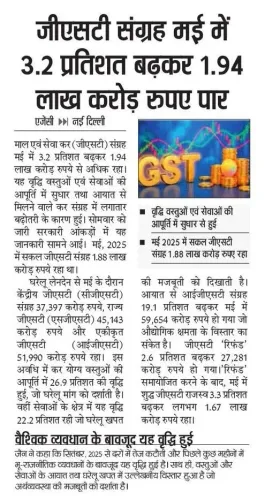
GST was implemented on 1 July 2017 , unifying central and state indirect taxes after years of constitutional negotiation.
Singh drew a contrast spanning roughly 12-13 years — from basic mobile access being an achievement to technology now empowering every citizen.
Since 2014 , the central government has positioned GST and digital infrastructure together as the foundation of economic formalisation.
The GST Council and upcoming Union Budget sessions remain key forums where the reform's next phase will be tested.
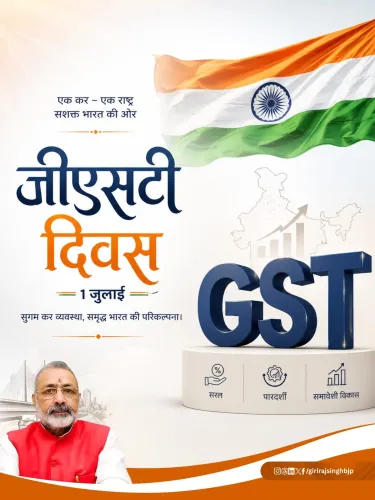
From a country where simply owning a mobile phone once felt like a milestone to a nation reshaping its economy through structural reform — Union Defence Minister Rajnath Singh marked Tuesday, October 20, 2026 with a pointed assertion: India's reforms are driven by belief, not necessity.
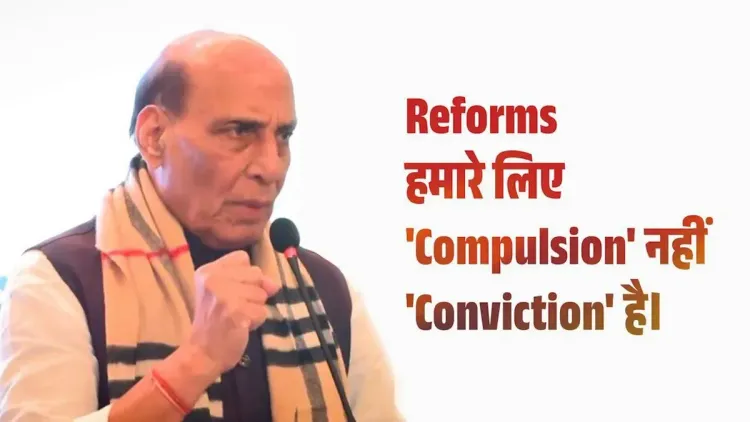
Writing in Hindi on X, Singh declared, 'GST जैसे व्यापक आर्थिक एवं संरचनात्मक सुधार हमारी 'Compulsion' नहीं, बल्कि राष्ट्र निर्माण के प्रति हमारी 'Conviction' का प्रतीक हैं' — ('Sweeping economic and structural reforms like GST are not our compulsion, but a symbol of our conviction towards nation-building.')
The framing is deliberate. Reforms historically imposed on economies in fiscal crisis are here repositioned as proactive choices — a rhetorical line that separates reform-from-strength from reform-under-duress.
GST's Long Road From Negotiation to National Infrastructure
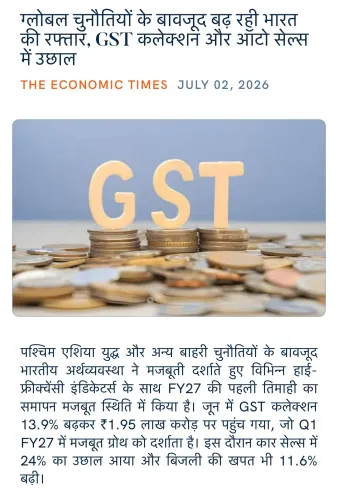
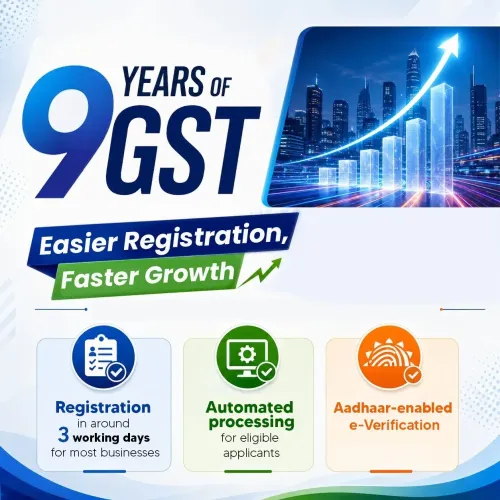
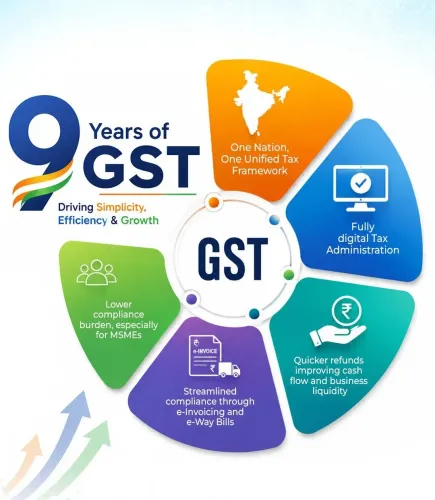
The Goods and Services Tax, rolled out on 1 July 2017, unified a maze of central and state levies into a single indirect tax structure — the culmination of constitutional amendments and over a decade of negotiation on tax federalism. Since 2014, successive central governments have framed GST alongside digital infrastructure expansion as twin pillars of formalisation and ease of doing business.
Singh's post drew a sharp contrast across roughly a decade: where once mobile and internet access was itself considered a significant achievement, technology and reform today — in his framing — are becoming 'tools of empowerment for every citizen.'
The Confidence Argument: Reform as National Character
The minister described an India moving forward on the path of progress with 'unprecedented confidence' — 'अभूतपूर्व आत्मविश्वास'. That phrase does real work here. It situates current policy not as a response to external pressure or ratings-agency demands, but as an expression of a self-assured state.
For small businesses and common citizens — the stakeholders most directly touched by GST compliance and digital public infrastructure — the argument is that structural reform has moved from elite boardrooms to the everyday economy. Whether that transition is complete is a live debate; the GST Council continues to meet on rate rationalisation and compliance simplification, and future Union Budget cycles will test the durability of that claim.
Singh is one of the BJP's most senior figures — a former Chief Minister of Uttar Pradesh and former Union Home Minister before assuming the Defence portfolio. When he frames economic reform in the language of national conviction, the audience is both domestic and aspirational: a rising-power narrative aimed as much at the next generation as at any policy wonk.
The distance between 'mobile access as achievement' and 'technology as mass empowerment tool' took roughly twelve years to travel. The bet implicit in Singh's post is that the next twelve move even faster — and that the architecture of GST and digital reform is what makes the journey irreversible.
Point of View
Shoring up the BJP's reform-from-strength narrative ahead of budget season. By anchoring the argument in a 12-13 year technology transformation arc, he implicitly credits post-2014 governance without naming it, a standard BJP rhetorical move that avoids direct self-citation while drawing the contrast clearly. The emphasis on GST is also timely: with the GST Council periodically revisiting rate structures, framing it as settled 'conviction' pre-empts any opposition narrative that the tax remains a work-in-progress. For a senior leader who commands credibility across security and economic portfolios, the post signals that the government intends to run hard on its reform record as a political asset.
NationPress
20 Oct 2026
Frequently Asked Questions
What did Rajnath Singh say about GST in his October 2026 post?
Rajnath Singh said GST and similar structural reforms are not a 'compulsion' but a symbol of India's 'conviction' towards nation-building, describing them as tools for empowering every citizen through technology and reform.
When was GST implemented in India?
GST — the Goods and Services Tax — was implemented on 1 July 2017 , unifying multiple central and state indirect taxes into a single structure after years of constitutional amendments and federal negotiations.
What is Rajnath Singh's current role in the Indian government?
Rajnath Singh is currently India's Union Defence Minister . He previously served as Union Home Minister and as Chief Minister of Uttar Pradesh, and is one of the BJP's most senior leaders.
What does 'conviction not compulsion' mean in the context of Indian economic reforms?
The phrase distinguishes India's reform agenda as a proactive, ideologically-driven choice rather than a response to external pressure or fiscal crisis — framing structural changes like GST as deliberate nation-building decisions.
How has India's digital and technology landscape changed over the past 12-13 years according to Singh?
Singh noted that roughly 12-13 years ago, basic mobile and internet access was itself considered a major achievement in India; today, he said, technology and reforms have become instruments of mass empowerment for ordinary citizens.