CM Rekha Gupta marks 9 years of GST, hails 'one nation, one tax'

Synopsis
Delhi Chief Minister Rekha Gupta on 1 July 2026 marked nine years of GST, praising the 'one nation, one tax' reform as a pillar of economic transparency and cooperative federalism under PM Modi's leadership, and congratulating taxpayers for driving national progress.
Key Takeaways
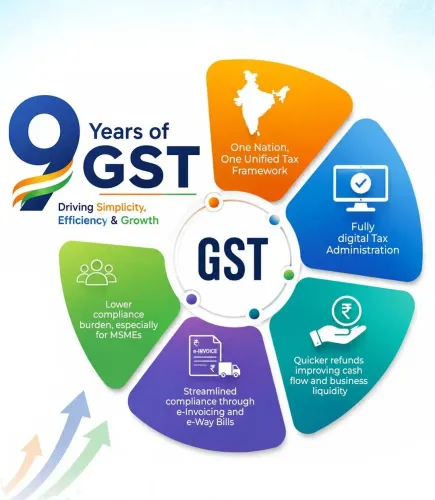
Delhi CM Rekha Gupta posted on 1 July 2026 to mark nine years of GST , launched on 1 July 2017.
She described GST as the foundation of transparency, simplicity, and economic momentum under PM Narendra Modi 's guidance.
GST replaced multiple central and state levies — including excise duty, service tax, and VAT — under the 101st Constitutional Amendment Act of 2016 .
The GST Council , a constitutional body of central and state finance ministers, governs the tax by consensus, embodying cooperative federalism.
CM Gupta linked GST's economic impact to the broader vision of Viksit Bharat (Developed India).
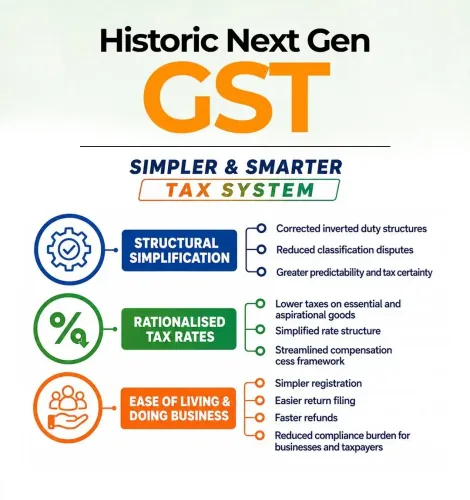
Rate rationalisation and possible inclusion of petroleum products in GST remain key agenda items for upcoming Council meetings.
Delhi Chief Minister Rekha Gupta on Wednesday, 1 July 2026 congratulated citizens and taxpayers across the country on the completion of nine years of the Goods and Services Tax (GST), calling it the foundation of transparency, simplicity, and new momentum in India's economy. She credited Prime Minister Narendra Modi's guidance for strengthening the spirit of cooperative federalism through the unified tax regime.
Context
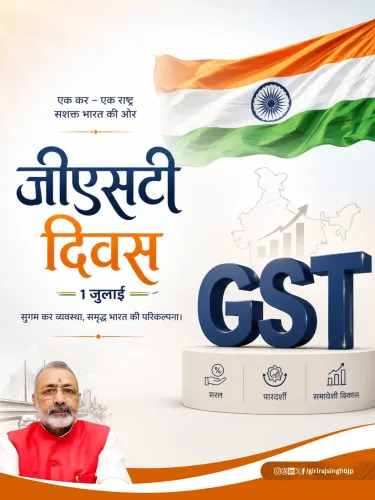
Posting in Hindi on the occasion of GST's ninth anniversary, CM Gupta wrote: 'एक राष्ट्र, एक कर' ('One nation, one tax') — the defining slogan under which GST was conceived and launched. She extended greetings to all taxpayers who she said have contributed to national progress, and described an economy strengthened through GST as playing a 'significant role' in advancing the vision of a Viksit Bharat (Developed India).
GST was rolled out on 1 July 2017 in a midnight session at the Central Hall of Parliament, replacing a web of central and state levies including excise duty, service tax, and value-added tax. The 101st Constitutional Amendment Act of 2016 had cleared the legal path for the unified indirect tax framework.
Policy Backdrop
GST operates through the GST Council, a constitutional body comprising the Union Finance Minister and state finance ministers, which decides rates, exemptions, and rule changes by consensus. This structure institutionalised a form of cooperative federalism rarely seen in Indian fiscal policy, requiring centre and states to negotiate and agree before any change takes effect.
Over nine years, successive administrations have pointed to rising GST collections as evidence of improved tax compliance and the formalisation of supply chains driven by digital invoicing and e-way bills. The tax has also been credited with reducing the cascading effect of multiple levies that previously inflated the cost of goods and services.
Stakeholders and Impact
The primary beneficiaries of a simplified tax structure have been traders, manufacturers, and small businesses that previously navigated dozens of overlapping state and central levies. State governments were guaranteed compensation for revenue shortfalls in the transition years, a provision that itself became a source of political negotiation between the centre and opposition-ruled states.
For consumers, the consolidation of taxes brought greater price transparency, though critics have long argued that the multi-slab rate structure — ranging from zero to 28 per cent — preserved much of the complexity GST was meant to eliminate. The question of including petroleum products within the GST net remains unresolved and continues to be debated in GST Council meetings.
What's Next
The GST Council's next meeting is expected to take up rate rationalisation proposals that have been under deliberation for several rounds, with a focus on merging the 12 per cent and 18 per cent slabs to simplify compliance further. Any legislative amendments arising from these decisions may be tabled in the monsoon session of Parliament. CM Gupta's post, framed around Viksit Bharat, signals that the BJP intends to keep GST's ninth anniversary as a political and economic milestone in the run-up to that legislative calendar.
Point of View
She slots GST into the ruling party's long-term economic vision rather than treating it as a standalone reform. The omission of any reference to persistent structural debates — multi-slab complexity, petroleum exclusion, compensation disputes — is itself a political choice, projecting consensus where friction exists. As a chief minister of a state that is a net consumer of goods, Gupta's unqualified endorsement also signals Delhi's alignment with the centre on fiscal federalism at a moment when several opposition-ruled states have pushed back on GST's revenue-sharing terms.
NationPress
30 Sept 2026
Frequently Asked Questions
When was GST launched in India?
GST was launched on 1 July 2017 in a midnight session at the Central Hall of Parliament, replacing multiple indirect taxes including excise duty, service tax, and VAT.
What did Delhi CM Rekha Gupta say about GST's 9th anniversary?
CM Rekha Gupta congratulated all citizens and taxpayers on GST completing nine years, calling it the foundation of transparency and simplicity and crediting PM Modi's guidance for strengthening cooperative federalism through the tax reform.
What is the GST Council and how does it work?
The GST Council is a constitutional body comprising the Union Finance Minister and state finance ministers. It decides GST rates, exemptions, and rules by consensus, institutionalising cooperative federalism between the centre and states.
What is 'one nation, one tax' in the context of GST?
'One nation, one tax' is the guiding slogan of GST, reflecting its aim to replace dozens of overlapping central and state levies with a single unified indirect tax across India.
What are the next steps for GST reform in India?
The GST Council is expected to consider rate rationalisation — potentially merging the 12 per cent and 18 per cent slabs — and the long-pending question of including petroleum products within the GST framework, with possible legislative changes in Parliament's monsoon session.