Giriraj Singh marks 9 years of GST, hails 'One Nation One Tax'
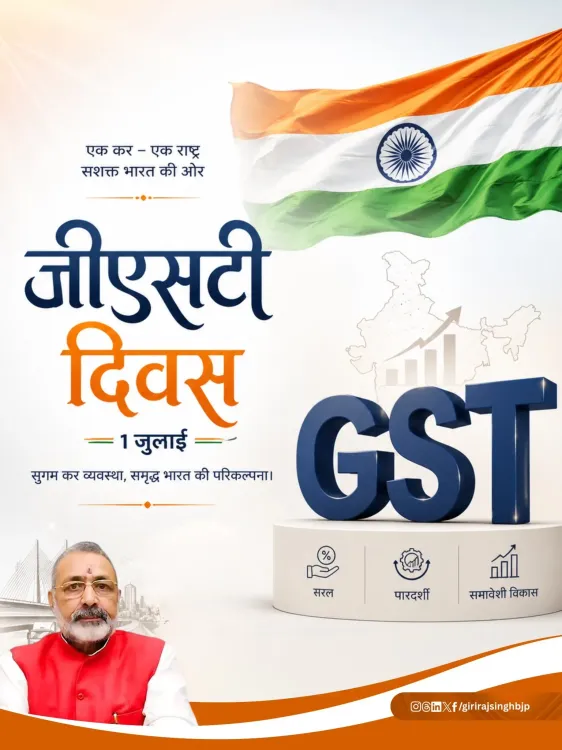
Synopsis
Union Textiles Minister Giriraj Singh on 1 July 2026 marked nine years of GST, crediting PM Modi's vision for realising 'One Nation, One Tax' and citing the reform's role in boosting transparency, ease of doing business, and economic self-reliance.
Key Takeaways
Union Textiles Minister Giriraj Singh posted on X on 1 July 2026 to mark the ninth anniversary of GST .
GST was launched on 1 July 2017 , replacing central excise, service tax, and state VAT with a unified destination-based levy.
The legal basis was the Constitution (One Hundred and First Amendment) Act, 2016 , which restructured Centre-state taxation powers.
Singh credited Prime Minister Narendra Modi's 'visionary leadership' for realising the 'One Nation, One Tax' goal.
The minister linked GST to improved Ease of Doing Business and a more self-reliant Indian economy.
The GST Council is expected to take up further rate rationalisation in upcoming meetings.
Union Textiles Minister Giriraj Singh on Tuesday, 1 July 2026 marked the ninth anniversary of the Goods and Services Tax (GST), calling it a historic milestone in India's tax administration and crediting Prime Minister Narendra Modi's vision for the reform's success.
Context
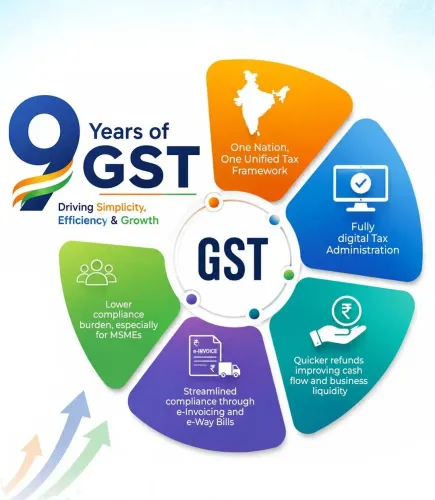
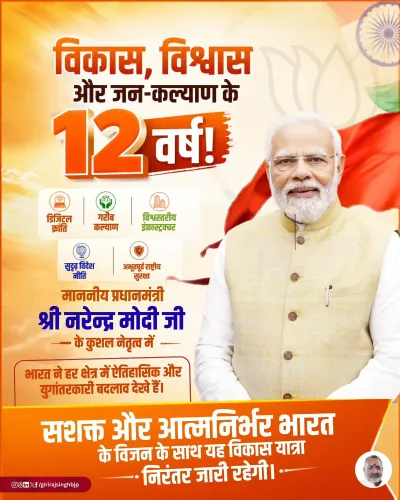
Posting on X, Singh wrote that under Prime Minister Modi's 'दूरदर्शी नेतृत्व' ('visionary leadership'), the resolve of 'One Nation, One Tax' has been successfully realised. He described nine years of GST as a symbol of a 'historic journey' toward transparency, simplicity, and a unified tax system in India's fiscal architecture.
Singh further noted that GST is today strengthening the country's economy and making it more 'आत्मनिर्भर' (self-reliant), while also giving fresh momentum to Ease of Doing Business. The post was tagged #9YearsOfGST, part of a broader government-wide social media observance of the anniversary.
Policy Backdrop
GST was rolled out across India on 1 July 2017, replacing a fragmented web of central excise duty, service tax, and state-level value-added taxes with a single destination-based levy. The legal foundation was laid by the Constitution (One Hundred and First Amendment) Act, 2016, which restructured the division of taxation powers between the Centre and states.
The reform was designed to create a unified national market, reduce the cascading effect of multiple taxes, and bring more businesses into the formal economy. The GST Council — a constitutional body comprising Union and state representatives — governs rate-setting and policy changes, and has been cited by the government as a model of cooperative federalism.
Since launch, the Council has undertaken successive rounds of rate rationalisation and compliance simplification, including the introduction of the Quarterly Return Monthly Payment (QRMP) scheme for smaller taxpayers and the phased expansion of the e-invoicing mandate.
Stakeholders and Impact
The GST regime directly affects businesses, MSMEs, exporters, and individual taxpayers across all sectors, including the textiles industry that Singh's own ministry oversees. Textile and apparel manufacturers were among the sectors most affected by the GST transition, given the earlier complex multi-rate structure under state VAT and central excise.
Ease of Doing Business rankings have been a key metric cited by the government to demonstrate the reform's impact on the investment climate. A unified tax code reduces compliance costs for multi-state businesses and simplifies inter-state trade, which had previously attracted the Central Sales Tax and entry-level levies.
What's Next
The anniversary comes as the GST Council is expected to take up further rate rationalisation proposals in upcoming meetings. Possible legislative amendments to the GST law in the next parliamentary session remain on the policy radar. The government's continued push for formalisation of the economy and expansion of the taxpayer base are likely to keep GST reform at the centre of fiscal policy discussions through the remainder of 2026.
Point of View
But it carries political weight as the BJP continues to position GST as the centrepiece of Modi-era economic governance. By linking the tax reform to 'Aatmanirbhar Bharat' and Ease of Doing Business, the messaging seeks to embed GST within a broader nationalist economic narrative ahead of potential electoral cycles. The reference to cooperative federalism through the GST Council also serves to pre-empt opposition criticism from state governments about revenue sharing. As rate rationalisation debates intensify in the Council, such high-profile endorsements from Cabinet ministers signal that the government intends to defend the GST architecture rather than revisit its fundamentals.
NationPress
30 Sept 2026
Frequently Asked Questions
When was GST launched in India?
GST was launched in India on 1 July 2017 , replacing a complex structure of central excise duty, service tax, and state VAT with a single unified indirect tax.
What is 'One Nation, One Tax' in India?
'One Nation, One Tax' is the guiding principle behind GST, meaning a single, uniform indirect tax applies across all states and union territories, eliminating the earlier multi-layered tax structure.
What did Giriraj Singh say about GST on its 9th anniversary?
Union Textiles Minister Giriraj Singh said that under PM Modi's visionary leadership, the 'One Nation, One Tax' resolve has been successfully realised, and that GST is strengthening the economy and boosting Ease of Doing Business.
What is the GST Council and what does it do?
The GST Council is a constitutional body comprising the Union Finance Minister and state finance ministers that decides GST rates, exemptions, and policy changes through consensus.
How has GST affected ease of doing business in India?
GST has reduced compliance costs for multi-state businesses by replacing multiple taxes with a single return framework, and has been cited by the government as a key factor in improving India's Ease of Doing Business metrics.