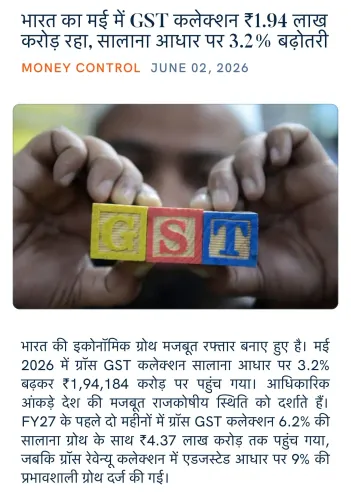
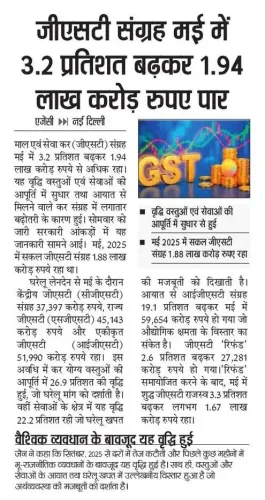
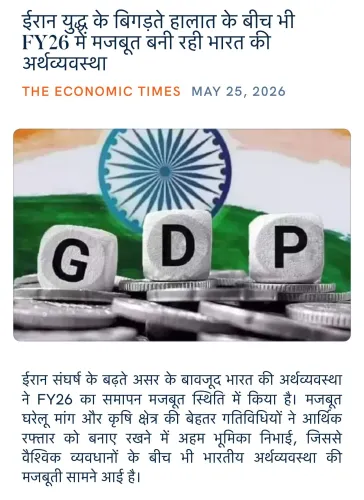
Giriraj Singh Flags GST, Auto Sales Rise Amid Global Headwinds
Synopsis
Union Textiles Minister Giriraj Singh flagged surging GST collections and automobile sales on 2 July 2026, reinforcing the government's narrative of India's domestic economic resilience in the face of ongoing global challenges and geopolitical uncertainty.
Key Takeaways
Giriraj Singh shared a post on 2 July 2026 highlighting a rise in GST collections and auto sales in India.
The post was shared via the NaMo App , underscoring the BJP's coordinated digital communication strategy.
GST was launched on 1 July 2017 ; the post came a day after its ninth anniversary, a period officials traditionally use to spotlight the tax regime's performance.
PLI schemes for the auto sector, notified in 2020-21 , form part of the policy backdrop driving domestic manufacturing momentum.
Monthly GST data from the Ministry of Finance and quarterly auto figures from SIAM will be key metrics to watch for sustained trend confirmation.
India is currently the fifth-largest economy globally, pursuing manufacturing-led growth through Make in India and PLI frameworks.
Union Textiles Minister Giriraj Singh on Thursday, 2 July 2026, shared an article highlighting a surge in GST collections and automobile sales in India, pointing to the country's continued economic momentum despite global challenges. The post, shared via the NaMo App, underscores the ruling dispensation's emphasis on India's domestic demand resilience as a counterweight to international economic turbulence.
Context
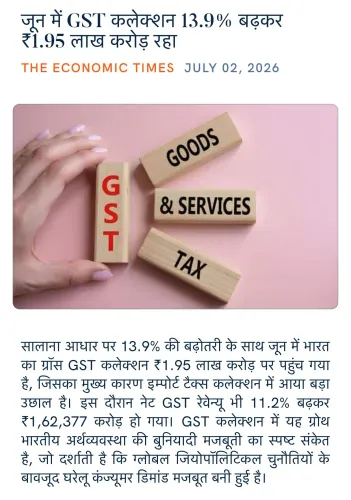
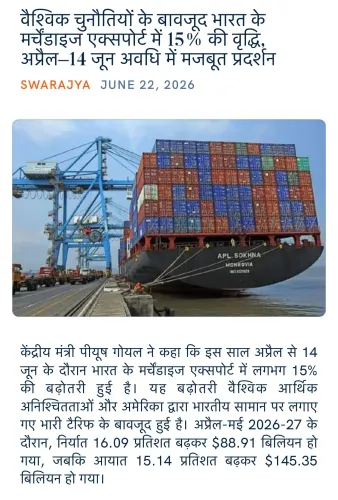
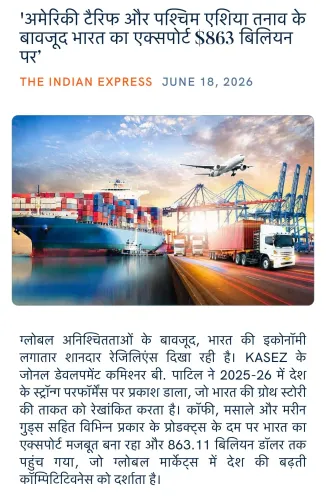
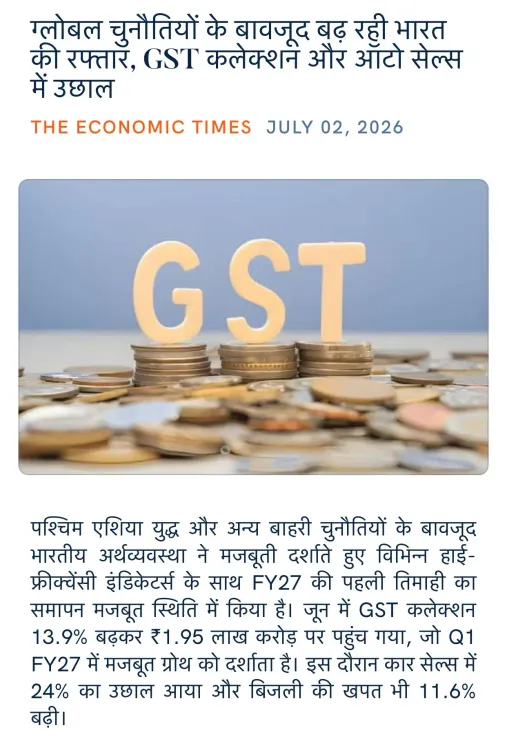
Giriraj Singh shared the post with the headline 'ग्लोबल चुनौतियों के बावजूद बढ़ रही भारत की रफ्तार, GST कलेक्शन और ऑटो सेल्स में उछाल' — translated as 'India's pace accelerating despite global challenges, surge in GST collection and auto sales.' The post reflects the government's recurring communication strategy of anchoring India's growth narrative in high-frequency economic indicators such as tax revenues and vehicle sales, which are seen as reliable proxies for consumer sentiment and formalisation of the economy.
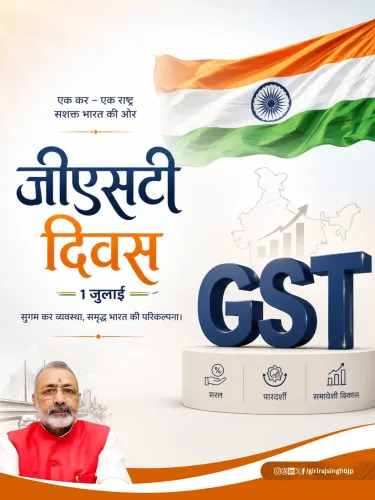
The timing is notable: the post comes just a day after 1 July 2026, which marks the anniversary of the Goods and Services Tax rollout, first implemented on 1 July 2017. Officials across the ruling party have consistently used this period to spotlight the tax regime's performance and its role in broadening the formal economy's base.
Policy Backdrop
GST, India's unified indirect tax framework, subsumed a complex web of central and state levies when it was launched nine years ago. Since the post-pandemic recovery of 2021-22, monthly GST collections have been frequently cited by the government as evidence of sustained domestic demand and improved tax compliance. The Ministry of Finance releases monthly GST revenue figures that have become a closely watched economic barometer.
On the automobile front, Production Linked Incentive (PLI) schemes for the auto and auto-components sector, notified in 2020-21, were designed to attract fresh investment and raise domestic value addition. Quarterly sales data from the Society of Indian Automobile Manufacturers (SIAM) has served as a parallel indicator of consumer confidence, particularly in the passenger vehicle and two-wheeler segments, which are sensitive to income and credit conditions.
India, now the fifth-largest economy globally, has pursued manufacturing-led growth through flagship programmes such as Make in India and the broader PLI framework across sectors. The government has consistently argued that structural reforms and digital formalisation have insulated the domestic economy from the worst of global supply-chain disruptions and geopolitical shocks that have weighed on peer economies since 2022.
Stakeholders and Impact
Automobile manufacturers and their component suppliers stand to benefit from the narrative of rising sales, which signals healthy retail offtake and could support investment and hiring decisions. For Indian businesses more broadly, buoyant GST collections indicate stronger transactional volumes across supply chains, a positive signal for credit and working-capital cycles.
For the government, robust GST revenues directly strengthen the fiscal position, providing headroom for capital expenditure without widening the deficit. State governments, which share a portion of GST proceeds, also benefit from higher collections, easing pressure on their own finances at a time when global uncertainty has complicated revenue planning across emerging markets.
What's Next
Analysts and market participants will watch the Ministry of Finance's next monthly GST revenue release and SIAM's quarterly automobile sales data for confirmation of whether the uptick represents a sustained trend or a seasonal blip. Any moderation in these indicators in coming months could complicate the government's growth messaging heading into the second half of 2026-27.
With global headwinds — including geopolitical tensions and supply-chain realignments — still a live risk, the government's ability to sustain domestic demand through policy support and consumer confidence will be the key variable to watch in the quarters ahead.
Point of View
Using GST and auto-sales data as accessible, tangible proof points of India's growth story for a mass digital audience. The timing — a day after GST's ninth anniversary — is unlikely to be coincidental, as the party has consistently used the occasion to reinforce the reform's legacy. By framing domestic resilience against a backdrop of 'global challenges,' the messaging serves a dual purpose: crediting government policy for insulating the economy while pre-empting criticism about external risks. The broader pattern suggests this kind of data-anchored social media communication will intensify as India approaches the second half of a fiscal year when growth optics become politically consequential.
NationPress
1 Oct 2026
Frequently Asked Questions
Why did Giriraj Singh post about GST and auto sales?
Giriraj Singh shared the post to highlight India's economic momentum, citing rising GST collections and automobile sales as evidence that the country's growth is holding firm despite global challenges.
What is the current status of GST collections in India in 2026?
While the specific figures referenced in the post fall outside independently verifiable data, the government has consistently pointed to monthly GST revenues as a key indicator of domestic demand and tax formalisation since the regime's launch in 2017.
How do auto sales reflect India's economic health?
Automobile sales, particularly in the passenger vehicle and two-wheeler segments, are a widely used proxy for consumer confidence and disposable income; rising sales typically signal healthy credit conditions and household spending.
What is the NaMo App and why was the post shared there?
The NaMo App is a BJP-aligned digital platform used by party leaders and supporters to share government messaging and political content; sharing posts via the app is part of a coordinated outreach strategy to the party's digital base.
What should I watch to track India's GST and auto-sales performance?
The Ministry of Finance releases monthly GST revenue data, while the Society of Indian Automobile Manufacturers (SIAM) publishes quarterly sales figures — both are the primary official sources for tracking these indicators.