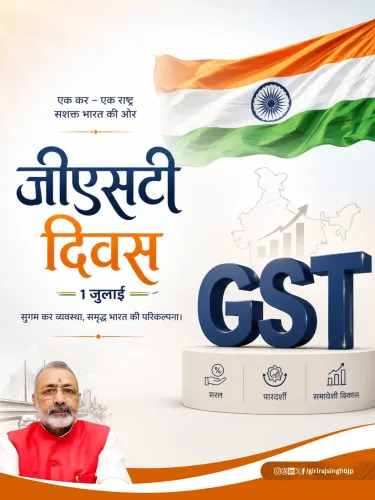
Giriraj Singh marks GST's 9 years: revenue up, compliance stronger

Synopsis
Union Textiles Minister Giriraj Singh marked GST's ninth anniversary on 2 August 2026, citing rising revenues and better tax compliance. Launched via a midnight Parliament session in July 2017, GST subsumed dozens of central and state levies. Nine years on, e-invoicing and successive GST Council reforms have steadied the system.
Key Takeaways
Giriraj Singh shared a GST ninth-anniversary post on 2 August 2026 via the NaMo App , citing improved revenues and compliance.
GST was launched on 1 July 2017 through a midnight Parliament session, backed by the Constitution (One Hundred and First Amendment) Act, 2016 .
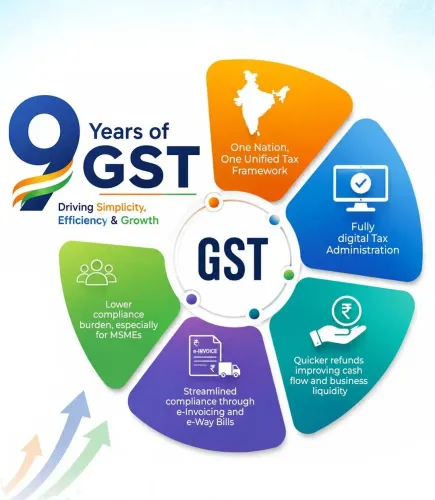
The reform subsumed central excise duty, service tax, VAT, and octroi into a single destination-based tax.
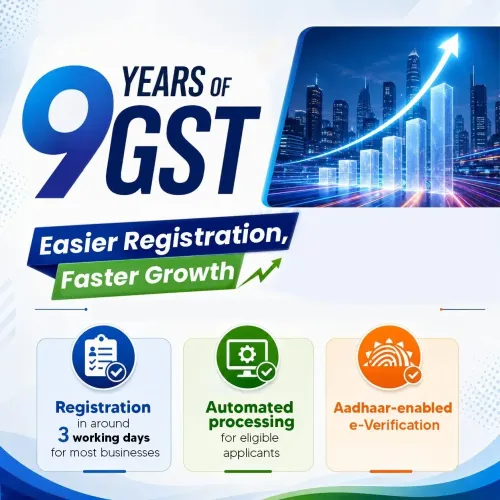
Anti-evasion tools including e-invoicing and real-time input tax credit matching have been key to improving compliance since rollout.
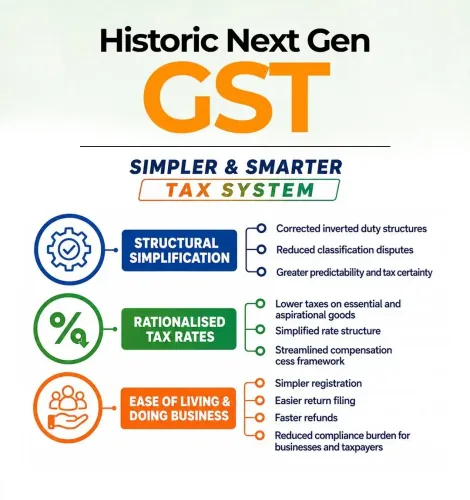
The GST Council has conducted multiple rounds of rate rationalisation since 2017; the next meeting is expected to revisit rate changes and excluded items.
The textiles sector — Singh's own portfolio — has been directly affected by GST rate decisions on fibres, garments, and cotton.
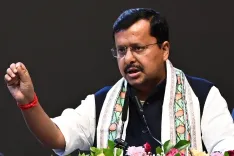
Nine years after India rewired its entire indirect tax architecture in a single midnight stroke, Union Textiles Minister Giriraj Singh is marking the milestone — pointing to stronger revenues and improved tax compliance as proof that the gamble paid off. On Sunday, 2 August 2026, the senior BJP leader and Lok Sabha MP from Begusarai, Bihar, shared the anniversary note via the NaMo App, underscoring the ruling party's continued ownership of the Goods and Services Tax as a signature reform.
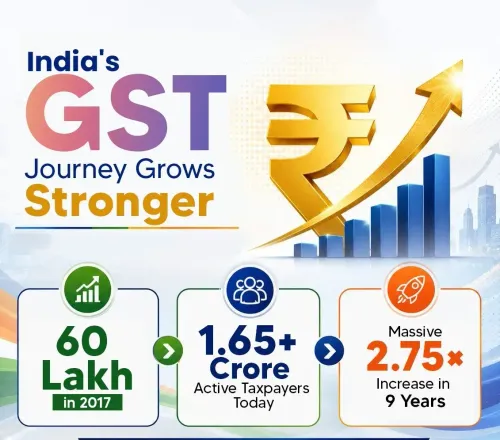
The post, in Hindi, reads: 'GST ke 9 saal poore: revenue mein badhotri, tax compliance hua behtar' — 'GST completes 9 years: revenue rises, tax compliance improves.' Brief as the message is, it lands at a moment when the government is keen to cement the narrative that what critics once called a 'hastily implemented' reform has matured into a stable, self-reinforcing revenue engine.
From midnight chaos to nine-year milestone
GST went live on 1 July 2017 — launched at a dramatic midnight Parliament session — subsuming a maze of central and state levies including central excise duty, service tax, VAT, and octroi into a single, destination-based tax. The legal backbone was the Constitution (One Hundred and First Amendment) Act, 2016, which empowered both Parliament and state legislatures to levy the unified tax. The early years were turbulent: cascading rate revisions, a compliance portal that buckled under load, and small businesses struggling with monthly return filings. Nine years on, that picture has shifted. The GST Council — the federal body where the Centre and all states negotiate rate changes — has conducted successive rounds of rationalisation. Anti-evasion tools like e-invoicing and real-time input tax credit matching have tightened the system against fake-invoice fraud. Annual revenue collections have trended upward, and filing discipline across states has improved markedly — the twin metrics Singh's post highlights.Why a Textiles Minister is amplifying a tax anniversary
Giriraj Singh's portfolio is textiles, not finance — so why is he amplifying a GST anniversary? The answer lies in the BJP's broader political strategy: GST is a whole-of-government achievement, and every senior minister is expected to reinforce the reform's legacy, especially as the party approaches its third consecutive term in office. The textiles sector itself has a direct stake — GST rate decisions on man-made fibres, garments, and cotton have been among the most contested in Council history, making the reform personally relevant to Singh's ministerial brief. The use of the NaMo App — the BJP's own digital ecosystem — to share the post signals that this is coordinated party communication, not a spontaneous observation. It is a reminder that economic milestones, in Indian politics, are as much about narrative consolidation as about data. The next GST Council meeting, expected to weigh further rate rationalisation and the politically sensitive question of bringing excluded items like petroleum products under the GST net, will test whether the reform's ninth year is truly a turning point — or just a well-timed anniversary headline.Point of View
Return-matching, the GSTN portal — is finally delivering the formalisation dividend the reform promised. Whether the momentum translates into the politically harder step of bringing petroleum under GST will be the real test of reform conviction in year ten.
NationPress
16 Sept 2026
Frequently Asked Questions
When did GST complete 9 years in India?
GST completed nine years on 1 July 2026 , having been launched at a midnight Parliament session on 1 July 2017 .
What did Giriraj Singh say about GST's 9th anniversary?
Union Textiles Minister Giriraj Singh shared a post on 2 August 2026 stating that GST's nine years had brought higher revenues and better tax compliance across India.
What is the GST Council and what does it do?
The GST Council is a federal body comprising the Union Finance Minister and state finance ministers that decides GST rates, exemptions, and policy changes through consensus.
How has GST improved tax compliance in India?
Compliance has improved through digital tools such as e-invoicing , real-time input tax credit matching, and mandatory return filing — measures introduced progressively since the 2017 rollout.
What items are still outside GST in India?
Key items including petroleum products (petrol, diesel, crude oil, aviation turbine fuel) and alcohol for human consumption remain outside the GST framework, a long-pending issue before the GST Council.