PM Modi Reaffirms India-Nepal Civilizational Ties

Synopsis
On Independence Day 2026, PM Narendra Modi publicly acknowledged greetings from Nepal PM Balendra Shah, reaffirming India's commitment to deepening civilizational, economic, and people-to-people ties with its Himalayan neighbour under the Neighbourhood First policy.
Key Takeaways
PM Modi responded to Nepal PM Balendra Shah's Independence Day greetings on August 15, 2026 .
Modi pledged to strengthen 'multifaceted and age-old civilizational ties' between India and Nepal.
The 1950 Treaty of Peace and Friendship remains the foundational framework for open borders and trade between the two nations.
Modi's first foreign visit after taking office in 2014 was to Kathmandu , signalling the primacy of Neighbourhood First.
India and Nepal share unique open-border arrangements allowing citizens to live and work freely across both countries.
Cross-border rail, hydropower, and pipeline connectivity remain the active frontier of bilateral cooperation.
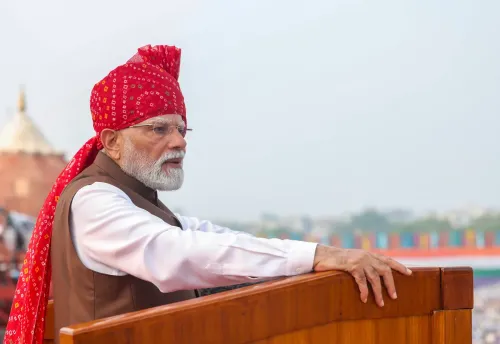
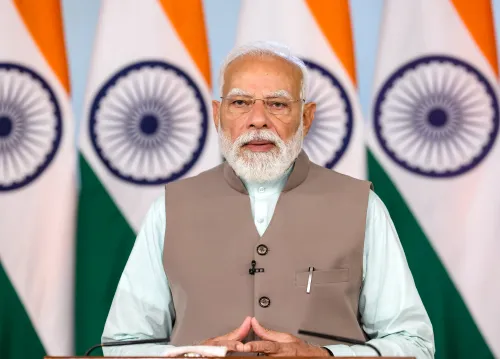
On Independence Day, August 15, 2026, Prime Minister Narendra Modi responded to greetings from his Nepali counterpart, reaffirming India's commitment to deepening the ancient bonds between the two nations — a signal that New Delhi's Neighbourhood First policy remains firmly in place.
Modi's reply to Prime Minister Balendra Shah of Nepal was brief but deliberate: 'We are committed to working together to further strengthen the multifaceted and age-old civilizational ties between India and Nepal for the mutual prosperity and well-being of the people of our nations.' The choice of language — 'civilizational,' 'multifaceted,' 'age-old' — is not incidental. It frames the relationship not as a transactional diplomatic exchange, but as something rooted in shared history, religion, and culture that predates the modern state.
A Relationship Older Than Both Republics
The India-Nepal relationship rests on a foundation unlike almost any other bilateral in South Asia. The 1950 Treaty of Peace and Friendship established open borders and deep security and trade ties. Citizens of both countries can live, work, and own property across the border without a visa — an arrangement that exists nowhere else in the region. Millions of Nepali nationals work in India; Indian pilgrims travel freely to sites like Pashupatinath in Kathmandu. The economic and human interdependence is structural, not symbolic. When Modi took office in 2014, his first foreign visit was to Kathmandu — a pointed signal that Neighbourhood First was more than a slogan. That visit set in motion a wave of connectivity initiatives: cross-border rail links, petroleum pipelines, and expanding hydropower trade agreements that have made Nepal one of India's most consequential energy partners.Why Independence Day Timing Matters
Nepal's greetings to India on August 15 — and Modi's public acknowledgment of them — follow a well-established diplomatic ritual, but the public nature of the exchange on X gives it added visibility. It signals to domestic audiences in both countries that the relationship is warm and active at the highest level. For India, projecting harmony with Kathmandu matters: Nepal sits between India and China, and Beijing has steadily expanded its infrastructure footprint there over the past decade. Every reaffirmation of civilizational kinship is also, implicitly, a strategic statement. The kicker: the next test of these ties will come not in words on a social platform, but in concrete joint announcements — on hydropower, on rail, on border trade. Watch for what follows the greeting.Point of View
High-visibility diplomatic gesture that fits a consistent pattern: New Delhi uses ceremonial moments to reinforce its Neighbourhood First narrative and keep Kathmandu visibly in India's orbit. The emphasis on 'civilizational' framing — rather than transactional or strategic language — is deliberate, invoking shared Hindu and Buddhist heritage to distinguish India's pitch from China's infrastructure-led engagement in Nepal. The real measure of this commitment will be progress on pending hydropower and rail connectivity deals, where implementation has historically lagged behind rhetoric.
NationPress
30 Sept 2026
Frequently Asked Questions
What did PM Modi say to Nepal PM Balendra Shah?
PM Modi thanked Balendra Shah for his Independence Day greetings and reaffirmed India's commitment to strengthening the 'multifaceted and age-old civilizational ties' between India and Nepal for mutual prosperity.
What is India's Neighbourhood First policy with Nepal?
Neighbourhood First is India's foreign policy approach that prioritises engagement with immediate neighbours. With Nepal, it has translated into open-border arrangements, infrastructure connectivity projects, and regular high-level diplomatic contact — symbolised by Modi's first foreign trip in 2014 being to Kathmandu.
What is the 1950 India-Nepal Treaty?
The Treaty of Peace and Friendship signed in 1950 is the foundational agreement governing India-Nepal relations, establishing open borders, trade ties, and security cooperation that remain in force today.
Why does India prioritise relations with Nepal?
Nepal's geographic position between India and China makes it strategically significant. Deep historical, religious, and economic ties — including millions of Nepali workers in India and shared pilgrimage sites — give the relationship both cultural and security dimensions.
What are the key India-Nepal connectivity projects?
Key projects include cross-border rail links, a petroleum pipeline from India to Nepal, and expanding hydropower trade agreements under which Nepal sells electricity to India — areas that represent the active frontier of bilateral cooperation.