CM Rekha Gupta Marks 5 Years of India's Cooperation Ministry
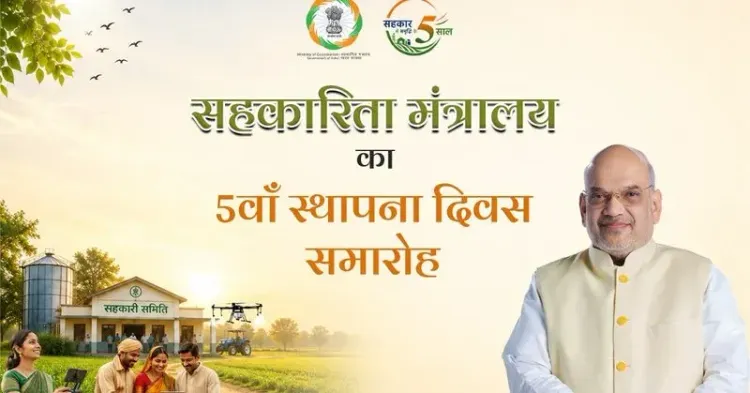
Synopsis
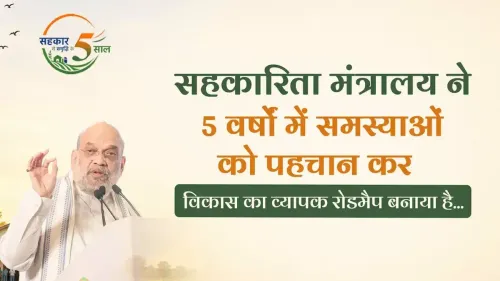
Delhi Chief Minister Rekha Gupta marked the fifth anniversary of India's Ministry of Cooperation on 6 July 2026, praising PM Modi and Amit Shah for giving the cooperative sector new direction through transparency, technology, and rural empowerment under the 'Sahkar se Samridhi' vision.
Key Takeaways
Delhi CM Rekha Gupta congratulated cooperative institutions and workers on 5 years of the Ministry of Cooperation on 6 July 2026 .
The ministry was established in July 2021 — the first dedicated central cooperative ministry since independence.
The government is targeting computerisation of 63,000 PACS (Primary Agricultural Credit Societies) by 2027 .
The Multi-State Cooperative Societies (Amendment) Act, 2023 strengthened autonomy and accountability in the sector.
Key beneficiaries identified include farmers, dairy producers, fishermen , and rural cooperative members.
The hashtag #SahkarSeSamriddhiKe5Saal anchors the BJP's political messaging around cooperative reform.
Delhi Chief Minister Rekha Gupta on Monday, 6 July 2026, congratulated cooperative institutions, workers, and citizens across the country on the completion of five years of the Ministry of Cooperation, crediting the ministry's journey to the guidance of Prime Minister Narendra Modi and the leadership of Union Home and Cooperation Minister Amit Shah.
Context
Gupta's post, written in Hindi, states that under Modi's guidance and Shah's leadership, 'sahkaarита क्षेत्र को नई दिशा, नई गति और नया सामर्थ्य' — 'India's cooperative sector has been given a new direction, new momentum, and new capability' — over the past five years. She extended warm wishes on the occasion, using the hashtag #SahkarSeSamriddhiKe5Saal, meaning 'Five Years of Prosperity Through Cooperation.'
The post underlines the central government's framing of cooperatives as engines of rural prosperity, invoking the slogan 'Sahkar se Samridhi' ('Prosperity Through Cooperation'), which has become the defining motto of the ministry since its inception.
Policy Backdrop
The Ministry of Cooperation was established in July 2021, marking the first time since independence that a dedicated central ministry was carved out exclusively for the cooperative sector, previously overseen as part of the Ministry of Agriculture. The move was seen as a structural acknowledgement of cooperatives' role in rural credit, dairy, fisheries, and marketing.
The legal architecture supporting this push includes the 97th Constitutional Amendment (2011) and the Multi-State Cooperative Societies (Amendment) Act, 2023, which together aimed to strengthen autonomy and accountability across cooperative bodies. A flagship initiative under the ministry has been the computerisation of 63,000 Primary Agricultural Credit Societies (PACS) — grassroots cooperative credit bodies — targeted for completion by 2027.
The ministry's five-year programme has also prioritised transparency and technology adoption, aligning with the broader Atmanirbhar Bharat agenda to reduce rural dependence on informal credit channels and build farmer-owned institutions.
Stakeholders and Impact
The constituencies directly addressed in Gupta's post include farmers, dairy producers, fishermen, and the wider rural economy — groups that collectively represent a substantial share of India's population and depend on cooperative structures for credit access, milk procurement, and market linkages.
Dairy cooperatives, in particular, have been a focal point, complementing existing programmes such as PM-KISAN and the dairy infrastructure fund. The ministry's emphasis on digitisation and a national cooperative database is intended to bring greater accountability to a sector historically marked by fragmented oversight spread across multiple departments.
As Delhi's Chief Minister, Gupta's endorsement of the ministry's anniversary reflects the Bharatiya Janata Party's effort to build a unified political narrative around cooperative reform, connecting state-level leadership with the central government's rural outreach agenda.
What's Next
Attention will now turn to the rollout status of the national cooperative database and the pace of the PACS computerisation drive ahead of its 2027 deadline. There is also anticipation around the possible tabling of a new National Cooperative Policy in Parliament, which would provide a long-term statutory framework for the sector's evolution.
The fifth anniversary marks a moment for the government to consolidate its cooperative reforms into measurable outcomes — particularly for the millions of rural households whose economic lives are intertwined with the health of these institutions.
Point of View
The message reinforces the party's chain-of-command optics on rural governance. The five-year milestone gives the BJP a structured moment to claim credit across a sector touching hundreds of millions of rural voters — farmers, dairy producers, and fishermen — before the PACS computerisation drive reaches its 2027 deadline. Whether the ministry's institutional ambitions translate into measurable rural income gains will ultimately determine how durable this political dividend proves to be.
NationPress
5 Oct 2026
Frequently Asked Questions
When was the Ministry of Cooperation established in India?
The Ministry of Cooperation was established in July 2021 , becoming the first dedicated central ministry for the cooperative sector since India's independence, carved out from the Ministry of Agriculture.
What is 'Sahkar se Samridhi'?
'Sahkar se Samridhi' means 'Prosperity Through Cooperation' in Hindi. It is the guiding motto of India's Ministry of Cooperation, reflecting the government's goal of using cooperative institutions to drive rural economic growth.
What is the PACS computerisation scheme?
The PACS computerisation scheme targets the digital upgrade of 63,000 Primary Agricultural Credit Societies — grassroots rural credit bodies — with a completion deadline of 2027 , aimed at improving transparency and financial access for farmers.
Why did Delhi CM Rekha Gupta post about the Ministry of Cooperation?
Gupta posted to mark the fifth anniversary of the Ministry of Cooperation on 6 July 2026 , extending congratulations to cooperative institutions and workers while crediting PM Modi and Amit Shah for the sector's progress.
What legal changes support India's cooperative reforms?
The 97th Constitutional Amendment (2011) and the Multi-State Cooperative Societies (Amendment) Act, 2023 form the primary legal framework, strengthening autonomy, accountability, and governance across cooperative bodies in India.