Rajnath Singh: Indian Diaspora Are Cultural Ambassadors
Synopsis
Defence Minister Rajnath Singh on 20 October 2026 honoured the global Indian diaspora as India's 'Cultural Ambassadors and Extended Family,' reaffirming the government's long-standing doctrine of treating overseas Indians as agents of soft power and civilisational identity — not just economic contributors.
Key Takeaways
Rajnath Singh posted on X on 20 October 2026 calling the Indian diaspora India's 'Cultural Ambassadors' and 'Extended Family.' He emphasised that overseas Indians strengthen India's identity through culture and traditions, beyond their economic contributions to host nations.
The Government of India has held Pravasi Bharatiya Divas annually since 2003 to formally recognise diaspora contributions.
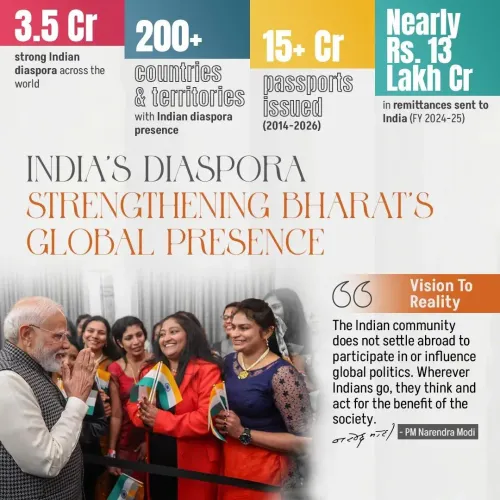
The Indian diaspora numbers roughly 32 million people spread across the globe, making it one of the world's largest overseas communities.
Singh's statement reflects a whole-of-government stance on diaspora soft power, notable because it comes from the Defence portfolio rather than External Affairs.
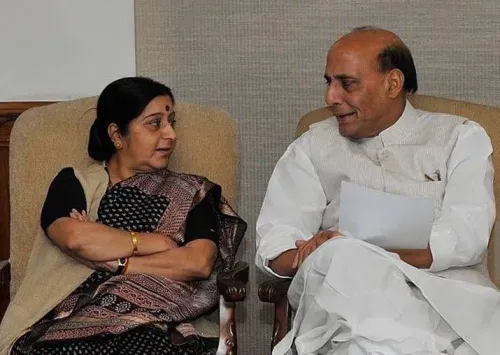
Every Indian living abroad carries two homelands in their chest — and Union Defence Minister Rajnath Singh put that idea into sharp relief on Tuesday, 20 October 2026, saluting the global Indian community as both contributors to their adopted nations and tireless custodians of Indian civilisation.
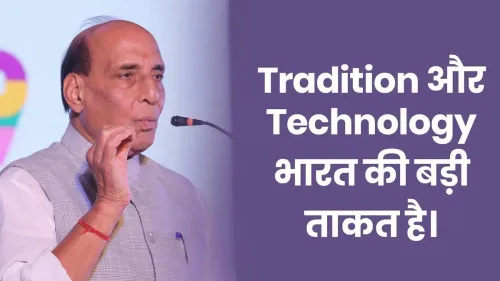
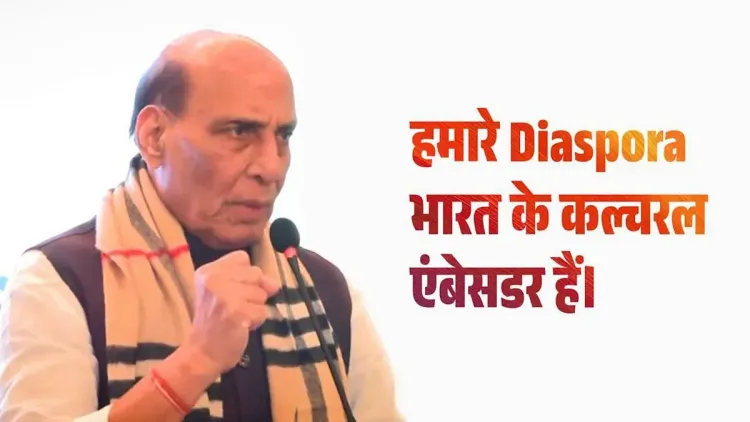
Writing in Hindi on X, Singh said: 'विदेशों में रहने वाले भारतीय न केवल वहां की प्रगति में योगदान देते हैं, बल्कि अपनी संस्कृति और परंपराओं के माध्यम से भारत की पहचान को भी मजबूत करते हैं।' ('Indians living abroad not only contribute to the progress of those countries, but also strengthen India's identity through their culture and traditions.') He concluded with a phrase that distils decades of official outreach into one line: the diaspora are India's 'Cultural Ambassadors' and its 'Extended Family.'
A diaspora recast as soft-power engines
The framing is neither new nor accidental. Since 2003, the Government of India has convened Pravasi Bharatiya Divas — an annual convention that formally recognises the contributions of overseas Indians and cements the idea that the roughly 32 million-strong global Indian diaspora is an arm of the nation's foreign presence, not merely a source of remittances. Singh's post is a public restatement of that doctrine.
Successive governments have leaned on this framing to project soft power: Indian classical dance in London, temple consecrations in Houston, yoga festivals in Tokyo — each is quietly understood as cultural diplomacy carried out not by embassies but by ordinary families who packed their traditions into their luggage. Singh's choice of the word 'ambassadors' makes that quiet understanding explicit.
Why a Defence Minister is speaking the language of cultural diplomacy
It is worth noting who is saying this. Rajnath Singh — a former Chief Minister of Uttar Pradesh and former Union Home Minister — commands one of the most powerful portfolios in the Cabinet. His voice on diaspora pride carries weight beyond a ceremonial sentiment. Senior Cabinet figures articulating this narrative signal that the positioning of overseas Indians as strategic national assets is a whole-of-government stance, not just the brief of the Ministry of External Affairs.
The post was accompanied by a video — the content of which underscores that this was a considered, produced statement rather than an off-the-cuff remark. The framing of the diaspora as 'Extended Family' echoes the constitutional and diplomatic concept of Vasudhaiva Kutumbakam ('the world is one family'), a phrase India has championed on multilateral stages in recent years.
For millions of Indians in the United States, United Kingdom, Canada, Australia, the Gulf states, and beyond, the message is pointed: your cultural persistence is not nostalgia — it is national service. That is a powerful reframe, and one that lands differently coming from the Defence Minister's office.
Point of View
Investment — into a full-spectrum soft-power doctrine where cultural continuity is treated as strategic value. The choice of the Defence Minister, rather than the External Affairs Minister, to articulate this publicly broadens the government's ownership of the narrative. It also sets expectations ahead of events like Pravasi Bharatiya Divas, reinforcing that cultural diplomacy is not a niche ministry brief but a Cabinet-level priority. The 'Extended Family' metaphor, repeated across BJP-era external outreach, is becoming a settled vocabulary of Indian statecraft.
NationPress
20 Oct 2026
Frequently Asked Questions
What did Rajnath Singh say about the Indian diaspora?
On 20 October 2026, Rajnath Singh posted on X that Indians living abroad contribute to the progress of their host countries and simultaneously strengthen India's identity through culture and traditions, calling the diaspora India's 'Cultural Ambassadors' and 'Extended Family.'
What is Pravasi Bharatiya Divas?
Pravasi Bharatiya Divas is an annual convention organised by the Government of India since 2003 to recognise the contributions of overseas Indians and strengthen ties between the Indian state and its global diaspora.
How large is the Indian diaspora?
The global Indian diaspora numbers roughly 32 million people, making it one of the largest overseas communities in the world, spread across countries including the United States, United Kingdom, Canada, Australia, and the Gulf states.
Why is Rajnath Singh's role significant in diaspora diplomacy?
As Union Defence Minister and a senior BJP leader, Singh's public articulation of diaspora as soft-power assets signals that this is a whole-of-government stance in India, not confined to the Ministry of External Affairs alone.
What does 'Cultural Ambassadors' mean in the context of the Indian diaspora?
The term, as used by Rajnath Singh, frames overseas Indians as informal representatives of Indian civilisation abroad — through language, festivals, arts, and traditions — serving a diplomatic function even without official titles.