HP CM Office: 174 Chitta Smugglers Jailed, Rs 51 Cr Assets Seized
Synopsis
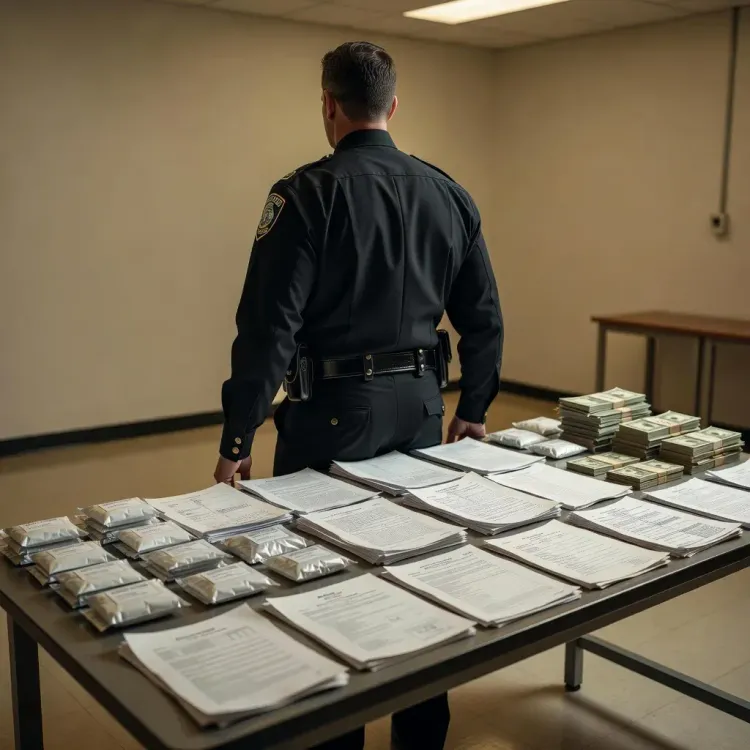
The Chief Minister's Office of Himachal Pradesh says the Sukhu-led Congress government has jailed 174 chitta smugglers, seized Rs 51 crore in illegal assets, and identified 66 suspect properties under an NDPS property-attachment drive that the previous BJP government allegedly failed to activate.
Key Takeaways
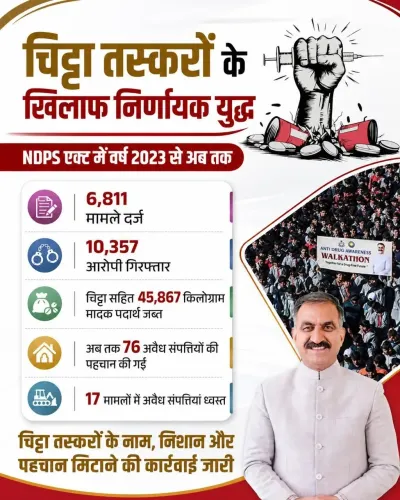
174 chitta smugglers have been imprisoned under the Himachal Pradesh government's ongoing anti-narcotics enforcement drive.
Illegal assets worth Rs 51 crore have been attached under NDPS property-forfeiture provisions.
66 suspected properties have been identified for further financial investigation and potential attachment.
Financial investigation of drug-trafficking cases is being pursued as a structured campaign , not just incidental to arrests.
The CM Office explicitly contrasts the current drive with the previous BJP government's alleged failure to operationalise the same law.
The legal basis is the central NDPS Act, 1985 (amended 2014), with state-level rules framed during 2017–2022.
The Chief Minister's Office of Himachal Pradesh posted on X (formerly Twitter) on Friday, June 5, 2026, highlighting the Congress government's record under a state-level property-attachment law targeting drug traffickers — and pointedly contrasting it with what it called the previous BJP government's failure to operationalise the same legislation.
Context
The post, written in Hindi, states: 'Jabki pichhli BJP sarkar is kanoon ko laagu karne mein vifal rahi thi' ('Whereas the previous BJP government had failed to implement this law'). Against that backdrop, the Sukhvinder Singh Sukhu-led Congress administration lists four enforcement milestones it claims to have achieved since taking office in December 2022.
According to the post, 174 chitta smugglers have been sent to prison, illegal assets worth Rs 51 crore have been attached, financial investigations into drug-trafficking cases have been pursued as a dedicated campaign, and 66 suspected properties have been identified for further action. 'Chitta' is a colloquial term in Himachal Pradesh and neighbouring states for heroin and high-potency synthetic drugs that have devastated young populations across the region.
Policy Backdrop
The legal scaffolding for these actions comes from the central Narcotic Drugs and Psychotropic Substances (NDPS) Act, 1985, whose 2014 amendments significantly strengthened provisions for the attachment and forfeiture of properties derived from drug trafficking. States are responsible for notifying rules and deploying enforcement machinery to activate these provisions.
Himachal Pradesh framed state-level rules enabling attachment of NDPS-linked properties during the 2017–2022 period — under the previous BJP administration — but the current government's position is that those rules were never meaningfully enforced until the Congress came to power. The post frames the current drive not as a new legislative initiative but as an acceleration of financial investigation alongside conventional arrest-and-prosecution work.
Northern Indian states, including Punjab and Uttarakhand — both of which share borders with Himachal Pradesh — have run parallel property-attachment drives under the NDPS framework since the mid-2010s, targeting the financial infrastructure of cross-border heroin and synthetic-drug supply chains rather than relying solely on arrests.
Stakeholders and Impact
The primary targets of the drive are trafficking networks that move narcotics through Himachal Pradesh's highway corridors and mountain passes. State police and revenue officials are the operational arms of the campaign, coordinating arrests with financial investigations to trace and attach proceeds of crime.
The broader beneficiaries are communities — particularly youth in drug-affected districts — who have borne the social cost of the chitta epidemic. Property attachment, by stripping traffickers of financial assets, is designed to disrupt the economic incentive structure of organised drug supply chains in ways that imprisonment alone does not.
What's Next
Scrutiny will now focus on the Himachal Pradesh Home Department's quarterly reporting on attachment proceedings, and on whether any of the 66 identified properties face legal challenges before the Appellate Tribunal under the NDPS Act. The government's framing of this as an ongoing 'campaign' rather than a concluded operation signals that further attachment actions are expected.
Any reference to dedicated anti-narcotics enforcement cells in the upcoming 2026–27 state budget would indicate whether the administration intends to institutionalise these efforts beyond the current political cycle — a test of whether the drive outlasts its partisan messaging.
Point of View
The administration signals a more sophisticated enforcement doctrine that targets trafficking economics, not just traffickers. This mirrors a broader trend across northern Indian states where NDPS asset-forfeiture has become a political performance metric. The credibility of the claimed figures will ultimately depend on Home Department disclosures and court records, which will be the real test of whether the campaign is substantive or primarily rhetorical.
NationPress
19 Sept 2026
Frequently Asked Questions
What is chitta and why is it a problem in Himachal Pradesh?
Chitta is a local term for heroin and high-potency synthetic drugs that have become a serious public-health and law-enforcement crisis in Himachal Pradesh, Punjab, and neighbouring states, particularly affecting young people in rural and semi-urban areas.
How many drug smugglers have been arrested in Himachal Pradesh in 2026?
According to the Chief Minister's Office, 174 chitta smugglers have been sent to jail under the current Congress government's enforcement drive, though the exact time period covered by this figure was not specified in the post.
What law is Himachal Pradesh using to seize drug traffickers' property?
The state is using property-attachment and forfeiture provisions under the central Narcotic Drugs and Psychotropic Substances (NDPS) Act, 1985 , strengthened by its 2014 amendments , along with state-level rules framed during 2017–2022.
Why is the Himachal Pradesh government criticising the previous BJP administration on drugs?
The CM Office claims the previous BJP government failed to operationalise the property-attachment law despite the rules being in place, and that the current Congress government under Sukhvinder Singh Sukhu is the first to run it as a sustained enforcement campaign.
What happens to the Rs 51 crore in seized drug assets in Himachal Pradesh?
Assets attached under the NDPS Act are subject to formal forfeiture proceedings; they can be challenged before an Appellate Tribunal, and if the forfeiture is confirmed, the proceeds typically vest with the state government.