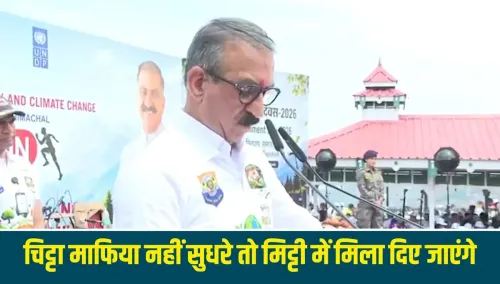
HP CM Office warns drug mafia: 17 properties razed, 174 jailed
Synopsis
The Chief Minister's Office of Himachal Pradesh issued a final warning to chitta drug mafias on June 8, 2026, citing demolition of 17 traffickers' properties, 174 arrests, and seizure of Rs 51 crore in illegal assets as the state's zero-tolerance campaign accelerates.
Key Takeaways
The Chief Minister's Office of Himachal Pradesh issued a 'final warning' to chitta drug mafias on June 8, 2026 .
Properties of 17 smugglers have been demolished as part of the ongoing crackdown.
174 criminals have been imprisoned under the state's anti-narcotics drive.
Illegal assets worth Rs 51 crore have been seized by authorities.
The campaign targets 'chitta' — synthetic white-powder narcotics — prevalent in northern India's border districts.
The legal basis for asset actions is the NDPS Act, 1985 , supplemented by state revenue and demolition powers.
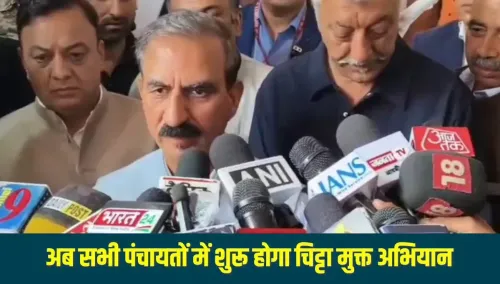
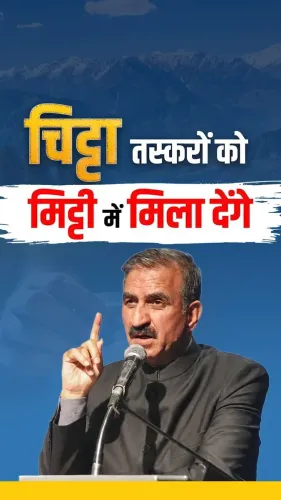
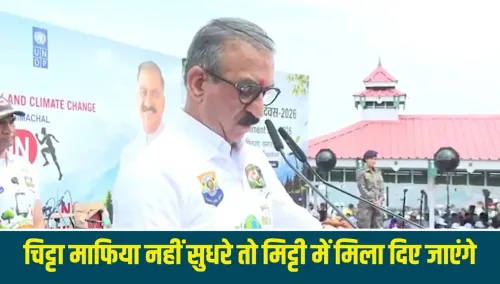
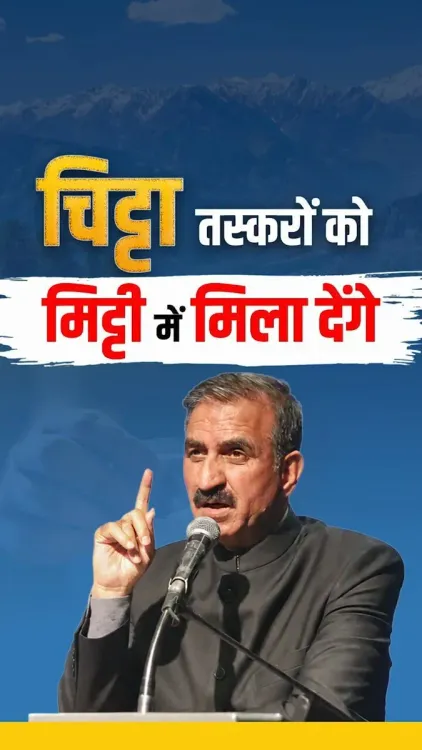
The Chief Minister's Office of Himachal Pradesh issued a stark warning to drug traffickers on Monday, June 8, 2026, declaring that narcotics networks operating in the state face total destruction if they do not abandon their activities. The post, shared from the official CMO account, cited sweeping enforcement figures as evidence that the state's zero-tolerance campaign against synthetic drugs is producing concrete results.
The post, written in Hindi, states: 'Chitta maafiyaon ke liye yeh antim chetavni hai ki sudhar jao, nahin to mitti mein mila diye jaoge' — ('This is the final warning to chitta mafias: reform yourselves, or you will be ground to dust.'). The statement names 'chitta' — a street term for heroin or synthetic white-powder narcotics widely circulated in northern India — as the specific target of the crackdown.
Context
Himachal Pradesh shares a border with Punjab, a state long identified as a primary corridor for synthetic drug trafficking into the Himalayan region. The proximity has made several Himachal districts vulnerable to the same narcotics networks that have devastated communities across the northern plains. Chief Minister Sukhvinder Singh Sukhu, who took office in December 2022, made anti-narcotics enforcement a centrepiece of his administration's public-order agenda from the outset. The CMO's post lists three specific enforcement milestones: properties of 17 smugglers have been demolished, 174 criminals have been sent to prison, and Rs 51 crore worth of illegal assets have been seized. These figures frame the warning not as rhetoric but as a record of sustained operational activity.Policy Backdrop
The legal architecture underpinning these actions is the Narcotic Drugs and Psychotropic Substances (NDPS) Act, 1985, which grants enforcement agencies broad powers to seize and attach property linked to drug trafficking. State governments can also invoke provisions under state-level laws and revenue statutes to demolish or confiscate assets tied to convicted or accused traffickers. Following the 2022 assembly elections, the Himachal Pradesh government announced a formal zero-tolerance policy against drug networks. That commitment has since been operationalised through coordinated drives by the Himachal Pradesh Police, involving raids, arrests, and asset-attachment proceedings. Similar enforcement patterns have been observed across neighbouring states including Punjab and Haryana, reflecting a broader northern-India consensus on targeting traffickers' financial holdings alongside their persons.Stakeholders and Impact
The most immediate stakeholders are the drug trafficking networks themselves, whose financial base is being systematically dismantled through property demolitions and asset seizures. Beyond the criminal networks, the crackdown is aimed at protecting Himachal Pradesh's youth, who have been identified by state authorities as the primary victims of the chitta epidemic. Local communities in border districts stand to benefit from reduced narcotics availability, while families of those already incarcerated face the additional pressure of property actions. Civil liberties observers have, in similar enforcement drives elsewhere in India, raised questions about due process in demolitions — a dimension that state authorities will need to address as the campaign intensifies.What's Next
The language of 'final warning' in the CMO's post signals that the administration considers the current phase of the crackdown to be entering a more aggressive stage. Watchers of Himachal Pradesh governance will look for periodic seizure reports from the state police and any new de-addiction or rehabilitation budget lines in upcoming assembly sessions. The administration's ability to sustain enforcement momentum while building parallel rehabilitation infrastructure will determine the long-term impact of what is, for now, primarily a punitive campaign.Point of View
Street-level language — designed to project state authority directly into the social spaces where drug networks recruit and operate. By leading with demolition and asset-seizure figures rather than arrest counts alone, the Sukhu administration is signalling that it intends to attack traffickers' economic incentives, not merely their liberty. This approach mirrors a broader pattern across northern Indian states where governments have found that property actions generate stronger deterrence optics than conventional criminal prosecution. The durability of this campaign will ultimately be tested by whether rehabilitation infrastructure keeps pace with punitive enforcement, or whether the crackdown remains a headline-driven exercise.
NationPress
24 Oct 2026
Frequently Asked Questions
What is 'chitta' and why is it a problem in Himachal Pradesh?
'Chitta' is a street term for heroin or synthetic white-powder narcotics that have become widespread in northern India, particularly in states bordering Punjab. Himachal Pradesh's proximity to established drug-trafficking corridors has made its youth especially vulnerable to the substance.
How many properties have been demolished in Himachal Pradesh's drug crackdown?
According to the Chief Minister's Office, properties belonging to 17 drug smugglers have been demolished as part of the state's ongoing anti-narcotics campaign.
How much illegal property has been seized in HP's anti-drug drive?
The CMO's post states that Rs 51 crore worth of illegal assets have been seized from drug traffickers in Himachal Pradesh.
What law allows the government to demolish or seize drug traffickers' property?
The primary legal framework is the Narcotic Drugs and Psychotropic Substances (NDPS) Act, 1985 , which empowers authorities to attach and forfeit property linked to drug trafficking. State revenue and demolition statutes may also be invoked.
Who is the Chief Minister of Himachal Pradesh leading this crackdown?
Sukhvinder Singh Sukhu has been Chief Minister of Himachal Pradesh since December 2022 and has made anti-narcotics enforcement a central plank of his administration's public-order agenda.