HP CM Office: 10,357 Arrested, 45,867 kg Drugs Seized Since 2023

Synopsis
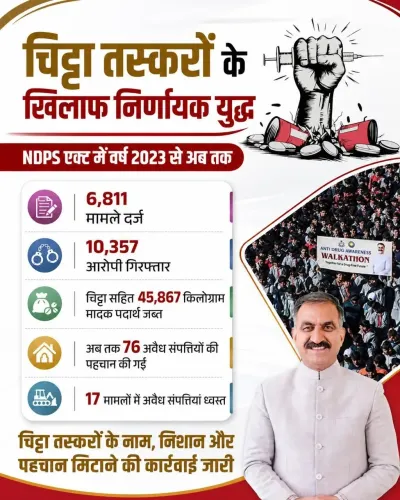
The Himachal Pradesh Chief Minister's Office has reported that since 2023, state police registered 6,811 drug cases, arrested 10,357 accused, seized 45,867 kg of narcotics including chitta, identified 76 illegal properties, demolished 17, and dismantled 19 major trafficking networks.
Key Takeaways
6,811 drug cases registered in Himachal Pradesh from 2023 to June 2026 .
10,357 accused arrested under the anti-narcotics drive.
45,867 kilograms of narcotics, including chitta , seized by state police.
76 illegal properties linked to drug trafficking identified; 17 demolished.
19 major chitta trafficking networks dismantled across the state.
The campaign operates under the NDPS Act, 1985 , with asset forfeiture provisions central to the strategy.
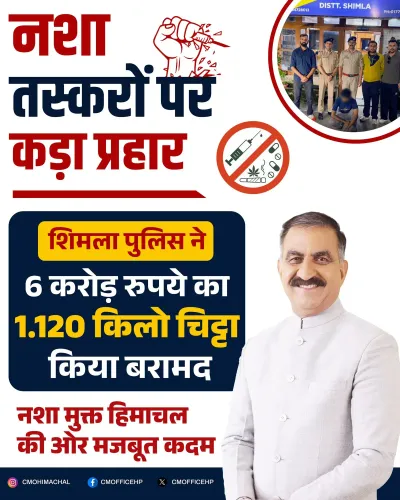
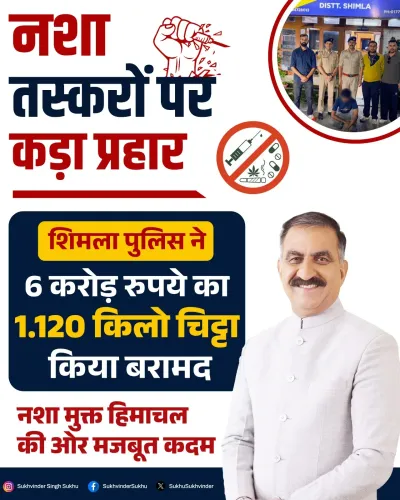
The Chief Minister's Office of Himachal Pradesh shared a sweeping update on the state's anti-narcotics campaign on Friday, 26 June 2026, disclosing that since 2023, authorities have registered 6,811 cases, arrested 10,357 accused, and seized 45,867 kilograms of narcotics including the synthetic opioid locally known as chitta.
Context
The official post from the Chief Minister's Office listed a series of enforcement milestones: 76 illegal properties identified, 17 cases in which such properties were demolished, and 19 major chitta trafficking networks dismantled. The data covers the period from 2023 to the present, framing the disclosures as evidence of sustained institutional pressure on drug supply chains operating within the state.
Chitta — a colloquial term for heroin or a heroin-methamphetamine mix — has been a focal concern for law enforcement across Himachal Pradesh and neighbouring northern states. Its low street price and high addictiveness have made it a primary target of state-level enforcement drives.
Policy Backdrop
All arrests and seizures cited by the Chief Minister's Office fall under the Narcotic Drugs and Psychotropic Substances (NDPS) Act, 1985, which provides the central legal framework for drug prosecutions across India. Amendments in 2001 and 2014 strengthened provisions for asset forfeiture and introduced enhanced penalties for commercial-scale trafficking — the legal basis on which the 17 property demolitions and 76 property identifications rest.
Himachal Pradesh Police serves as the primary implementing agency, working within India's federal structure where states enforce central narcotics legislation. The Narcotics Control Bureau, the central coordinating body, typically supports state agencies on cases involving inter-state or cross-border trafficking networks.
Stakeholders and Impact
The figures carry direct implications for Himachal Pradesh's youth population, which law enforcement officials have repeatedly identified as the demographic most exposed to synthetic opioid abuse. Disrupting 19 major trafficking networks targets the supply infrastructure rather than only street-level possession, a tactical shift that mirrors enforcement approaches adopted in Punjab and other northern states since 2022.
Property demolitions — a tool increasingly used by state governments to signal zero tolerance — serve a dual purpose: neutralising logistical hubs and acting as a public deterrent. The identification of 76 illegal properties suggests an ongoing asset-mapping exercise that may yield further action.
What's Next
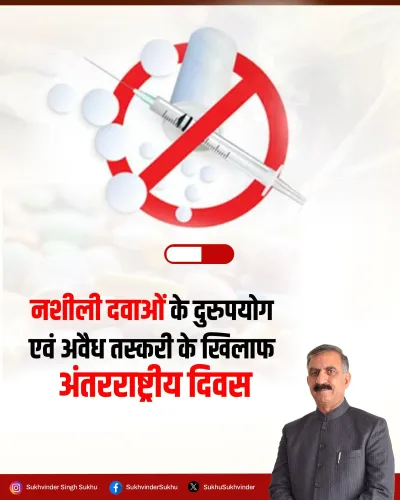
The Chief Minister's Office has not announced specific new measures alongside these disclosures, but the data release on International Day Against Drug Abuse and Illicit Trafficking — observed on 26 June each year — signals continued political emphasis on the anti-narcotics agenda. Analysts will watch for possible expansion of joint operations with central agencies and any new asset-forfeiture rules that the state assembly may consider in upcoming sessions.
With 76 properties identified but only 17 cases resulting in demolition so far, a significant pipeline of enforcement action remains pending, suggesting the campaign's visible impact is likely to grow in the months ahead.
Point of View
Rather than just seizure tonnage, reflects a deliberate pivot toward disrupting trafficking economics rather than chasing headline numbers. This mirrors a broader northern-India enforcement pattern where states compete to demonstrate toughness on synthetic opioids, particularly chitta, which has become a defining law-and-order issue. Whether the pace of prosecutions and convictions matches the pace of arrests will be the harder metric to watch.
NationPress
24 Sept 2026
Frequently Asked Questions
How many drug cases have been registered in Himachal Pradesh since 2023?
According to the Chief Minister's Office of Himachal Pradesh, 6,811 drug cases have been registered in the state from 2023 to June 2026.
How much chitta has been seized in Himachal Pradesh?
The CM Office reported that 45,867 kilograms of narcotics, including chitta, have been seized since 2023. Chitta is a synthetic opioid that has been a primary enforcement target in northern India.
What is chitta and why is it a problem in Himachal Pradesh?
Chitta is a colloquial term for heroin or a heroin-methamphetamine mixture that is cheap, highly addictive, and widely trafficked across northern Indian states including Himachal Pradesh and Punjab. Its affordability has made it especially prevalent among youth.
How many drug trafficking networks have been busted in Himachal Pradesh?
19 major chitta trafficking networks have been dismantled by Himachal Pradesh Police since 2023, according to the official CM Office update.
What legal powers allow Himachal Pradesh to demolish properties linked to drug trafficking?
Property demolitions in drug cases are carried out under the asset forfeiture provisions of the Narcotic Drugs and Psychotropic Substances (NDPS) Act, 1985 , strengthened by amendments in 2001 and 2014 that allow authorities to identify and act against illegally acquired assets.