HP CM Office launches Phase 2 of anti-chitta campaign in schools
Synopsis
The Himachal Pradesh government has completed Phase 1 of its state-wide anti-chitta drive and launched Phase 2, deploying Deputy Commissioners and Superintendents of Police to schools and colleges to educate youth on the dangers of synthetic drug abuse.
Key Takeaways
The Chief Minister's Office of Himachal Pradesh announced a state-wide public movement against chitta on 15 June 2026 .
Phase 1 of the anti-chitta campaign has been declared successfully completed.
In Phase 2 , Deputy Commissioners and Superintendents of Police will personally visit schools and colleges across the state.
The campaign targets youth as the primary audience for drug-awareness outreach.
The drive aligns with the central government's Nasha Mukt Bharat Abhiyan framework launched in 2020 .
The government claims the campaign has received broad public support across Himachal Pradesh.
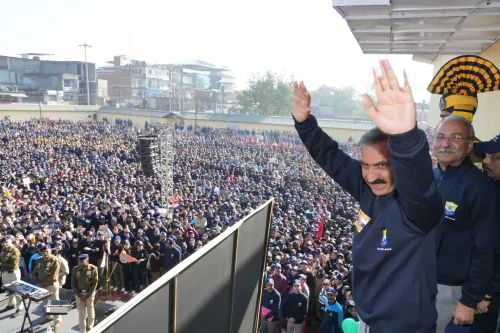
The Chief Minister's Office of Himachal Pradesh announced on Monday, 15 June 2026 that the state government has launched a mass public movement against chitta — a potent synthetic drug — across the state, with the first phase of the campaign now successfully concluded. In the second phase, district-level officials including Deputy Commissioners and Superintendents of Police will visit schools and colleges to directly engage with young people on the dangers of drug abuse.
Context
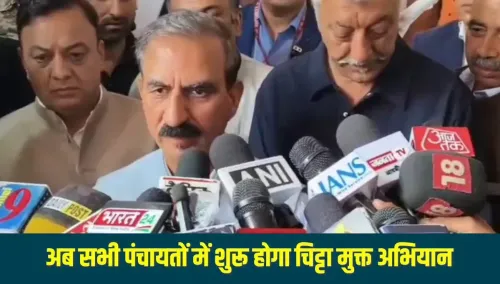
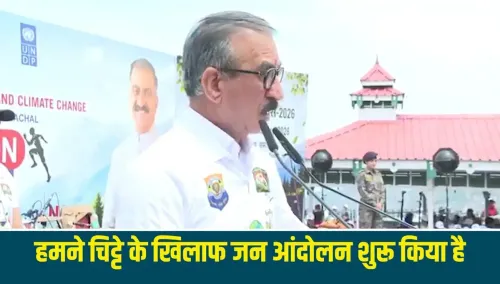
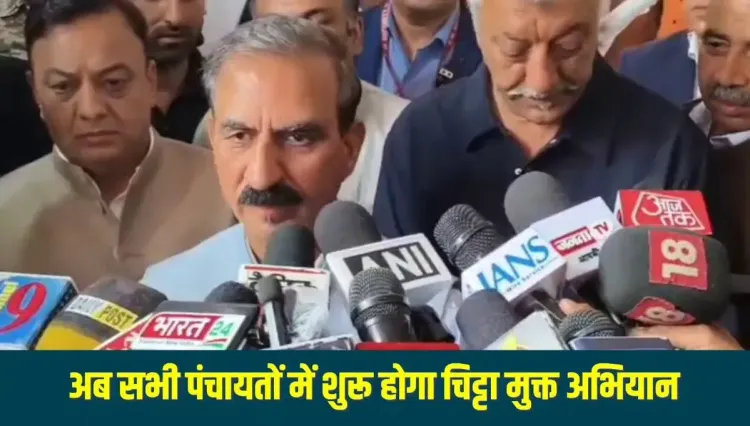
The post from the official CMO Himachal Pradesh X account states: 'हमारी सरकार ने चिट्टा के खिलाफ पूरे प्रदेश में जन-आंदोलन शुरू किया है' ('Our government has launched a public movement against chitta across the entire state'), adding that the campaign has received broad public support. The announcement marks a deliberate escalation from a general awareness drive to a targeted institutional outreach in educational settings.
Chitta, a street name for heroin-based synthetic drugs, has become a significant public health crisis in Himachal Pradesh, particularly among youth in urban and semi-urban areas. The state has been among the northern Indian states most visibly affected by the spread of synthetic opioids in the past decade.
Policy Backdrop
The campaign builds on the framework established by the Narcotic Drugs and Psychotropic Substances (NDPS) Act of 1985, which governs anti-narcotics enforcement across India. At the central level, the Nasha Mukt Bharat Abhiyan, launched in 2020, created a structured template for state governments to run awareness programmes targeting youth, women, and educational institutions.
Himachal Pradesh's two-phase approach — combining public mobilisation with official school outreach — mirrors a broader pattern seen in northern states where enforcement alone has proved insufficient to curb demand. Pairing police action with preventive education in schools is now considered a standard component of state-level drug-control strategy.
Stakeholders and Impact
Students and young people in schools and colleges across Himachal Pradesh are the primary target of the second phase. Having Deputy Commissioners and Superintendents of Police personally lead sessions in educational institutions signals that the state is deploying its senior administrative machinery — not just health workers — to deliver the anti-drug message.
Parents, teachers, and local community groups are implicitly part of the 'jan-andolan' (public movement) framing, suggesting the government is seeking to build a social consensus around drug refusal rather than relying solely on law enforcement. This community-ownership model has shown traction in similar campaigns in neighbouring Punjab and Uttarakhand.
What's Next
The effectiveness of the second phase will be measured by the depth and consistency of official outreach across Himachal Pradesh's 12 districts. Observers will watch whether the school sessions are followed by rehabilitation referral pathways or coordinated action with de-addiction centres.
Any data on drug seizures, registered cases, or student participation figures released in coming weeks will serve as early indicators of the campaign's on-ground impact. The state government's ability to sustain momentum beyond two phases — potentially into community and family-level interventions — will determine the campaign's long-term legacy.
Point of View
Reducing the perception of this as a purely coercive law-enforcement exercise. This two-phase structure, with enforcement preceding education, reflects a maturing state-level playbook on synthetic drug control that other northern states have also begun to adopt. Whether the campaign translates into measurable demand reduction will depend on whether rehabilitation infrastructure is scaled alongside the awareness push.
NationPress
14 Sept 2026
Frequently Asked Questions
What is chitta and why is it a problem in Himachal Pradesh?
Chitta is a street name for a heroin-based synthetic drug that has become a serious public health crisis in Himachal Pradesh, particularly affecting youth in urban and semi-urban areas. Its low cost and high addictive potential have made it one of the most dangerous substances in northern India.
What is Phase 2 of Himachal Pradesh's anti-chitta campaign?
In Phase 2, Deputy Commissioners and Superintendents of Police will visit schools and colleges across Himachal Pradesh to conduct awareness sessions for students and young people about the dangers of chitta and drug abuse.
Has Phase 1 of the HP anti-chitta campaign been completed?
Yes. The Chief Minister's Office of Himachal Pradesh announced on 15 June 2026 that Phase 1 of the campaign has been successfully completed, with the government citing broad public support for the initiative.
What is Nasha Mukt Bharat Abhiyan and how does it relate to this campaign?
Nasha Mukt Bharat Abhiyan is a central government scheme launched in 2020 to drive awareness against substance abuse across Indian states. Himachal Pradesh's anti-chitta drive aligns with this national framework, adapting it to the state's specific synthetic drug challenge.
Which officials are involved in the Himachal Pradesh school drug awareness drive?
Deputy Commissioners and Superintendents of Police — senior district-level administrative and law enforcement officials — are leading outreach sessions in schools and colleges as part of the campaign's second phase.