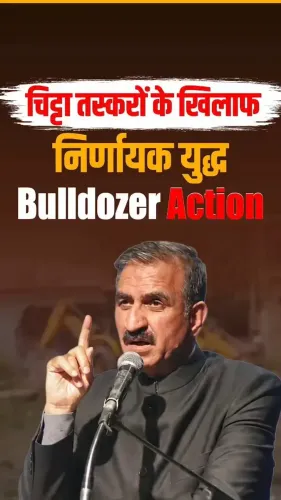
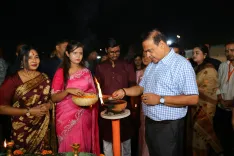
HP CM's Office declares zero tolerance on chitta drug menace
Synopsis
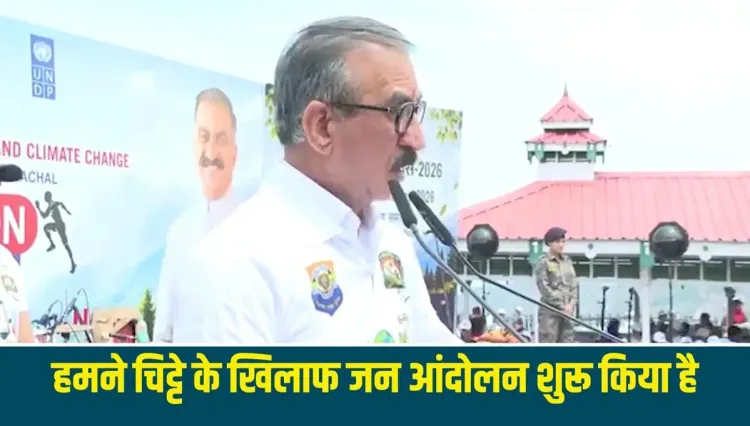
The Chief Minister's Office of Himachal Pradesh has declared a zero-tolerance policy against chitta, announcing a mass public movement backed by youth, women, and children. The state government says every section of society is lending unprecedented support to the campaign.
Key Takeaways
The Chief Minister's Office of Himachal Pradesh announced a comprehensive public movement against chitta on June 5, 2026 .
The government states its policy on chitta is one of zero tolerance .
Youth, women, and children are highlighted as active participants driving the campaign.
The movement claims unprecedented support from every section of society .
The announcement mirrors anti-drug community-mobilisation models seen in neighbouring states Punjab and Haryana .
The Congress-led Sukhu government has been in power in Himachal Pradesh since December 2022 .
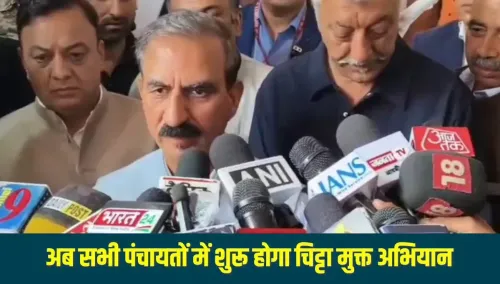
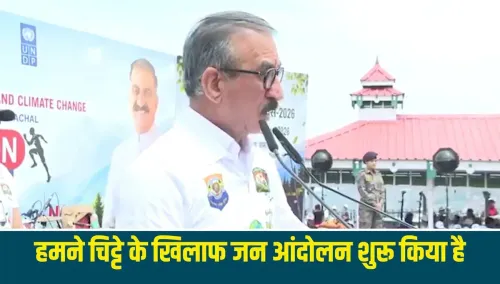
The Chief Minister's Office of Himachal Pradesh declared on Friday, June 5, 2026 that the state government has launched a mass public movement against chitta — the street name for synthetic heroin variants — and reaffirmed its zero-tolerance policy on the drug, citing broad-based participation from across society.
Context
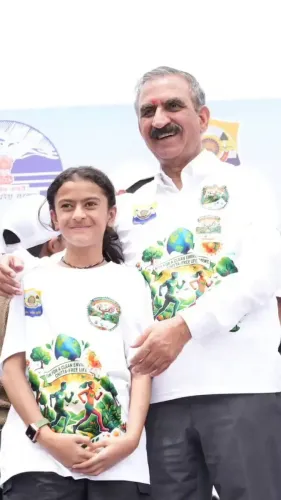
The post states: 'Hamari sarkar ne chitte ke khilaf vyapak jan andolan khada kiya hai, jise samaj ke har varg ka abhutpurv sahyog mil raha hai' — 'Our government has built a comprehensive public movement against chitta, which is receiving unprecedented support from every section of society.' The office further noted that the active participation of youth, women, and children has transformed the campaign into a truly people-driven mission.
The post closes with an unambiguous policy statement: 'Our policy towards chitta is zero tolerance.' The message was accompanied by a video, suggesting the communication is part of a sustained outreach effort rather than a one-off announcement.
Policy Backdrop
Himachal Pradesh, a northern hill state that attracts heavy tourist footfall, has faced documented challenges with synthetic opioid abuse in select districts. The term chitta refers broadly to white-powder heroin derivatives that have spread through several north Indian states over the past decade.
The Congress-led government under Chief Minister Sukhvinder Singh Sukhu, in power since December 2022, has positioned community mobilisation as a central pillar of its anti-drug strategy, operating under the framework of the Narcotic Drugs and Psychotropic Substances (NDPS) Act. This mirrors public-participation models that neighbouring states such as Punjab and Haryana have deployed over the past decade, combining stricter policing with grassroots awareness drives.
Stakeholders and Impact
The government's messaging explicitly elevates youth, women, and children as active agents of change rather than passive beneficiaries of policy — a framing that signals intent to embed anti-drug norms at the household and community level. Schools, colleges, and local self-governance bodies are typically the operational nodes for such campaigns in the region.
Local communities in districts with higher reported substance-abuse incidence stand to be most directly affected. The emphasis on 'every section of society' also suggests outreach to religious institutions, self-help groups, and panchayat bodies, which have historically served as credible messengers in rural Himachal Pradesh.
What's Next
Observers will track whether the state follows this communication with measurable enforcement milestones — such as seizure data, conviction rates under the NDPS Act, or the rollout of formal school and college awareness curricula. Any proposed amendments to state excise or policing regulations would mark an escalation from awareness to structural reform.
The zero-tolerance declaration sets a clear political benchmark: the Sukhu government will be judged on whether enforcement statistics and community-level outcomes align with the ambition of a state-wide jan andolan in the months ahead.
Point of View
Making accountability diffuse while maximising optics. For the Sukhu government, which has faced pressure on governance delivery since 2022, a visible social campaign offers both moral high ground and a mobilisation tool ahead of future electoral cycles. The explicit naming of youth, women, and children as participants echoes a broader north Indian political pattern where anti-drug messaging doubles as community-organising. The real test will be whether the zero-tolerance declaration is backed by verifiable enforcement data and institutional follow-through rather than remaining a communications exercise.
NationPress
20 Oct 2026
Frequently Asked Questions
What is chitta and why is it a problem in Himachal Pradesh?
Chitta is a street name for synthetic heroin derivatives that have spread through north Indian states. Himachal Pradesh has faced substance-abuse challenges in select districts and tourist areas due to its geography and high visitor footfall.
What has the Himachal Pradesh government announced about drugs?
The Chief Minister's Office announced on June 5, 2026 that the state has launched a mass public movement against chitta and reiterated a zero-tolerance policy on the drug.
Who is the Chief Minister of Himachal Pradesh?
Sukhvinder Singh Sukhu of the Indian National Congress has been Chief Minister of Himachal Pradesh since December 2022.
How is Himachal Pradesh tackling the drug problem?
The state government is combining stricter enforcement under the NDPS Act with a community-mobilisation drive that actively involves youth, women, children, and other sections of society.
How does Himachal Pradesh's anti-drug approach compare with other states?
The model mirrors public-participation strategies used in Punjab and Haryana over the past decade, pairing police action with grassroots awareness campaigns to embed anti-drug norms at the community level.