HP CM Office Warns Chitta Mafia: 'Will Be Wiped Out'
Synopsis
The Chief Minister's Office of Himachal Pradesh issued a stern public warning on June 5, 2026, threatening to 'wipe out' the chitta mafia and citing three and a half years of decisive enforcement action under the PIT-NDPS Act against organised drug-trafficking networks in the state.
Key Takeaways
The Chief Minister's Office of Himachal Pradesh issued a public warning on June 5, 2026 that the 'chitta mafia' will be 'wiped out' if they do not stop their activities.
The state government claims it has been fighting chitta trafficking for three and a half years under CM Sukhvinder Singh Sukhu , who took office in December 2022 .
The PIT-NDPS Act , a central preventive detention law, is being strictly enforced to disrupt drug-trafficking networks in the state.
Himachal Pradesh borders Punjab , a known transit corridor for opioids, making it vulnerable to cross-border narcotics movement.
The NDPS Act, enacted in 1985 and strengthened in 2001 and 2014 , provides for asset forfeiture and enhanced penalties for commercial-quantity drug trafficking.
Future home department reports and state assembly sessions will be key indicators of whether enforcement action follows the public warning.
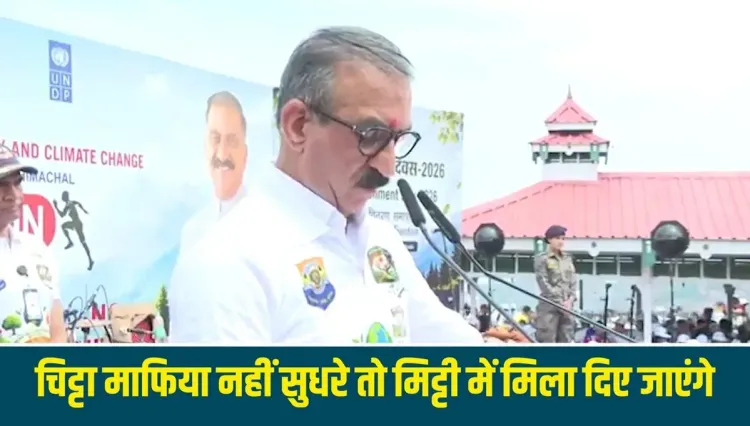
The Chief Minister's Office of Himachal Pradesh issued a sharp public warning on Friday, June 5, 2026, declaring that the 'chitta mafia' — organised networks trafficking synthetic heroin in the state — would be 'wiped out' if they failed to mend their ways. The statement underlined that the state government has been waging a 'decisive battle' against chitta for the past three and a half years, invoking the Prevention of Illicit Traffic in Narcotic Drugs and Psychotropic Substances (PIT-NDPS) Act as its primary enforcement instrument.
Context
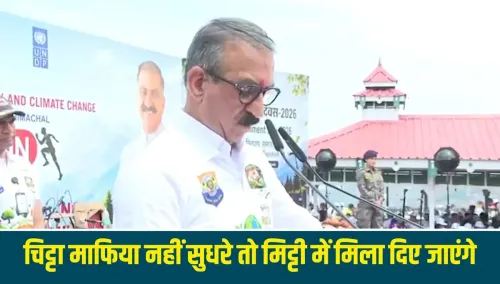
The post, shared from the official CMO account, carried a direct Hindi-language warning: 'अगर चिट्टा माफिया नहीं सुधरे, तो उन्हें मिट्टी में मिला दिया जाएगा' ('If the chitta mafia does not reform, they will be ground to dust'). The message also stated that the government has been landing 'continuous blows' on drug-trafficking networks by strictly enforcing the PIT-NDPS Act. Chitta, a street name for heroin or synthetic opioids, has become one of the most pressing public-health and law-enforcement concerns in Himachal Pradesh and neighbouring northern states.
Policy Backdrop
The PIT-NDPS Act is a central preventive detention law that allows authorities to detain individuals involved in illicit narcotic trafficking without trial for a defined period, aiming to dismantle supply chains before cases reach court. The parent legislation, the Narcotic Drugs and Psychotropic Substances (NDPS) Act, 1985, was significantly strengthened by amendments in 2001 and 2014, adding provisions for asset forfeiture and enhanced penalties for commercial-quantity trafficking. Himachal Pradesh, which shares a border with Punjab — long identified as a transit corridor for opioids — has increasingly leaned on these central statutes as part of a wider regional enforcement push.
Chief Minister Sukhvinder Singh Sukhu, who has led the state Congress government since December 2022, has repeatedly flagged drug trafficking as a governance priority. The CMO's framing of 'three and a half years' of sustained action aligns with the tenure of the current administration, signalling that the campaign is being positioned as a defining policy achievement ahead of future electoral cycles.
Stakeholders and Impact
The primary targets of the warning are organised trafficking networks that move chitta through the Himalayan foothills into towns and villages across Himachal Pradesh. Families of young users, school and college students, and rural communities in districts such as Kangra, Mandi and Shimla are among the most affected stakeholders. Anti-drug civil society groups and local panchayat bodies have previously called for stronger state action, lending public legitimacy to the government's deterrence messaging.
For law-enforcement agencies, the public statement raises the political stakes of enforcement: the CMO's explicit warning creates an accountability benchmark against which future seizure data and PIT-NDPS detention orders will be measured. Defence lawyers and civil liberties observers, however, may scrutinise the broad use of preventive detention, which bypasses standard judicial trial timelines.
What's Next
Attention will now shift to the Himachal Pradesh home department and state police for follow-through: fresh PIT-NDPS detention orders, drug seizure reports, and possible amendments to state excise or police rules would indicate whether the CMO's warning translates into measurable enforcement action. State assembly sessions are expected to provide a formal forum where opposition members are likely to press the government for verified statistics on arrests, seizures and convictions. The broader pattern across northern India suggests that public deterrence messaging of this kind is typically accompanied by intensified police operations in the weeks that follow.
Point of View
Vernacular warning — promising to 'grind the chitta mafia to dust' — is calibrated as much for public deterrence as for operational signalling to law enforcement. By anchoring the message to three and a half years of governance, the Sukhu administration is converting a law-and-order issue into an electoral credential, framing drug enforcement as a signature achievement of the Congress government in Himachal Pradesh. The aggressive deployment of the PIT-NDPS Act reflects a broader northern-India pattern where states bypass slower judicial processes to disrupt trafficking networks quickly, though this approach routinely invites scrutiny over due-process safeguards. Whether the warning is backed by measurable outcomes — seizure volumes, detention orders, network dismantling — will determine its credibility with both voters and civil society.
NationPress
13 Sept 2026
Frequently Asked Questions
What is chitta and why is it a problem in Himachal Pradesh?
Chitta is a local street name for heroin or synthetic opioids that has become widely abused in Himachal Pradesh, particularly among youth. The state's geography — bordering Punjab, a known drug-transit corridor — makes it vulnerable to organised trafficking networks moving narcotics through the Himalayan foothills.
What is the PIT-NDPS Act and how is Himachal Pradesh using it?
The Prevention of Illicit Traffic in Narcotic Drugs and Psychotropic Substances (PIT-NDPS) Act is a central law that allows the government to detain drug traffickers without trial for a defined period to disrupt their networks. Himachal Pradesh has been invoking it strictly to target organised chitta supply chains operating in the state.
Who is the Chief Minister of Himachal Pradesh in 2026?
Sukhvinder Singh Sukhu of the Indian National Congress has been the Chief Minister of Himachal Pradesh since December 2022 and is the head of the government behind the anti-chitta campaign.
What did the Himachal Pradesh CMO post on X on June 5, 2026?
The official CMO account posted a Hindi-language warning stating that if the chitta mafia does not reform, 'they will be ground to dust,' and highlighted three and a half years of enforcement action under the PIT-NDPS Act.
What happens next in Himachal Pradesh's fight against drug trafficking?
Observers will watch for fresh PIT-NDPS detention orders, drug seizure data from the state police, and home department reports. The state assembly is also expected to be a forum where the government's anti-drug record is scrutinised by opposition members.