HP CM Office Reaffirms Anti-Drug Drive on Int'l Day
Synopsis
The Chief Minister's Office of Himachal Pradesh marked the International Day Against Drug Abuse and Illicit Trafficking on 26 June 2026, reaffirming sustained enforcement against narcotics networks under the PIT-NDPS Act and calling for a drug-free society.
Key Takeaways
The Chief Minister's Office of Himachal Pradesh issued a statement on 26 June 2026 for the International Day Against Drug Abuse and Illicit Trafficking .
The state government cited continuous strict action against drug trafficking networks under the PIT-NDPS Act of 1988 .
The International Day Against Drug Abuse has been observed globally on 26 June every year since 1987 , per a UN resolution.
The NDPS Act (1985) and PIT-NDPS Act (1988) form the twin legislative pillars of India's anti-narcotics enforcement framework.
Himachal Pradesh's geographic position near inter-state and international transit corridors makes it a focus area for narcotics enforcement.
Youth and law enforcement agencies are identified as the primary stakeholders in the state's anti-drug efforts.
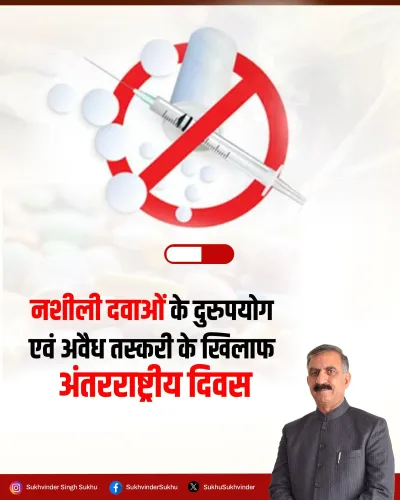
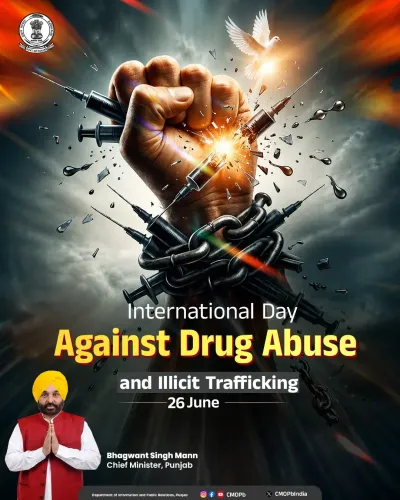
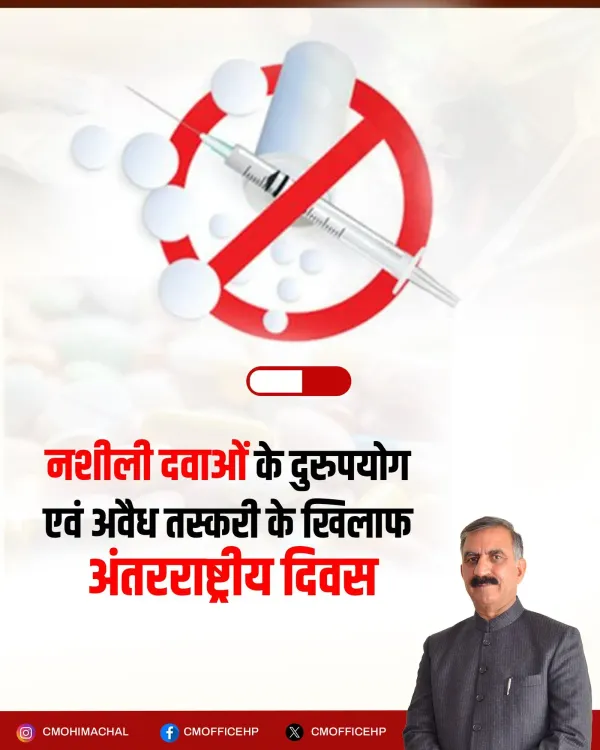
The Chief Minister's Office of Himachal Pradesh on Friday, 26 June 2026, marked the International Day Against Drug Abuse and Illicit Trafficking by reaffirming the state government's commitment to dismantling narcotics networks, citing sustained enforcement action under the Prevention of Illicit Traffic in Narcotic Drugs and Psychotropic Substances (PIT-NDPS) Act.
Context
The post, issued in Hindi, describes the observance as 'नशा-मुक्त समाज के निर्माण और नशा तस्करी के विरुद्ध सामूहिक प्रतिबद्धता का प्रतीक' — 'a symbol of collective commitment to building a drug-free society and combating drug trafficking.' It signals that the Himachal Pradesh government views the UN-designated day not merely as a ceremonial milestone but as an occasion to underscore active enforcement.
The International Day Against Drug Abuse and Illicit Trafficking is observed every year on 26 June, a tradition established by the United Nations in 1987 to reinforce global resolve against drug abuse in line with the 1988 UN Convention Against Illicit Traffic in Narcotic Drugs and Psychotropic Substances.
Policy Backdrop
India enacted the Narcotic Drugs and Psychotropic Substances (NDPS) Act in 1985, consolidating and strengthening the country's legal framework against drug-related offences. Three years later, the PIT-NDPS Act of 1988 added a preventive detention dimension, empowering authorities to detain individuals involved in illicit narcotics trafficking without the procedural delays of ordinary criminal proceedings.
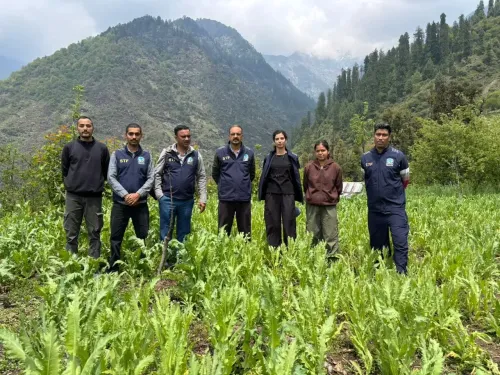
Himachal Pradesh, owing to its geographic position near inter-state and international transit corridors, has periodically reported seizures and network disruptions under both statutes. State enforcement agencies coordinate with central narcotics bodies to address both consumption and trafficking dimensions of the drug problem.
Stakeholders and Impact
The primary stakeholders in this enforcement drive are youth — the demographic most vulnerable to drug abuse — and law enforcement agencies at the state and district levels tasked with executing PIT-NDPS detention orders and conducting seizure operations. Families in border and transit districts of the state bear a disproportionate share of the social cost of trafficking networks.
Awareness campaigns aligned with the 26 June observance typically target schools, colleges, and community organisations, aiming to reduce demand alongside the supply-side crackdown that PIT-NDPS enforcement represents.
What's Next
Attention will now turn to whether the Himachal Pradesh government releases district-level seizure data or announces new de-addiction facilities as a follow-through to its stated commitment. Proposed amendments to PIT-NDPS rules and the rollout of new rehabilitation infrastructure in the coming fiscal year are among the developments to watch closely.
The state's continued invocation of preventive detention powers under the PIT-NDPS Act signals a sustained, supply-side approach to narcotics control — one that will be tested by the operational reach of trafficking networks across Himachal Pradesh's mountainous terrain.
Point of View
Not merely sympathetic to victims. This fits a broader national pattern where state governments use UN observances as platforms to publicise enforcement credibility ahead of budget and legislative cycles. For Himachal Pradesh, where transit-route vulnerabilities are a recurring concern, sustained PIT-NDPS invocations serve both a law-and-order and an electoral communication purpose. The real test, however, lies in verifiable outcomes: seizure volumes, detention orders upheld by courts, and rehabilitation capacity built on the ground.
NationPress
24 Sept 2026
Frequently Asked Questions
What is the International Day Against Drug Abuse and Illicit Trafficking?
It is a UN-proclaimed annual observance held every year on 26 June since 1987 , aimed at strengthening global action against drug abuse and illicit trafficking in line with the 1988 UN Convention Against Illicit Traffic in Narcotic Drugs and Psychotropic Substances .
What is the PIT-NDPS Act and how is Himachal Pradesh using it?
The Prevention of Illicit Traffic in Narcotic Drugs and Psychotropic Substances (PIT-NDPS) Act, 1988 is a central Indian law that allows preventive detention of persons involved in drug trafficking. Himachal Pradesh has cited its use for continuous crackdowns on narcotics networks operating in the state.
Why is Himachal Pradesh particularly vulnerable to drug trafficking?
Himachal Pradesh's geographic location near inter-state and international transit corridors makes it susceptible to drug trafficking networks, leading state enforcement agencies to coordinate closely with central narcotics bodies.
What is the difference between the NDPS Act and the PIT-NDPS Act?
The NDPS Act of 1985 is the primary legislation consolidating laws against narcotic and psychotropic substance offences, while the PIT-NDPS Act of 1988 specifically enables preventive detention of traffickers, supplementing the NDPS framework with a faster administrative tool.
What actions is the Himachal Pradesh government taking against drug abuse in 2026?
The Chief Minister's Office of Himachal Pradesh stated on 26 June 2026 that the state government is continuously taking strict action against drug trafficking networks under the PIT-NDPS Act , as part of its commitment to building a drug-free society.