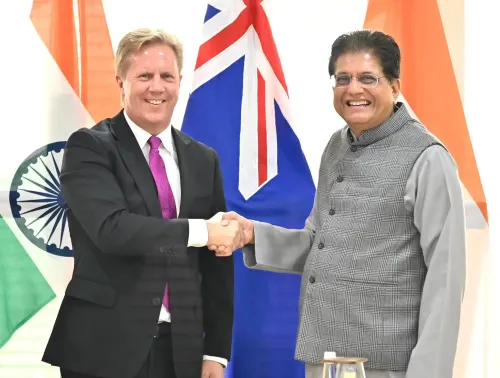
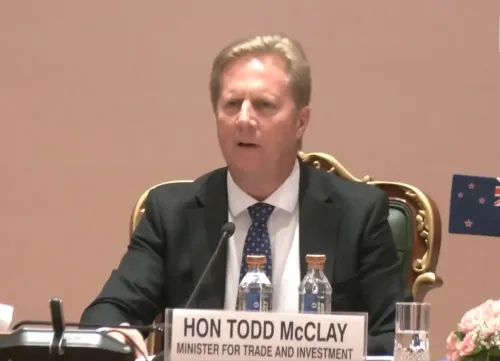
Kishan Reddy Backs India-New Zealand FTA for Export Growth
Synopsis
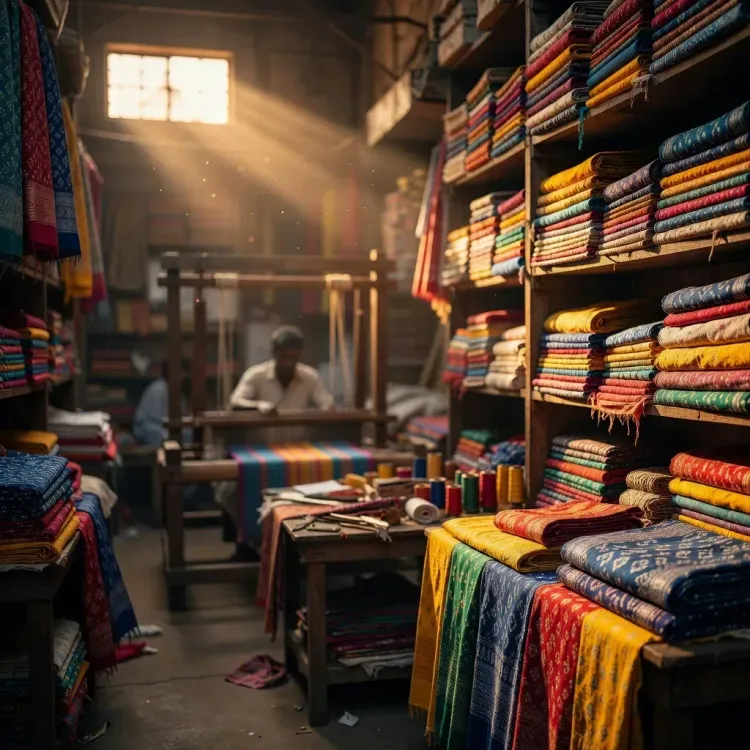
Union Coal and Mines Minister G. Kishan Reddy on 19 October 2026 publicly backed the India-New Zealand FTA, arguing zero-duty access across covered tariff lines will benefit Indian weavers, leather manufacturers, farmers, food processors and pharmaceutical companies.
Key Takeaways
Kishan Reddy endorsed the India-New Zealand FTA on 19 October 2026 , citing benefits for weavers, leather manufacturers, farmers, food processors and pharma companies.
The agreement promises zero-duty access across covered tariff lines , aimed at boosting Indian export competitiveness in the Pacific market.
India-New Zealand Comprehensive Economic Cooperation Agreement talks were first launched in 2010 , making the engagement over 16 years old.
The deal aligns with India's broader FTA strategy, which also includes concluded agreements with the UAE and Australia .
Final tariff schedules, sensitive-list details and a ratification timeline are yet to be officially confirmed.
From the handlooms of Telangana to the vaccine cold-chains of Hyderabad, Union Coal and Mines Minister G. Kishan Reddy says the India-New Zealand Free Trade Agreement can open doors that have been shut for decades — and on Monday, 19 October 2026, he made that case publicly on X.
Reddy's post named four specific constituencies: weavers, leather manufacturers, farmers, food processors and pharmaceutical companies — a deliberately wide-angle list that signals how broadly New Delhi is pitching the agreement's domestic dividend. 'Zero-duty access across covered tariff lines can strengthen competitiveness, support enterprises and generate opportunities across value chains,' he wrote.
Sixteen Years in the Making
The India-New Zealand Comprehensive Economic Cooperation Agreement has a long runway. Negotiations were formally launched in 2010, making this one of the older unresolved trade talks on India's diplomatic calendar. The renewed political attention — signalled by a senior Cabinet minister's public endorsement — suggests the engagement has regained momentum, though the exact signing date and implementation timeline remain to be confirmed officially.
New Zealand brings a complementary economic profile to the table: a powerful agricultural and dairy exporter that needs manufactured goods and services India can supply at scale. India's interest runs the other way — it wants preferential access for textiles, processed foods and generics in a high-income Pacific market with relatively low tariffs to begin with, but significant non-tariff advantages for early movers.
India's FTA Push: A Pattern Worth Watching
The New Zealand deal fits squarely into a broader Indian trade strategy that has accelerated over the past few years. India concluded a landmark economic partnership with the UAE and a full-scale FTA with Australia, both aimed at plugging domestic producers — especially in labour-intensive sectors — into global value chains more directly. The playbook is consistent: target tariff relief in textiles, agri-processing and pharmaceuticals, three sectors where Indian exporters have cost advantages but often face steep access barriers abroad.
Reddy's intervention is notable precisely because his core ministerial portfolio — coal and mines — sits well outside trade policy. A BJP Telangana state president amplifying an FTA signals that the party sees this agreement as politically salient at the state level too, where weaving clusters and leather manufacturing units are significant employers.
What the Zero-Duty Promise Actually Means
The phrase 'zero-duty access across covered tariff lines' carries a careful qualifier: covered. Every FTA has sensitive lists — products either excluded or given slower tariff reduction schedules to protect domestic producers on the other side. The real test of the India-New Zealand deal will be how wide those covered lines actually stretch and whether dairy — New Zealand's most competitive export and India's most politically sensitive import — ends up inside or outside the fence. Final tariff schedules and sector-specific impact assessments will be the document to watch when negotiations conclude.
For now, the political signal from a Cabinet minister is clear: India wants this deal landed, and it wants producers across the value chain to know there is upside waiting for them when it does.
Point of View
Leather workers, farmers — rather than framing it in abstract macroeconomic terms. Coming from a minister whose portfolio is coal and mines, the statement signals coordinated messaging across Cabinet rather than a trade ministry announcement, suggesting the government wants broad political ownership of the deal. The FTA also fits India's post-2022 export-diversification push, which has sought to reduce overdependence on any single market by building a web of bilateral agreements across geographies. The real political and economic test, however, will arrive with the fine print: specifically, how New Zealand's dairy sector is handled in a country where farm-gate milk prices are a live political issue.
NationPress
19 Oct 2026
Frequently Asked Questions
What is the India-New Zealand FTA?
The India-New Zealand Free Trade Agreement, formally called the Comprehensive Economic Cooperation Agreement, is a bilateral trade deal under negotiation since 2010 that would provide zero-duty access on covered tariff lines between the two countries, benefiting Indian exporters in sectors like textiles, agriculture and pharmaceuticals.
Which sectors in India benefit from the India-New Zealand FTA?
According to Union Minister G. Kishan Reddy, the FTA creates new market avenues for Indian weavers, leather manufacturers, farmers, food processors and pharmaceutical companies through preferential tariff access.
Has the India-New Zealand FTA been signed?
The exact signing date and implementation details of the India-New Zealand FTA cannot be officially confirmed as of now; the agreement has been under negotiation since 2010 and its final tariff schedules and ratification timeline are still awaited.
How does the India-New Zealand FTA fit India's broader trade strategy?
It aligns with India's push to diversify export destinations through bilateral FTAs, a strategy that also produced agreements with the UAE and Australia, all targeting tariff relief in labour-intensive and high-value sectors like textiles, processed foods and generics.
What should I watch for when the India-New Zealand FTA is finalised?
Key things to track include the final list of covered tariff lines, treatment of sensitive sectors like New Zealand dairy imports into India, the ratification timeline, and sector-specific impact assessments for Indian exporters.