India-New Zealand FTA: 57% of NZ exports tariff-free from day one, says PM Luxon
Synopsis
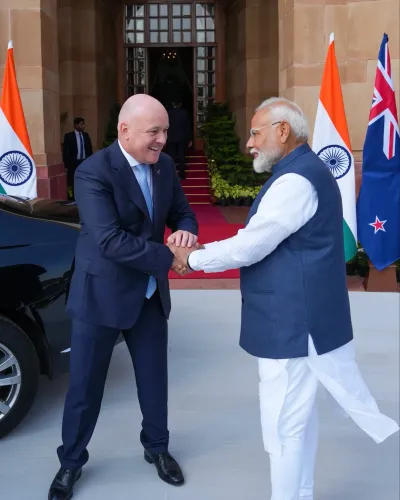
New Zealand PM Christopher Luxon says 57% of his country's exports to India will be tariff-free from day one under the newly signed FTA — a landmark concession from one of the world's most tariff-cautious major economies. The declaration lands just as PM Modi arrives for India's first New Zealand state visit in nearly 40 years, giving the deal immediate political momentum.
Key Takeaways
New Zealand PM Christopher Luxon confirmed that 57 per cent of New Zealand's exports to India will be tariff-free from the first day of the FTA.
The India-New Zealand Free Trade Agreement was finalised on 27 April 2025 .
PM Narendra Modi is on a two-day state visit to New Zealand from 10–11 July — the first by an Indian PM in nearly 40 years .
Modi's visit follows Luxon's trip to India in March 2025 and is focused on deepening economic and commercial ties.
Luxon called the FTA a 'once-in-a-generation opportunity' , citing India's rapid emergence as a major consumer economy.
New Zealand Prime Minister Christopher Luxon on Thursday, 9 July declared that 57 per cent of New Zealand's exports to India will attract zero tariffs from the very first day the bilateral Free Trade Agreement (FTA) comes into force — a commitment he described as a once-in-a-generation economic opportunity for his country.
What Luxon Said
In a post on X, Luxon wrote: 'New Zealand businesses are set to boom with our India Trade Deal' and that '57 per cent of everything we export to India will be tariff free from day one.' The statement underscored the scale of immediate market access New Zealand stands to gain under the agreement, which was finalised on 27 April 2025 and marks a pivotal shift in the two countries' bilateral relationship.
Modi's Historic New Zealand Visit
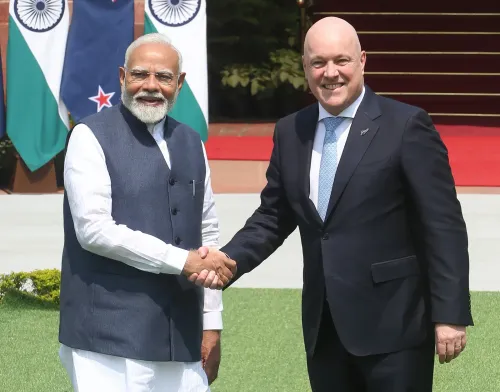
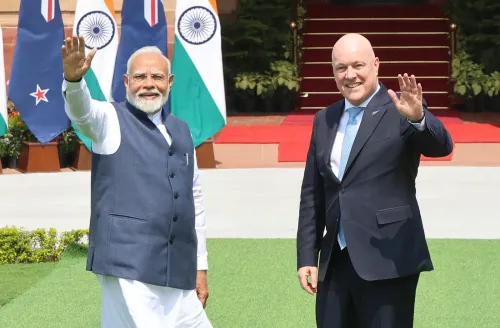
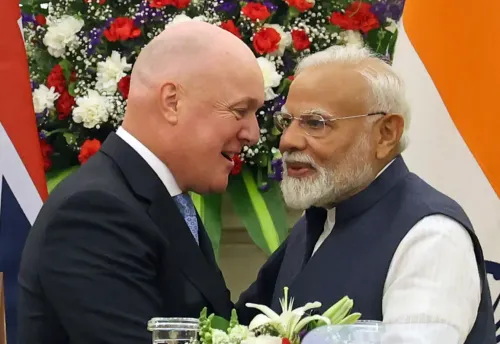
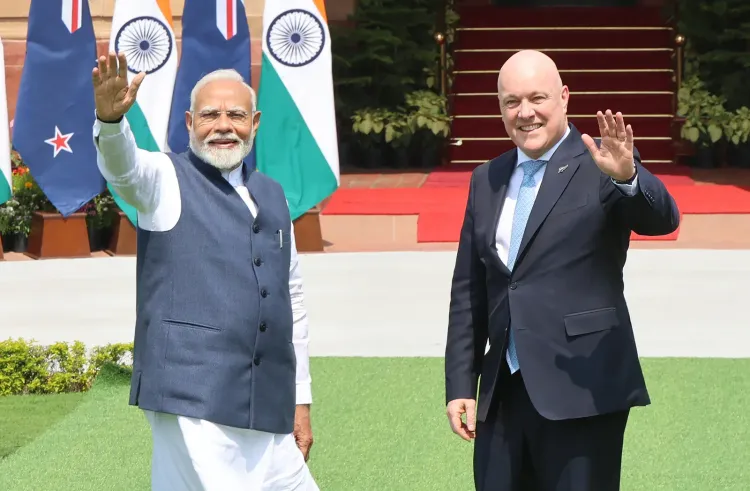
The announcement came just ahead of Prime Minister Narendra Modi's two-day state visit to New Zealand, scheduled for 10–11 July — the first by an Indian Prime Minister in nearly 40 years. The visit follows an invitation extended by Luxon and builds on his own trip to India in March 2025.
In an earlier post on X, Modi said the visit 'will meaningfully build upon the strong momentum in our bilateral ties pursuant to the visit of Prime Minister Luxon to India in March 2025.' He added that discussions would focus on deepening 'economic, trade and commercial engagements' between the two nations.
The FTA and What It Means
The India-New Zealand FTA, concluded after years of negotiations, positions New Zealand to align closely with India's economic trajectory as the South Asian giant transitions toward becoming one of the world's largest consumer economies. Luxon specifically highlighted India's emergence as a rapidly expanding market, arguing the deal gives New Zealand exporters a structural edge at precisely the right moment.
Notably, the immediate tariff-free access on 57 per cent of exports from day one is a significant concession in the context of India's historically cautious approach to FTAs — India has kept several key sectors shielded in past trade agreements.
The Indian Diaspora Dimension
Beyond trade, Modi indicated he looks forward to addressing a large gathering of the Indian community in New Zealand, acknowledging the diaspora's 'significant contributions' to bilateral ties. The Indian community in New Zealand has grown substantially over the past two decades and is widely seen as a key bridge in people-to-people relations.
What Comes Next
With the FTA signed and a high-level state visit now under way, attention will shift to implementation timelines, sector-specific rules of origin, and the pace at which remaining tariff lines are phased down. Industry groups in both countries will be watching closely to see whether the day-one gains translate into measurable export growth in the months ahead.
Point of View
But the real story is what it signals about India's evolving trade posture. For years, New Delhi resisted deep FTAs — pulling out of RCEP being the most visible example. A deal that grants immediate zero-tariff access on the majority of a partner's exports marks a meaningful departure. The timing of Modi's visit — the first in four decades — amplifies the political commitment. Yet implementation will be the true test: sector-specific carve-outs, rules of origin, and non-tariff barriers have historically blunted the gains of India's FTAs. Whether this one delivers for New Zealand exporters — and what India extracts in return on services and mobility — will define its legacy far more than the day-one number.
NationPress
8 Oct 2026
Frequently Asked Questions
What is the India-New Zealand Free Trade Agreement?
The India-New Zealand FTA is a bilateral trade agreement finalised on 27 April 2025, granting significant tariff concessions to both countries. Under the deal, 57 per cent of New Zealand's exports to India will be tariff-free from the first day it comes into force.
When did PM Modi visit New Zealand?
PM Narendra Modi visited New Zealand on 10–11 July, making it the first state visit by an Indian Prime Minister to New Zealand in nearly 40 years. The visit was at the invitation of New Zealand PM Christopher Luxon.
Why is the 57 per cent tariff-free figure significant?
India has historically maintained high import tariffs and has been cautious about deep FTAs, most notably withdrawing from the RCEP. Granting immediate zero-tariff access on 57 per cent of a partner's exports from day one represents a notably liberal concession by Indian trade standards.
What did PM Modi say about the visit?
Modi said the visit would 'meaningfully build upon the strong momentum in our bilateral ties' following Luxon's India trip in March 2025. He also indicated plans to address the Indian diaspora community in New Zealand and deepen economic and commercial engagement.
What comes after the FTA signing?
Following the finalisation of the agreement on 27 April 2025 and Modi's state visit, attention shifts to implementation — including sector-specific rules of origin, phased tariff reductions on remaining goods, and the removal of non-tariff barriers that have historically limited FTA gains.