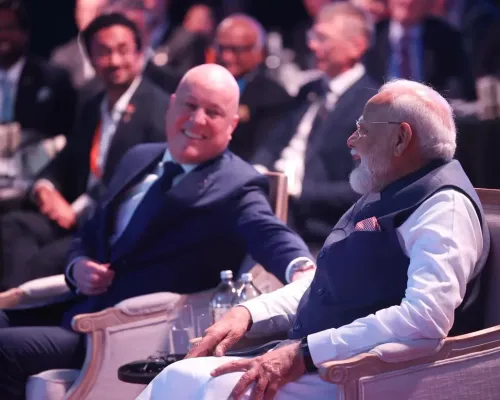
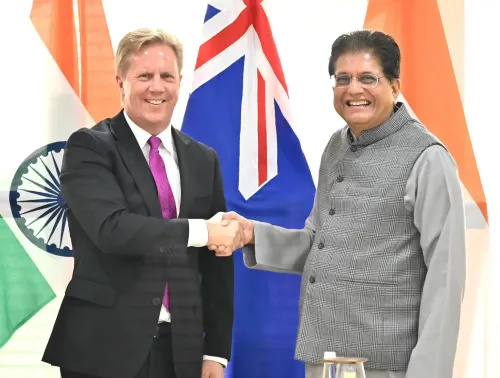
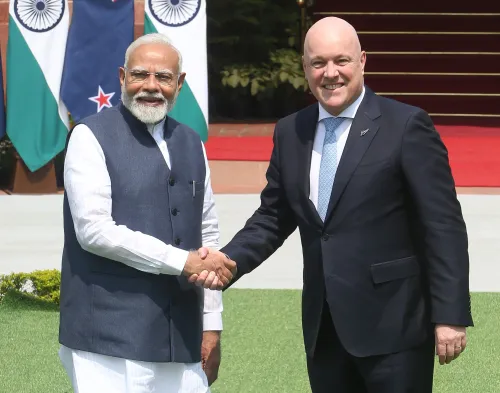
Kishan Reddy Hails India–New Zealand FTA, Zero-Duty on All Indian Goods
Synopsis
Union Minister G. Kishan Reddy hailed the India–New Zealand FTA on October 19, 2026, announcing zero-duty access for all Indian goods exports and new opportunities in textiles, engineering, marine products, and services under PM Modi's trade push.
Key Takeaways
100% of Indian goods exports will receive zero-duty access to New Zealand under the newly announced FTA.
Key beneficiary sectors include textiles, engineering goods, marine products, and services .
India and New Zealand first launched FTA negotiations in 2010 ; the deal follows years of stalled talks.
The agreement fits India's accelerated bilateral FTA strategy, which previously delivered deals with the UAE and Australia (2022) .
Parliamentary ratification and sector-specific tariff schedule release are the critical next steps to watch.
Kishan Reddy credited PM Narendra Modi's leadership for the trade breakthrough.
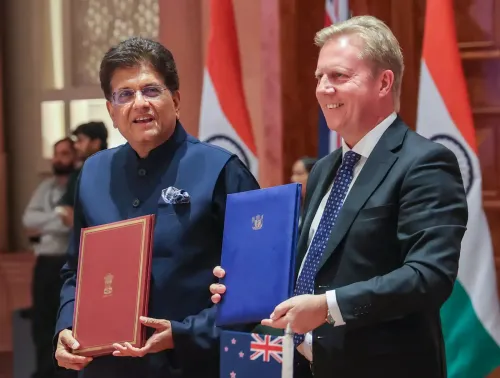
A trade door long in the making may have finally swung open. Union Coal and Mines Minister G. Kishan Reddy announced on Monday, October 19, 2026 that the India–New Zealand Free Trade Agreement (FTA) has been concluded, delivering zero-duty access for 100 per cent of Indian goods exports to New Zealand — a sweeping market-opening that Indian exporters in textiles, engineering, and marine products have waited years to see.
Zero Tariffs Across the Board — What That Means for Indian Exporters
The headline number is striking: 100% of Indian goods exports will enter New Zealand duty-free under the agreement. For sectors like textiles, engineering goods, and marine products — all called out explicitly in Reddy's post — this removes a cost layer that has historically made Indian goods less competitive against regional rivals in the Pacific market. The deal also extends to services, broadening the scope beyond merchandise trade.
New Zealand's market is modest in absolute size, but the symbolic and structural value is considerable: it plugs India into a gateway economy within the Pacific, a region where trade architecture is increasingly shaped by competing blocs.
The Long Road from 2010 Negotiations to a Concluded Deal
This agreement did not arrive quickly. India and New Zealand first launched FTA negotiations in 2010, with multiple rounds held before momentum stalled. The talks sat dormant for years as both sides navigated domestic political sensitivities — agriculture and dairy on New Zealand's side, services mobility and IP on India's. What eventually broke the logjam mirrors the playbook India used elsewhere: a bilateral, goods-first, services-inclusive structure that sidesteps the slower multilateral route.
India signed a similar Economic Cooperation and Trade Agreement with Australia in 2022, the UAE deal before that — each one a building block in what has become a deliberate sprint toward diversifying India's export architecture away from dependence on any single partner or forum.
Modi's FTA Push and the Bigger Trade Footprint
Reddy framed the agreement squarely as a product of Prime Minister Narendra Modi's trade leadership. That framing fits a broader pattern: the current government has treated bilateral FTAs as live instruments of economic statecraft, not just diplomatic gestures. Each concluded deal generates a new preferential lane for Indian exporters while creating negotiating leverage for the next one.
The next phase to watch is ratification and the release of sector-specific tariff schedules — the fine print that will determine exactly how quickly and how fully the zero-duty promise translates into real export gains on the ground. Industry bodies representing engineering exporters and marine product manufacturers will be parsing those schedules closely.
If the tariff schedules hold what the headline promises, Indian exporters just got a duty-free runway into the Pacific — and the race to use it starts now.
Point of View
If ratified and implemented as announced, represents a meaningful extension of India's bilateral trade offensive that began accelerating after the UAE and Australia deals. For the Modi government, each concluded FTA serves a dual purpose: real export gains for domestic constituencies and a signal to global partners that India is a serious, deal-completing trade partner. The inclusion of services alongside goods is particularly significant, as it addresses the longstanding Indian demand that market-opening be reciprocal and not limited to merchandise. The political messaging — attributed directly to PM Modi's 'dynamic leadership' — also suggests the government intends to make trade deal completions a visible electoral and economic narrative heading into the next phase of its term.
NationPress
19 Oct 2026
Frequently Asked Questions
What is the India–New Zealand Free Trade Agreement?
The India–New Zealand FTA is a bilateral trade agreement that grants zero-duty access for 100 per cent of Indian goods exports to New Zealand, covering sectors including textiles, engineering goods, marine products, and services.
When did India and New Zealand start FTA negotiations?
India and New Zealand first launched FTA negotiations in 2010 , with multiple rounds held before talks slowed down significantly for several years.
Which Indian sectors benefit most from the India–New Zealand FTA?
Textiles, engineering goods, marine products, and services are the sectors explicitly identified as key beneficiaries of the zero-duty access provided under the agreement.
How does the India–New Zealand FTA fit into India's broader trade strategy?
It follows a pattern of accelerated bilateral FTAs India has pursued in recent years, including deals with the UAE and Australia in 2022, aimed at diversifying export markets and boosting export-led growth.
What happens next after the India–New Zealand FTA announcement?
The critical next steps are parliamentary ratification in both countries and the release of sector-specific tariff schedules, which will determine the precise timeline and scope of the zero-duty benefits.