How Did India and New Zealand Finalize a Historic FTA?
Synopsis
In a groundbreaking move, India and New Zealand have finalized a Free Trade Agreement, paving the way for unparalleled access to a market of 1.4 billion consumers. This deal is poised to open new avenues for exporters and foster economic growth.
Key Takeaways
95% of New Zealand's exports will see tariff elimination or reduction.
57% of exports will be duty-free from day one.
Quotas for kiwifruit will be significantly increased.
Immediate tariff elimination on sheep meat, wool, and coal.
Broad services coverage enhancing financial services trade.
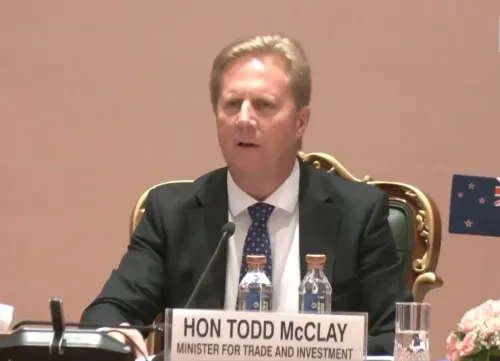
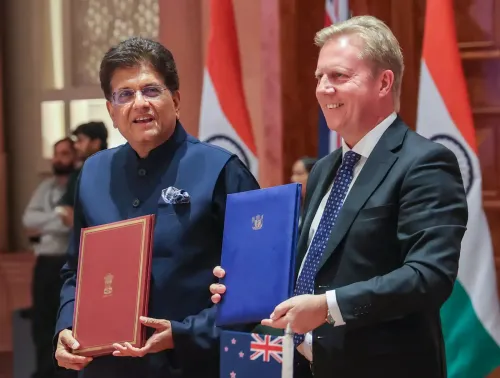
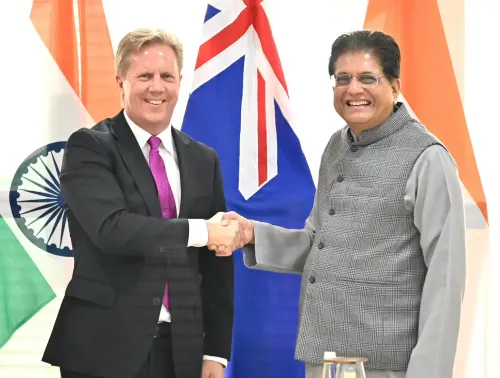
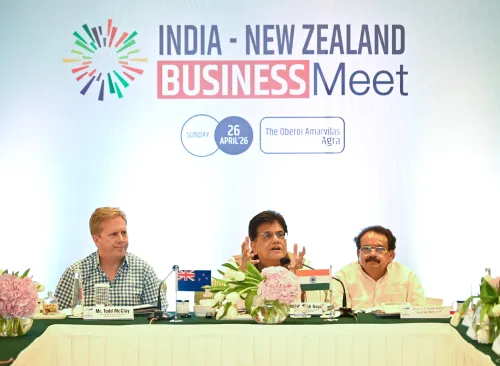
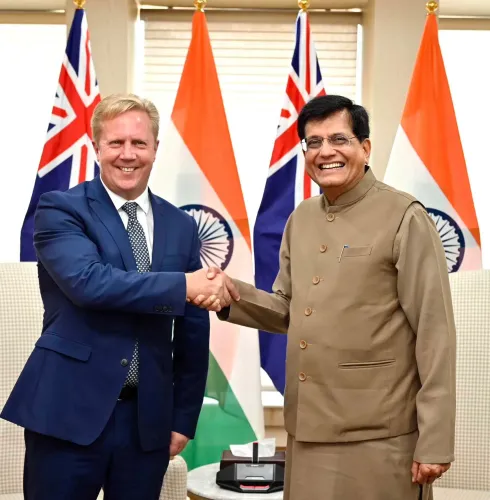
New Delhi, Dec 22 (NationPress) India and New Zealand have successfully finalized a Free Trade Agreement (FTA), granting New Zealand businesses unmatched access to 1.4 billion Indian consumers, as announced by Trade and Investment Minister Todd McClay. This landmark FTA is set to eliminate and reduce tariffs on 95% of New Zealand's exports—ranking among the highest in any Indian FTA—with nearly 57% becoming duty-free immediately and increasing to 82% upon full implementation, while the remaining 13% will see significant tariff reductions.
This agreement positions New Zealand exporters competitively against their rivals across various sectors and opens avenues to India’s swiftly growing middle class, according to an official statement.
Negotiations commenced on March 21 and concluded after nine months of rigorous discussions.
“This transformative Agreement presents opportunities that New Zealand exporters have never accessed before in India. It aligns with New Zealand’s interests and promises to generate thousands of jobs and billions in additional exports,” stated McClay.
“The Indian economy is projected to rise to NZ$12 trillion by 2030. The India-NZ Free Trade Agreement unlocks immense prospects for our top-notch exporters to the world’s most populous nation and will significantly expedite progress towards New Zealand’s ambitious target of doubling export value over a decade.”
Significant outcomes for New Zealand entail tariff elimination or reduction on 95% of exports; duty-free access on nearly 57% of exports from day one, rising to 82% when fully enacted, and the remaining 13% subject to sharp tariff cuts; immediate elimination of tariffs on sheep meat, wool, coal, and over 95% of forestry and wood exports; duty-free access for most seafood exports including mussels and salmon over seven years; and duty-free access for most iron, steel, and scrap aluminum over ten years or less.
“In a global first, New Zealand will enjoy duty-free access for a significant kiwifruit quota—almost four times our existing exports—with a 50% tariff applicable outside the quota. For the first time in an FTA, India has also granted preferential market access for apples and manuka honey,” McClay revealed.
The FTA encompasses extensive services coverage and significantly enhances India’s WTO commitments with an emphasis on financial services, e-payments, and FinTech, alongside an MFN clause to safeguard our services trade.
“New Zealand exporters will benefit from duty-free access for dairy and other food ingredients intended for re-export through the FTA, paving the way for enhanced collaboration and processing, and providing access to India’s increasing number of FTA partners through a dedicated fast-track mechanism,” McClay noted.
“We’ve also agreed to a review of the FTA one year after it comes into effect, establishing a framework for potential future enhancements,” McClay added.
Point of View
This historic Free Trade Agreement between India and New Zealand signifies a significant step towards enhanced bilateral trade relations. It opens up vast opportunities for exporters while also showcasing the growing importance of trade partnerships in a globalized economy. This agreement is a must-watch for those interested in international commerce, as it reflects the evolving dynamics of trade in the Asia-Pacific region.
NationPress
20 Sept 2026
Frequently Asked Questions
What is the significance of the FTA between India and New Zealand?
The Free Trade Agreement between India and New Zealand is significant as it allows New Zealand exporters unprecedented access to India's vast consumer market, eliminates tariffs on a majority of goods, and fosters economic collaboration.
When did the negotiations for the FTA begin?
Negotiations for the FTA began on March 21 and concluded after nine months of intensive efforts.
How much of New Zealand's exports will benefit from this FTA?
The FTA will eliminate or reduce tariffs on 95% of New Zealand's exports to India, with a significant portion becoming duty-free immediately.
What are some key products benefiting from the FTA?
Key products benefiting from the FTA include sheep meat, wool, coal, seafood, and a significant quota of kiwifruit, among others.
Will there be future reviews of the FTA?
Yes, there is an agreement to review the FTA one year after its implementation, providing a mechanism for future improvements.