CM Dhami Flags Noise Pollution as Shared Public Responsibility

Synopsis
Uttarakhand Chief Minister Pushkar Singh Dhami on October 24, 2026 called noise pollution harmful to all and urged collective civic responsibility for its effective control, invoking India's two-decade-old noise regulation framework.
Key Takeaways
CM Pushkar Singh Dhami posted on X on October 24, 2026 calling noise pollution harmful to everyone.
He framed noise control as a shared civic responsibility, not solely a government function.
India's Noise Pollution (Regulation and Control) Rules, 2000 under the Environment (Protection) Act, 1986 already set legal noise limits across industrial, commercial, residential, and silence zones.
Uttarakhand faces distinct noise pressures due to religious tourism hubs like Haridwar and Rishikesh and seasonal pilgrimage traffic.
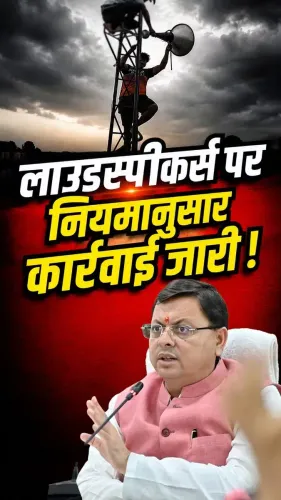
No specific new enforcement measure or statistic was announced; the post is a civic appeal signalling state-level intent.
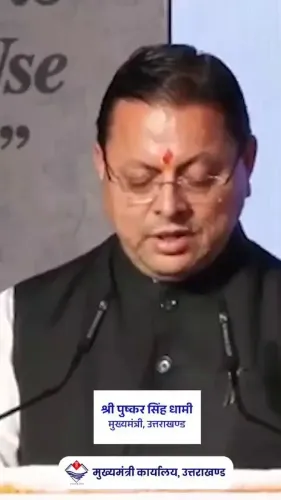
Noise pollution harms everyone — and Uttarakhand Chief Minister Pushkar Singh Dhami wants every citizen to own that fact. In a post on X on Saturday, October 24, 2026, Dhami called for the strongest possible efforts to control noise pollution, framing it not as a government task alone but as a collective civic duty.
Writing in Hindi, Dhami stated: 'ध्वनि प्रदूषण सभी के लिए हानिकारक है, इसलिए हमारी जिम्मेदारी है कि इसके प्रभावी नियंत्रण के लिए हरसंभव प्रयास किए जाएँ' — 'Noise pollution is harmful to everyone; it is therefore our responsibility to make every possible effort for its effective control.'
The Law Already on the Books — and the Enforcement Gap
India has had a legal framework for noise regulation for over two decades. The Noise Pollution (Regulation and Control) Rules, 2000, notified under the Environment (Protection) Act, 1986, set ambient noise limits across four zone types: industrial, commercial, residential, and silence zones. They also govern the use of loudspeakers, public address systems, and vehicle horns.
The rules exist. The gap, as urban residents across Indian cities know well, is consistent enforcement. That is precisely where state governments hold the lever — and where Dhami's statement points.
Why Uttarakhand's Voice on This Carries Weight
Uttarakhand occupies a particular place in India's environmental conversation. As a Himalayan state with ecologically sensitive zones, fragile biodiversity corridors, and a significant share of its economy tied to religious tourism and pilgrimage circuits, the state faces noise pressures that are both urban and distinctly seasonal. Festival seasons, highway traffic, and large religious gatherings can push noise levels well beyond prescribed limits in towns like Haridwar and Rishikesh.
A statement from the Chief Minister signalling intent — even without announcing a specific enforcement drive — sets a public tone that state agencies, district administrations, and local bodies typically follow.
Shared Responsibility, Not Just State Action
The deliberate framing of 'our responsibility' — hamaari zimmedaari — is worth noting. Dhami did not announce a crackdown or a new rule. He made a civic appeal. That language positions noise control as something citizens participate in, not just something the state imposes. It is a softer register, but it is also a durable one: behavioural change on noise — turning down a loudspeaker, respecting a hospital silence zone, not leaning on a horn — ultimately depends on public buy-in as much as police presence.
Whether the statement precedes a specific enforcement push in Uttarakhand remains to be seen. What is clear is that the Chief Minister has put noise pollution on the public agenda — and reminded residents that the obligation runs both ways.
Point of View
Noise regulation also carries economic logic beyond the environmental. The 'shared responsibility' framing is politically deft: it invites public participation while leaving the state room to escalate to enforcement if the softer appeal does not move behaviour. Watch for follow-through from district administrations in noise-sensitive zones like Haridwar and Rishikesh.
NationPress
25 Oct 2026
Frequently Asked Questions
What did Uttarakhand CM Dhami say about noise pollution?
CM Pushkar Singh Dhami stated that noise pollution is harmful to everyone and that it is the collective responsibility of all citizens to make every possible effort for its effective control.
What are India's noise pollution rules?
The Noise Pollution (Regulation and Control) Rules, 2000, notified under the Environment (Protection) Act, 1986, set permissible ambient noise levels for industrial, commercial, residential, and silence zones and regulate loudspeakers and vehicle horns.
Why is noise pollution a concern in Uttarakhand?
Uttarakhand is an ecologically sensitive Himalayan state with major religious tourism hubs like Haridwar and Rishikesh, where seasonal pilgrimage traffic, loudspeakers, and highway noise can push sound levels well beyond prescribed limits.
Did CM Dhami announce any new noise pollution law or crackdown?
No specific new law, rule, or enforcement drive was announced in the post. Dhami made a civic appeal urging collective responsibility for noise control.
How does India regulate noise pollution?
India regulates noise through the Noise Pollution (Regulation and Control) Rules, 2000, which set zone-wise noise limits and restrict the use of loudspeakers and public address systems, enforced by state pollution control boards and local authorities.