Vivek Ramaswamy Frames 2026 Race on Taxes, Bills, Crime
Synopsis
Vivek Ramaswamy distilled his political message into three binary contrasts — property taxes, electric bills, and urban crime — framing them as the defining choice for American voters, with no candidate names attached, just a ledger that demands a side.
Key Takeaways
Entrepreneur Vivek Ramaswamy posted a stark three-line political contrast covering property taxes , electric bills , and urban crime .
The post names no specific candidate, city, or party — making it a portable frame deployable across multiple races.
Ramaswamy previously co-led the US Department of Government Efficiency (DOGE) advisory effort and ran for the 2024 Republican presidential nomination.
His Strive Asset Management is founded on an anti-ESG, deregulation-first investment philosophy that mirrors this political messaging.
Republican campaigns have historically bundled property taxes, energy costs, and crime as evidence of policy failure in Democrat-governed jurisdictions.
State and local ballot measures on property tax caps , utility rate reform , and policing budgets are the natural arenas where this message will next be tested.
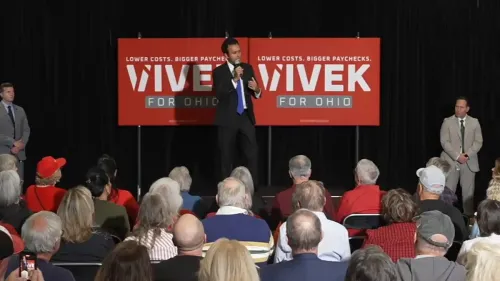
Three issues. Three contrasts. One blunt message. Entrepreneur Vivek Ramaswamy — founder of Strive Asset Management, former co-lead of the US Department of Government Efficiency (DOGE) advisory effort, and 2024 Republican presidential candidate — sharpened his political pitch in a post that strips the coming electoral choice down to its most kitchen-table essentials: what you pay in property taxes, what you pay on your electric bill, and whether your street is safe.
The post reads simply: 'The choice is clear. Lower vs. higher property taxes. Lower vs. higher electric bills. Lower vs. higher crime in our cities.' No names, no party labels — just a three-line ledger that dares voters to pick a column.
Why Property Taxes, Energy Costs, and Crime Form a Classic Republican Trifecta
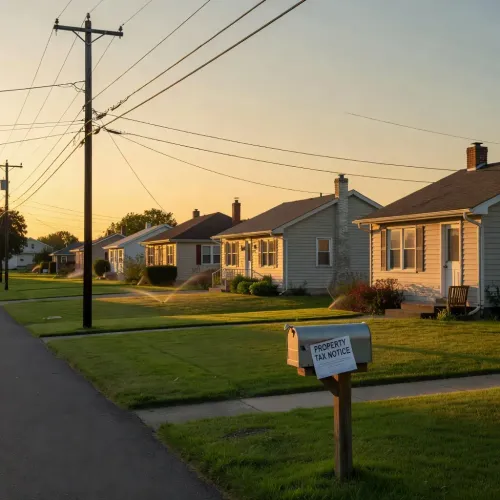
This is not an accidental trio. US Republican messaging has long bundled these three pressure points because each one lands directly in a voter's wallet or sense of personal safety — no abstraction required. Property tax burdens vary dramatically across states and municipalities, and Republican candidates have repeatedly tied higher rates to Democratic governance in urban jurisdictions. Energy pricing, meanwhile, has become a proxy war over regulation: states that have aggressively pushed renewable mandates have, in several cases, seen retail electricity rates climb, handing critics a concrete number to cite. Crime statistics — however contested in their methodology — remain one of the most viscerally effective frames in American politics.
Ramaswamy's framing collapses what are genuinely complex, multi-variable policy debates into a binary: lower or higher. That is a deliberate rhetorical move. It forces the audience to self-sort before a single candidate name is mentioned.
Ramaswamy's Positioning After DOGE
Since stepping back from his role as co-lead of the DOGE advisory effort alongside Elon Musk, Ramaswamy has remained a prominent voice on government efficiency, deregulation, and fiscal restraint. His Strive Asset Management is itself built around an 'anti-ESG' investment philosophy — a direct commercial extension of his political argument that energy and financial markets have been distorted by ideological mandates rather than economic fundamentals. The property-tax, electric-bill, crime trifecta fits neatly into that broader worldview: government overreach costs you money and security.
The post carries no attached image — only a video — and no specific city, state, or candidate is named. That universality is the point: the message is designed to travel across every competitive jurisdiction where these three issues are live on a ballot.
Watch for whether this framing anchors a broader campaign platform or resurfaces in state and local races where property tax caps, utility rate reform, and policing budgets are already on the agenda. When a message is this stripped-down, it usually means someone is testing whether it sticks — before spending real money to make it land.
Point of View
A strategy that has driven Republican gains in suburban districts. By stripping away candidate names and party labels, he is crafting a message that can be adopted by any right-leaning candidate without triggering partisan defensiveness in persuadable voters. His post-DOGE positioning as a government-efficiency voice gives these fiscal contrasts added credibility beyond standard campaign rhetoric. If this framing migrates into paid advertising or debate talking points, it signals that the Republican playbook for 2026 mid-term or state-level contests is consolidating around cost-of-living and public safety as its twin engines.
NationPress
25 Oct 2026
Frequently Asked Questions
What did Vivek Ramaswamy post about property taxes and crime?
Ramaswamy posted a three-point contrast framing the electoral choice as lower versus higher property taxes, lower versus higher electric bills, and lower versus higher crime — without naming specific candidates or parties.
What is Vivek Ramaswamy doing now after DOGE?
After stepping back from his co-lead role in the US Department of Government Efficiency (DOGE) advisory effort, Ramaswamy has continued as founder and executive chairman of Strive Asset Management and remains active in Republican political messaging.
Why do Republicans focus on property taxes and crime together?
Republican campaigns have long bundled property taxes, energy costs, and crime because all three affect voters directly and personally — and can be attributed to specific local and state policy decisions on taxation, energy regulation, and policing budgets.
What is Strive Asset Management?
Strive Asset Management is an investment firm founded by Vivek Ramaswamy built around an 'anti-ESG' philosophy, arguing that financial and energy markets should be driven by economic fundamentals rather than ideological or environmental mandates.
What elections could Ramaswamy's message influence?
The message is broadly applicable to state and local races where property tax caps, utility rate reform, and policing budgets are on the ballot — particularly in competitive suburban and urban-fringe districts across the United States .