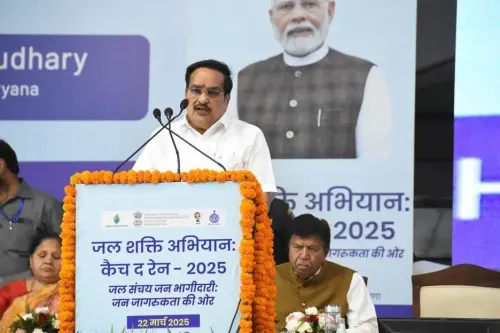
Jal Sanchay Abhiyan: 1.5 crore water conservation structures built since 2024
Synopsis
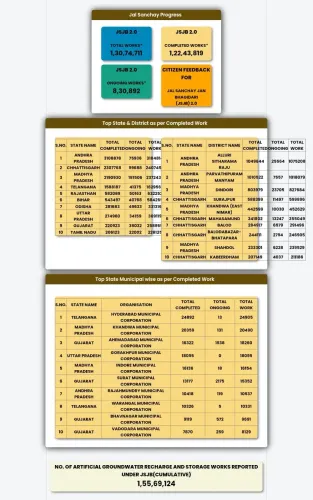
More than 1.5 crore water conservation structures have been built under the Jal Sanchay Abhiyan in under two years — a scale that dwarfs most previous government water campaigns. With the monsoon weeks away, the question is whether the storage capacity created can meaningfully ease India's chronic groundwater stress.
Key Takeaways
Paatil , Union Jal Shakti Minister, announced on 31 May 2026 that over 1.5 crore water conservation structures have been built under the Jal Sanchay Abhiyan .
The campaign was launched on 6 September 2024 at the call of Prime Minister Narendra Modi .
The first phase (until 31 May 2025 ) produced 27.5 lakh structures , creating approximately 2.4 BCM of additional water storage.
Widening and deepening of the Navsari Creek is underway and targeted for completion before the monsoon.
The minister appealed to citizens to support water conservation in their hometowns from wherever they currently live and work.
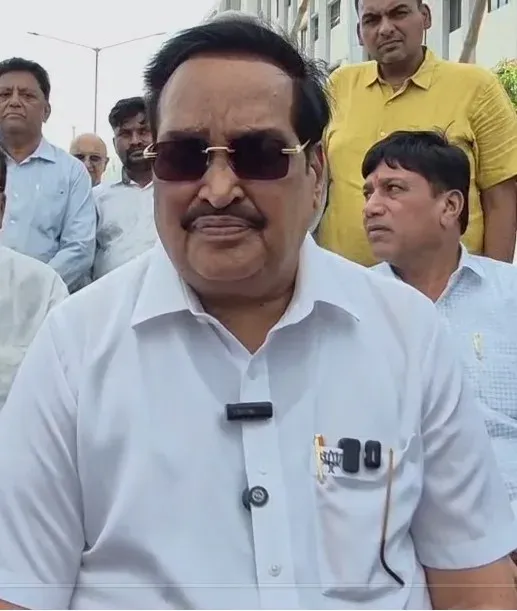
Union Jal Shakti Minister C.R. Paatil on Sunday, 31 May 2026 announced that the Jal Sanchay Abhiyan (water conservation campaign), launched on 6 September 2024, has successfully delivered over 1.5 crore water conservation structures across India. Speaking to reporters in Navsari, Gujarat, the minister called the milestone a testament to the public's response to Prime Minister Narendra Modi's call for a national water conservation movement.
Key Milestones of the Campaign
According to Paatil, the campaign's first phase — running until 31 May 2025 — saw the construction of 27.5 lakh (2.75 million) structures, generating approximately 2.4 BCM (Billion Cubic Metres) of additional water storage capacity. The total count has since crossed the 1.5 crore mark by 31 May 2026, representing a significant scale-up in the campaign's second year.
'Now that this figure has crossed the 15-million mark, the country is poised to achieve even greater success in water conservation during the upcoming monsoon season,' Paatil said.
What the Government Said
The minister attributed the campaign's scale to what he described as an 'overwhelming' public response, positioning the initiative as one of India's largest mass movements around natural resource management. He also appealed to citizens to contribute to water conservation in their Matrubhumi (place of birth) from their Karmabhumi (place of work) — a call directed at the Indian diaspora and migrant workforce.
Paatil, who also serves as the Member of Parliament from Navsari, praised local civic efforts and noted that the widening and deepening of the Navsari Creek is underway on a 'war footing', with completion targeted before the onset of the monsoon season.
Local Infrastructure Push in Navsari
'The ethos of completing tasks ahead of schedule — a hallmark of the Bharatiya Janata Party's workers and the administration — is clearly evident here today,' Paatil remarked. He credited the coordination between elected representatives and administrative officials for enabling faster resolution of public concerns, including chronic waterlogging in the region.
Broader Context and What Comes Next
The Jal Sanchay Abhiyan sits within a wider national water security agenda that includes the Jal Jeevan Mission and the Atal Bhujal Yojana. India faces acute groundwater stress in several states, and large-scale rainwater harvesting structures are seen as a decentralised response to seasonal water scarcity. With the southwest monsoon expected to arrive imminently, the campaign's structures are expected to capture significant runoff over the coming months. Officials have indicated that progress tracking will continue through the monsoon season, with updated figures likely after the rains.
Point of View
But the more important number is 2.4 BCM of additional storage generated in phase one — a figure that needs independent verification and comparison against India's annual water deficit to mean anything. Large-scale decentralised water harvesting has historically suffered from poor maintenance after construction; the campaign's long-term value will depend on whether these structures are functional and sustained, not merely built. With groundwater tables falling in Punjab, Haryana, and peninsular India, a mass-movement approach is directionally correct — but scale alone does not equal impact without quality audits and community ownership built in from the start.
NationPress
14 Oct 2026
Frequently Asked Questions
What is the Jal Sanchay Abhiyan?
The Jal Sanchay Abhiyan is a national water conservation campaign launched on 6 September 2024 at the call of Prime Minister Narendra Modi. It focuses on building decentralised water conservation structures — such as check dams, ponds, and recharge wells — across India to boost groundwater and surface water storage.
How many structures have been built under Jal Sanchay Abhiyan so far?
Over 1.5 crore (15 million) water conservation structures have been built as of 31 May 2026, according to Union Jal Shakti Minister C.R. Paatil. The first phase alone, completed by May 2025, delivered 27.5 lakh structures and added approximately 2.4 BCM of water storage capacity.
Who is C.R. Paatil and why did he address the media in Navsari?
C.R. Paatil is the Union Jal Shakti Minister and the Member of Parliament from Navsari, Gujarat. He addressed reporters in Navsari on 31 May 2026 to detail the campaign's progress and outline local infrastructure work, including the ongoing widening and deepening of the Navsari Creek ahead of the monsoon.
What is the significance of the 2.4 BCM water storage figure?
2.4 BCM (Billion Cubic Metres) represents the additional water storage capacity generated during the campaign's first phase, covering structures built until 31 May 2025. This figure indicates the volume of rainwater and runoff that can now be captured and stored rather than lost to drainage.
When is the Navsari Creek widening project expected to be completed?
According to Paatil, the widening and deepening of the Navsari Creek is being carried out on a 'war footing' and is targeted for completion before the onset of the monsoon season in 2026, aimed at preventing waterlogging in the area.