CM Dhami Highlights Reverse Migration Gains, New Jobs in Uttarakhand
Synopsis
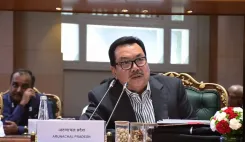
Uttarakhand CM Pushkar Singh Dhami announced on June 21, 2026, that the state has seen a measurable rise in reverse migration and a notable drop in unemployment, with Union Minister Ajay Tamta and MLA Mohan Maharaj present at the event.
Key Takeaways
CM Pushkar Singh Dhami declared on June 21, 2026 , that reverse migration in Uttarakhand has been actively encouraged under the current government.
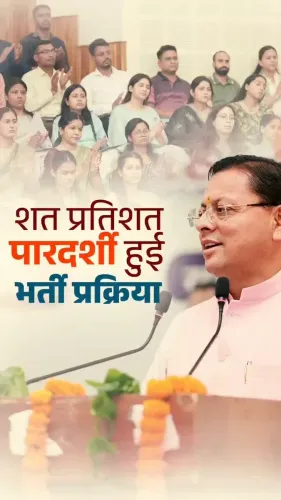
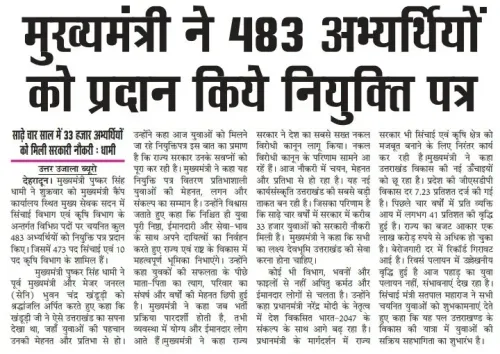
The Chief Minister cited new employment opportunities for youth and a significant decline in the unemployment rate as key outcomes.
Union Minister of State Ajay Tamta and MLA Mohan Maharaj were present at the event, signalling federal-state coordination on employment goals.
The state's Mukhya Mantri Swarozgar Yojana (since 2018) and post-COVID self-employment schemes form the policy backbone of the reverse-migration push.
Independent verification of unemployment and migration figures is expected from forthcoming Periodic Labour Force Survey district-level releases for Uttarakhand.
The reverse-migration narrative is likely to be a central BJP governance claim ahead of the 2027 Uttarakhand assembly elections .
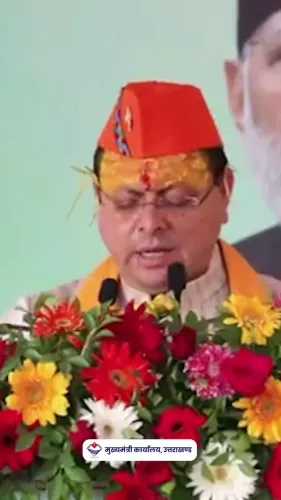
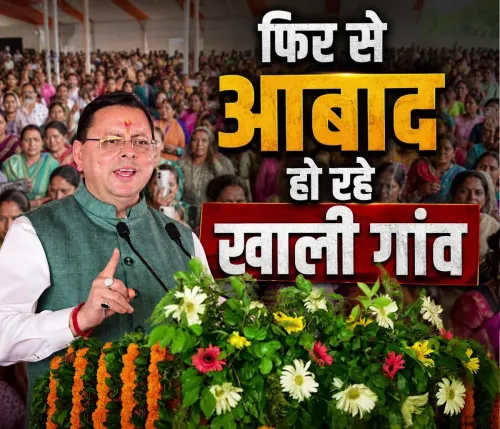
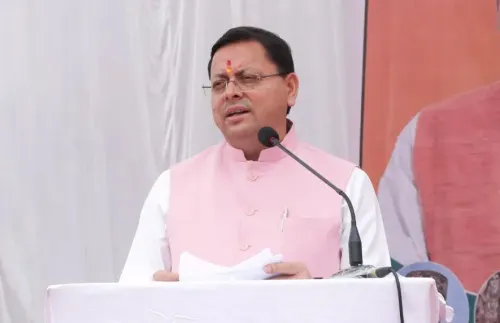
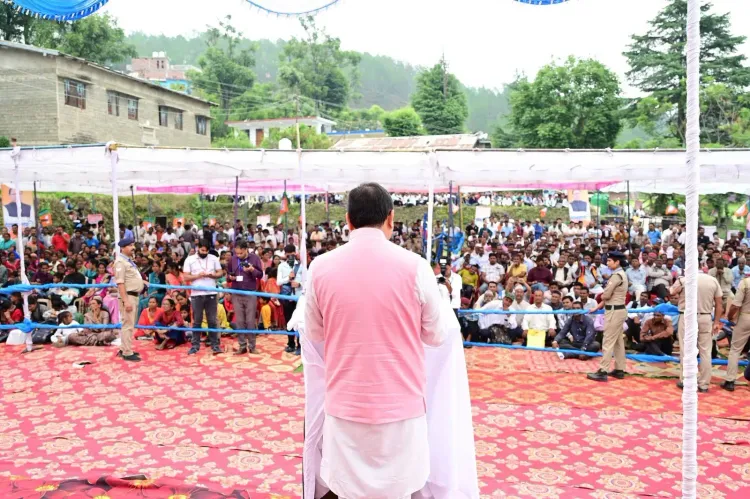
Uttarakhand Chief Minister Pushkar Singh Dhami on Sunday, June 21, 2026, highlighted that the state has seen a notable uptick in reverse migration, with new employment opportunities being created for youth and a significant decline in the unemployment rate. The announcement was made at a public event attended by senior BJP leaders from the state.
Context
Posting on X, CM Dhami stated — 'Uttarakhand mein reverse palayan ko protsahan mila hai, yuvaon ke liye naye avsar srujit hue hain tatha berojgari dar mein ullekhaniya kami darj ki gayi hai' — ('Reverse migration has been encouraged in Uttarakhand, new opportunities have been created for youth, and a notable decline in the unemployment rate has been recorded.'). He noted that Union Minister of State Ajay Tamta and MLA Mohan Maharaj were also present at the occasion.
Uttarakhand has grappled with chronic out-migration from its hill districts for decades, with residents moving to plains cities in search of livelihoods. Reversing this trend has been a stated priority of the BJP government since the state was carved out of Uttar Pradesh in 2000.
Policy Backdrop
The Dhami government has anchored its anti-migration push on a combination of central and state-level enterprise schemes. The state's Mukhya Mantri Swarozgar Yojana, running since 2018, provides subsidised loans to encourage local entrepreneurship in hill districts.
A fresh wave of policy attention followed the COVID-19 pandemic of 2020, when large numbers of migrant workers returned to their home villages. Uttarakhand responded with skill-development and self-employment loan programmes targeting these returning youth, framing the effort as part of the broader national Atmanirbhar Bharat push that pairs central infrastructure funding with state-level enterprise support.
Union Minister of State Ajay Tamta, a BJP parliamentarian from Uttarakhand, has been a consistent bridge between central scheme allocations and state-level implementation, making his presence at such events a signal of continued federal coordination on employment goals.
Stakeholders and Impact
The primary beneficiaries of reverse-migration policies are youth from Uttarakhand's hill districts — Pithoragarh, Chamoli, Uttarkashi, Bageshwar and others — who have historically left for cities like Delhi, Dehradun, and Haridwar in search of work. A sustained reversal of this trend would have demographic significance: depopulation of hill villages has strained local agriculture, education infrastructure, and community governance.
Local elected representatives such as MLA Mohan Maharaj are key ground-level stakeholders, as constituency-level implementation of self-employment schemes depends heavily on legislative outreach and grassroots awareness.
What's Next
The credibility of the government's unemployment and reverse-migration claims will be tested against forthcoming Periodic Labour Force Survey district-level data for Uttarakhand, which provide independent benchmarks for employment trends. Any new budget allocations under self-employment heads in the state's next fiscal cycle will indicate how firmly the policy commitment is backed by public expenditure.
With Uttarakhand assembly elections on the horizon in 2027, the reverse-migration narrative is expected to become a central plank of the BJP's governance record, putting pressure on the administration to translate announcements into verifiable, district-level outcomes.
Point of View
The absence of independently verified district-level data means the claims remain politically asserted rather than statistically confirmed, a gap that opposition parties are likely to exploit. With assembly elections approaching in 2027, the credibility of this reverse-migration story will hinge on whether PLFS data and ground-level reporting corroborate the government's narrative.
NationPress
19 Sept 2026
Frequently Asked Questions
What is reverse migration in Uttarakhand?
Reverse migration in Uttarakhand refers to the trend of residents — especially youth — who had moved to plains cities returning to their home villages in the hills, often encouraged by state self-employment and skill-development schemes.
What schemes does Uttarakhand have to stop out-migration?
The Mukhya Mantri Swarozgar Yojana , running since 2018, is the flagship scheme offering subsidised loans for local entrepreneurship. Post-COVID, the state also launched additional skill-development and self-employment support programmes targeting returning migrants.
Who is Ajay Tamta and why was he at the Uttarakhand event?
Ajay Tamta is a BJP Union Minister of State from Uttarakhand who frequently attends state events to coordinate central scheme implementation with local employment initiatives.
Has Uttarakhand's unemployment rate actually fallen?
CM Dhami has stated that the unemployment rate has recorded a notable decline, but independent verification will depend on forthcoming district-level data from the Periodic Labour Force Survey .
Why is reverse migration important for Uttarakhand?
Chronic out-migration from Uttarakhand's hill districts has depopulated villages, strained local agriculture, and weakened community infrastructure; reversing this trend is considered essential for sustainable hill development.