Dr. Jitendra Singh at IPRD 2026: India's Indo-Pacific Role
Synopsis
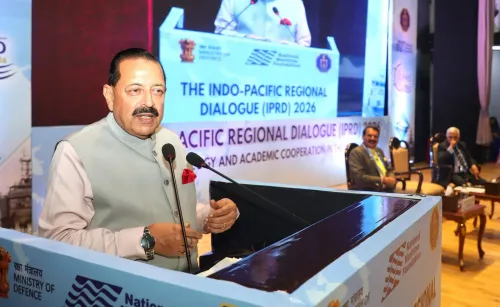
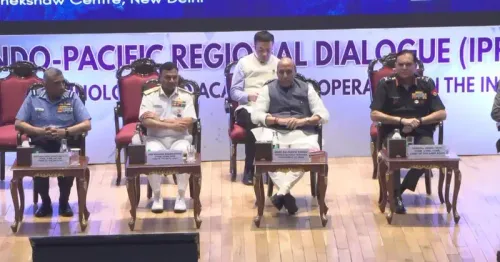
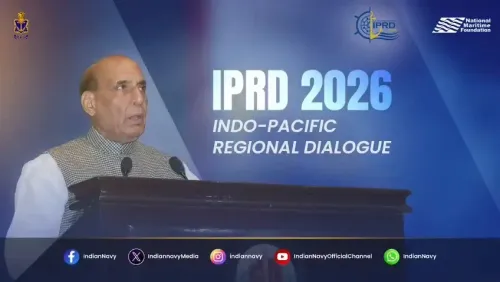
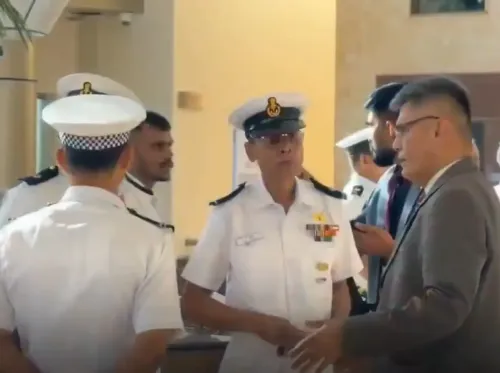
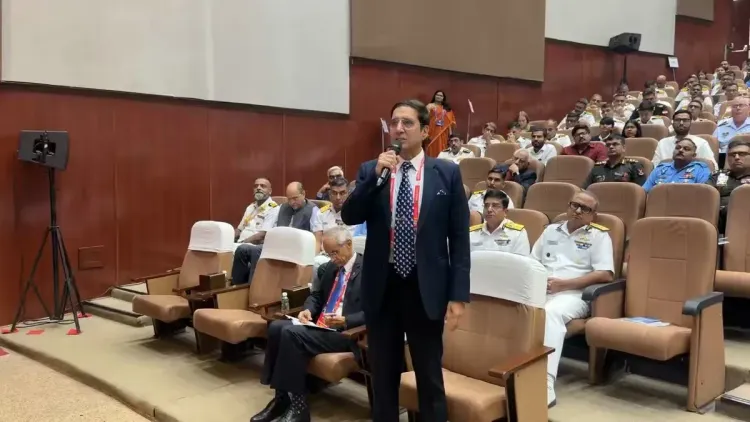
Union Minister Dr. Jitendra Singh attended the Indo-Pacific Regional Dialogue 2026 at Manekshaw Centre, New Delhi, engaging with naval officers and students on maritime security and India's expanding Indo-Pacific strategic role.
Key Takeaways
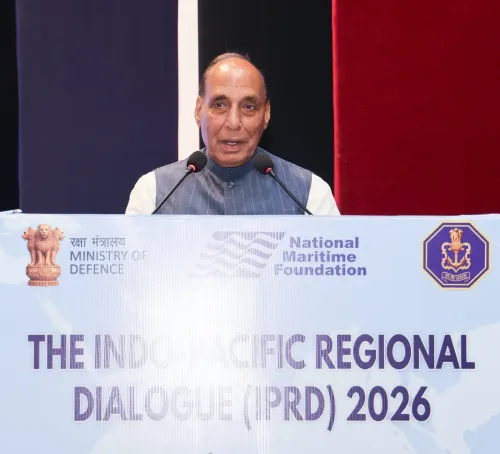
Jitendra Singh attended the Indo-Pacific Regional Dialogue 2026 (IPRD) at Manekshaw Centre, New Delhi on 4 November 2026 .
The event was organised by the National Maritime Foundation (NMF) , India's leading maritime think tank founded in 2005 .
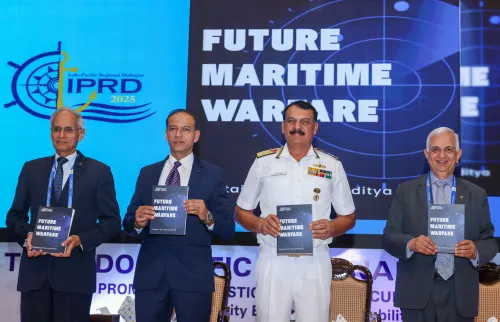
Admiral Dinesh Kumar Tripathi (Chairman NMF) and Vice Admiral Pradeep Chauhan (Director General NMF) led the organisation of the dialogue.
The session focused on maritime security, strategic cooperation, and India's growing Indo-Pacific role.
India's Indo-Pacific posture is underpinned by the SAGAR doctrine and participation in the Quad , with NMF dialogues forming a sustained institutional pillar.
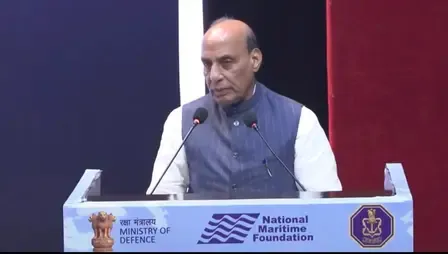
India's maritime strategic conversation got a ministerial voice on Wednesday, 4 November 2026, when Union Science and Technology Minister Dr. Jitendra Singh addressed officers and students at the Indo-Pacific Regional Dialogue 2026 (IPRD) — the flagship annual conference of the National Maritime Foundation (NMF) — held at the storied Manekshaw Centre, New Delhi.
Dr. Singh called the interaction 'enriching', crediting Admiral Dinesh Kumar Tripathi, Chairman NMF, and Vice Admiral Pradeep Chauhan, Director General NMF, for organising what he described as a 'thought-provoking session' that yielded insights into maritime security, strategic cooperation and India's growing role in the Indo-Pacific region.What NMF's annual dialogue represents for Indian strategic thought
The National Maritime Foundation, established in 2005, is India's pre-eminent maritime think tank, tasked with generating research and public discourse on sea-power and strategy. The Indo-Pacific Regional Dialogue is its marquee annual conference, drawing serving naval officers, academics, strategic studies students, and senior policymakers to stress-test ideas on trade, security and regional architecture across the vast Indo-Pacific arc.
Manekshaw Centre — named after Field Marshal Sam Manekshaw — has long served as New Delhi's preferred venue for high-stakes defence and strategic exchanges, lending an institutional gravitas to events held within its halls.
India's Indo-Pacific doctrine and the SAGAR framework
India's engagement with the Indo-Pacific is not incidental. At the 2018 Shangri-La Dialogue, India formally articulated a vision built on free navigation, a rules-based maritime order, and deep regional connectivity. That vision is operationalised through the SAGAR doctrine — Security and Growth for All in the Region — and reinforced through India's active participation in the Quad alongside the United States, Japan, and Australia.
NMF dialogues sit squarely within this strategic architecture. By convening serving officers alongside academic voices, IPRD builds the analytical bench that sustains India's maritime diplomacy beyond any single government or tenure.
A science minister at a maritime forum — why it matters
Dr. Singh's presence at a defence-and-strategy forum signals the deliberate cross-domain nature of India's Indo-Pacific engagement. Science, technology, and maritime security are increasingly inseparable — from deep-sea research to satellite-based domain awareness — and ministerial participation at platforms like IPRD underscores the whole-of-government character of India's strategic outlook. The next editions of IPRD, and any follow-up positions from the Ministries of Defence and External Affairs, will indicate how these dialogues translate into concrete policy.
Point of View
Not merely a defence-ministry brief. His acknowledgement of NMF's role signals continued executive support for think-tank-led strategic discourse — a model India has leaned on since formally unveiling its Indo-Pacific vision at the 2018 Shangri-La Dialogue. With the Quad deepening and maritime domain awareness becoming a technology-intensive pursuit, the intersection of a science minister and a naval strategy forum is less coincidental than it appears. Sustained ministerial engagement at platforms like IPRD also helps build domestic political consensus around long-horizon maritime commitments.
NationPress
5 Nov 2026
Frequently Asked Questions
What is the Indo-Pacific Regional Dialogue (IPRD)?
IPRD is an annual maritime security conference organised by the National Maritime Foundation (NMF), India's premier maritime think tank. It brings together naval officers, academics and policymakers to discuss strategy, trade and security across the Indo-Pacific.
What is the National Maritime Foundation of India?
The National Maritime Foundation (NMF) was established in 2005 as India's leading maritime research and policy think tank. It promotes analysis and public discourse on sea-power, maritime security and India's strategic interests in surrounding waters.
What is India's SAGAR doctrine?
SAGAR stands for 'Security and Growth for All in the Region.' It is India's maritime policy framework that emphasises cooperative security, free navigation, and economic partnerships with Indian Ocean and Indo-Pacific neighbours.
Where is Manekshaw Centre located?
Manekshaw Centre is a prominent conference and events venue in New Delhi, named after Field Marshal Sam Manekshaw. It is frequently used for high-level defence and strategic dialogues in India.
Why did a Science Minister attend a maritime security dialogue?
India's Indo-Pacific strategy increasingly blends science, technology and security — from deep-sea research vessels to satellite-based maritime domain awareness. Dr. Singh's presence at IPRD 2026 reflects the cross-domain, whole-of-government approach the Indian government brings to its Indo-Pacific engagement.