CM Dhami: Uttarakhand Unemployment Below National Average

Synopsis
Chief Minister Pushkar Singh Dhami has claimed Uttarakhand achieved a record reduction in its unemployment rate, pushing it below the national average. The statement, shared by the official CMO account on 28 May 2026, highlights the state's employment growth drive under its post-2021 industrial and skills policy push.
Key Takeaways
CM Pushkar Singh Dhami declared on 28 May 2026 that Uttarakhand's unemployment rate has fallen below the national average.
The state government attributes the improvement to sustained efforts in employment growth and industrial investment since 2021.
Uttarakhand's Industrial Policy (revised 2021 ) and central schemes like Skill India have been key policy instruments cited.
The MSME sector and Uttarakhand's youth , including those who previously migrated for work, are the primary stakeholders.
The claim awaits independent corroboration from the next Periodic Labour Force Survey (PLFS) round.
The statement was posted with a video on the official Chief Minister's Office of Uttarakhand X account.
The Chief Minister's Office of Uttarakhand, on Thursday, 28 May 2026, shared a statement from Chief Minister Pushkar Singh Dhami claiming the state has achieved a record reduction in its unemployment rate, bringing it below the national average through sustained employment growth efforts.
What Was Said
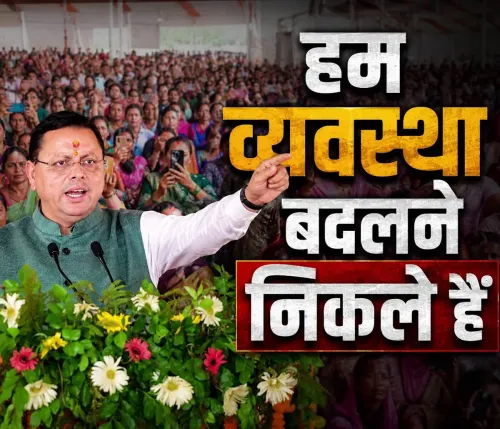
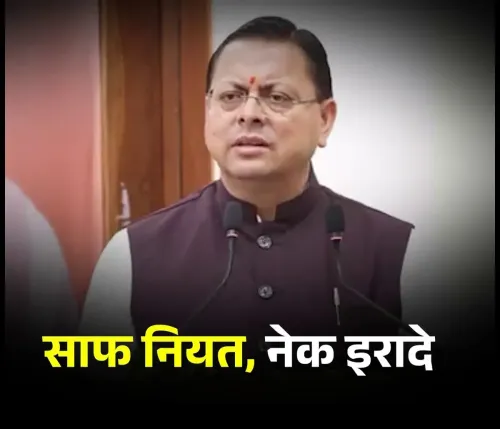
CM Dhami stated, in his words: 'Rozgar vriddhi dar mein achha prayas karte hue berozgari dar mein record kami lakar rashtriya ausat se neeche lakar Uttarakhand ne behtar prayas kiya hai.' Translated: 'By making good efforts in employment growth and bringing about a record reduction in the unemployment rate — bringing it below the national average — Uttarakhand has made a commendable effort.' The remark was accompanied by a video post on the official Chief Minister's Office account.
Context
Uttarakhand is a hill state where employment generation has historically been constrained by geography, seasonal tourism dependence, and limited industrial land. Since 2021, the state government under CM Dhami has pursued investment-linked job creation, particularly in Himalayan districts, as a policy priority. Indian states routinely benchmark their unemployment figures against the national Periodic Labour Force Survey (PLFS) average as a measure of economic health.
The claim of falling below the national average, if borne out by the next PLFS round, would represent a notable shift for a state that has long grappled with out-migration of working-age youth to plains cities. The MSME sector and self-employment schemes have been positioned as key levers in the state's jobs strategy.
Policy Backdrop
Uttarakhand's Industrial Policy, revised around 2021, sought to attract manufacturing and services investment into the state, offering incentives for units setting up in hill districts. Central government programmes — including Skill India and various self-employment credit-linked schemes rolled out since 2020 — have supplemented state-level efforts. The convergence of state industrial outreach and central skill-development funding has been cited by the government as a driver of the employment uptick.
Employment data for Indian states is formally tracked through the PLFS, published by the Ministry of Statistics and Programme Implementation. The next survey round is expected to provide updated state-wise unemployment figures that will either corroborate or qualify the state's claims.
Stakeholders and Impact
Uttarakhand's youth — particularly those in rural hill districts who previously migrated to Delhi, Dehradun, or other plains cities for work — stand as the primary beneficiaries if the employment gains are sustained. The MSME sector, which accounts for a significant share of non-farm employment in the state, has been a focal point of government outreach. Tourism-linked livelihoods, which were severely disrupted during the pandemic years, have also seen a recovery that contributes to employment numbers.
What's Next
The government's claim will be tested against the forthcoming PLFS data release, which will provide independently verified state-wise unemployment figures. Any new self-employment or skills budget allocations in Uttarakhand's upcoming financial cycle will indicate whether the state plans to consolidate these gains. If the numbers hold, Uttarakhand could cite the achievement as a model for other hill states navigating similar structural employment challenges.
Point of View
The absence of specific figures makes independent verification difficult until the next official labour survey round is published. If the data holds, it would mark a meaningful inflection in Uttarakhand's long-running effort to retain working-age residents within the state.
NationPress
16 Oct 2026
Frequently Asked Questions
What did CM Pushkar Singh Dhami say about Uttarakhand's unemployment rate?
CM Dhami stated that Uttarakhand has achieved a record reduction in its unemployment rate, bringing it below the national average through sustained employment growth efforts.
Is Uttarakhand's unemployment rate really below the national average?
The Chief Minister's Office has made this claim, but it is yet to be independently verified. The next Periodic Labour Force Survey (PLFS) round will provide official state-wise data to confirm or contradict the assertion.
What policies has Uttarakhand used to reduce unemployment?
The state has relied on its revised Industrial Policy (2021), MSME promotion, tourism-linked livelihoods, and central government schemes like Skill India and self-employment credit-linked programmes.
What is the PLFS and why does it matter for Uttarakhand?
The Periodic Labour Force Survey (PLFS) is the official government survey that tracks employment and unemployment rates across Indian states. It is the standard benchmark used to compare state performance against the national average.
Who are the main beneficiaries of Uttarakhand's employment push?
Uttarakhand's youth — especially those in rural hill districts who previously migrated to cities for work — and workers in the MSME and tourism sectors are the primary beneficiaries cited by the government.