CM Dhami: New Industries, Startups Driving 44% Rise in Reverse Migration
Synopsis
Chief Minister Pushkar Singh Dhami has credited new industries, startups, and a surge in hotels and homestays for a 44 per cent rise in reverse migration in Uttarakhand, framing it as a key marker of the state's economic turnaround.
Key Takeaways
CM Pushkar Singh Dhami announced a 44 per cent increase in reverse migration in Uttarakhand.
Growth in new industries, startups, hotels, and homestays was cited as the direct cause.
The announcement was made on 16 July 2026 via the official Chief Minister's Office account on X.
Reversing out-migration from hill districts of Garhwal and Kumaon has been a long-standing state priority.
The state's Industrial Development Policy (2021-22) introduced capital subsidies and single-window clearances to attract investment.
Independent verification of the 44 per cent figure , including its methodology and base period, has not yet been made public.
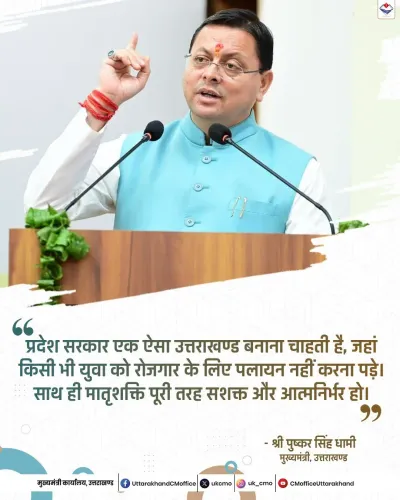
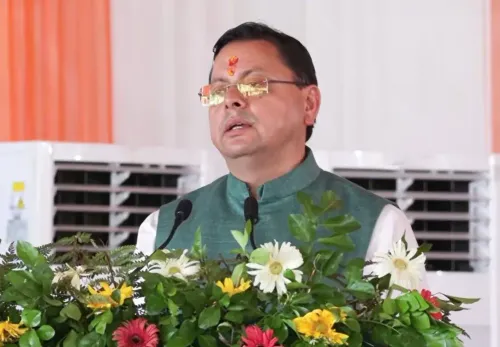
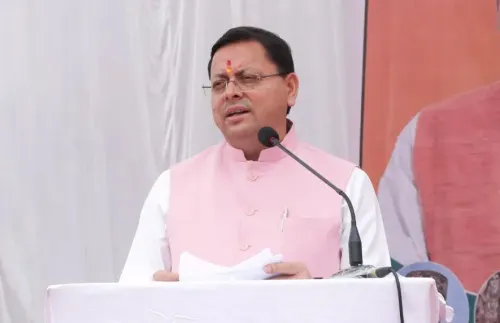
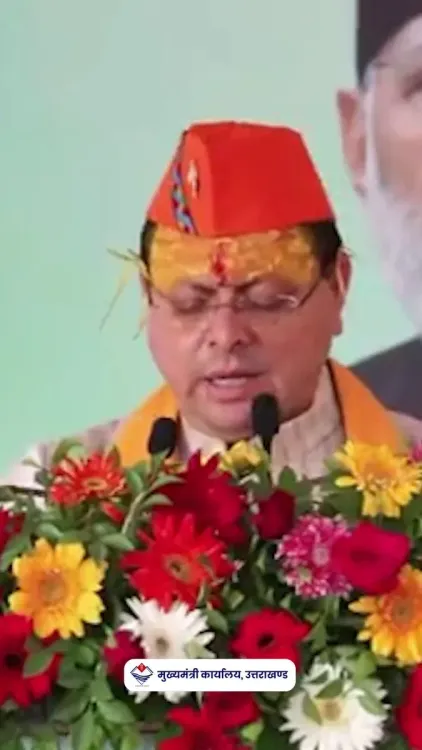
The Chief Minister's Office of Uttarakhand, on Thursday, 16 July 2026, quoted Chief Minister Pushkar Singh Dhami as saying that new industries, startups, hotels, and homestays established across the state have produced a 44 per cent increase in reverse migration — a metric the government is treating as a key indicator of its economic success.
Context
Addressing what has long been one of Uttarakhand's most politically sensitive challenges, CM Dhami stated: 'Aaj pradesh mein naye udyog sthaapit hue hain, startups ki sankhya mein vriddhi hui hai, hotelom va home stay ki sankhya mein badhotari hui hai' ('Today, new industries have been established in the state, the number of startups has grown, and the count of hotels and homestays has increased'). He attributed the 44 per cent rise in reverse migration directly to these developments, calling it a 'pleasing outcome' (sukhad parinaam).
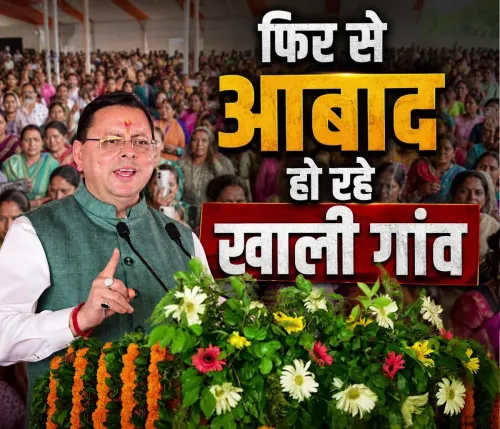
Out-migration from Uttarakhand's hill districts — spanning the Garhwal and Kumaon divisions — has depopulated hundreds of villages over decades, as residents moved to plains cities in search of employment and better services. Reversing this trend has been a stated priority of successive state governments.
Policy Backdrop
The Dhami government has leaned on a two-pronged approach: industrial growth in the Terai plains and eco-tourism expansion in the hills. Following the state's updated Industrial Development Policy of 2021-22, capital subsidies and single-window clearances were offered to attract new manufacturing units and startups.
The hospitality sector — particularly the homestay model — has been promoted as a low-capital, high-impact route for hill families to earn locally. Growth in registered homestays has been cited by the administration as evidence that rural households are finding viable income without relocating.
This dual strategy mirrors approaches taken by Himachal Pradesh and several Northeastern states, where MSME growth combined with tourism incentives has been used to claim reduced out-migration, making reverse-migration data a competitive performance metric across the Himalayan belt.
Stakeholders and Impact
The primary beneficiaries cited are hill youth, returning migrants, and homestay operators. For families that had relocated to cities like Dehradun, Haridwar, or further afield to Delhi and Mumbai, local employment opportunities — whether in a new factory, a startup, or a tourist-facing business — reduce the economic compulsion to stay away.
Homestay operators, in particular, represent a category that can generate income with relatively modest investment, and their growth signals that tourism demand in the state is being channelled into household-level economic activity rather than only large hotel chains.
What's Next
The 44 per cent reverse-migration figure, as stated by CM Dhami, is expected to feature prominently in the state's political and budgetary narrative. Analysts and opposition parties are likely to seek clarity on the methodology, baseline year, and geographic coverage of the data — details that the Uttarakhand planning department has not yet publicly released.
The next state budget presentation will be a critical moment to watch for fresh employment surveys, migration data, and any expansion of the industrial or homestay incentive framework. If independently verified, a sustained reversal of out-migration would represent one of the most significant socio-economic shifts in Uttarakhand since statehood in 2000.
Point of View
The absence of publicly available methodology makes the figure vulnerable to scrutiny — opposition parties and independent researchers will demand a baseline year and district-level breakdown before the number can anchor policy. If the data holds up, it would mark a genuine inflection point; if it does not, it risks becoming a liability for the administration.
NationPress
15 Oct 2026
Frequently Asked Questions
What is reverse migration in Uttarakhand?
Reverse migration refers to people who had left Uttarakhand's hill districts for employment in plains cities returning to live and work in their home state. It is considered a key indicator of local economic health in a state that has historically suffered severe rural depopulation.
What did CM Dhami say about reverse migration on 16 July 2026?
CM Pushkar Singh Dhami stated that new industries, startups, hotels, and homestays established in the state have resulted in a 44 per cent increase in reverse migration, calling it a pleasing outcome of the government's economic policies.
Why is out-migration a big issue in Uttarakhand?
Uttarakhand's Garhwal and Kumaon hill regions have seen decades of out-migration as residents moved to cities for jobs and services, leaving hundreds of villages underpopulated or abandoned. Reversing this trend is a central political and developmental challenge for the state government.
What policies has the Uttarakhand government used to boost local employment?
The state updated its Industrial Development Policy in 2021-22 to offer capital subsidies and single-window clearances for new industries and startups. It has also promoted the homestay model in hill areas to enable rural families to earn from tourism without relocating.
Has the 44% reverse migration figure been independently verified?
As of the date of the announcement, the methodology, baseline year, and geographic coverage of the 44 per cent reverse-migration figure cited by CM Dhami have not been publicly released by the Uttarakhand planning department, and the claim has not been independently verified.