ISKCON to take over mid-day meals in Bengal state schools: CM Adhikari
Synopsis
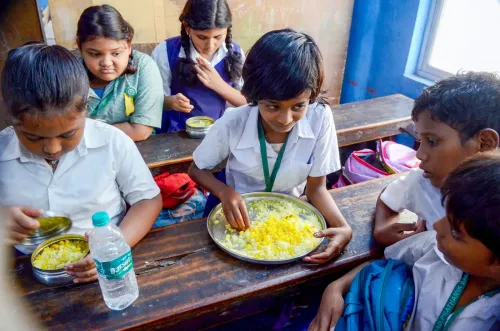
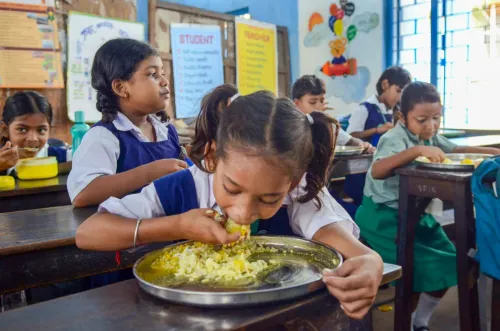
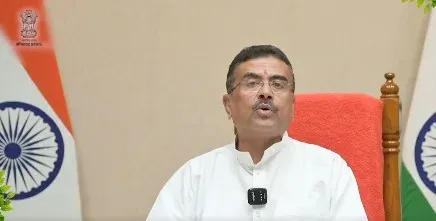
West Bengal CM Suvendu Adhikari has handed ISKCON a statewide mandate to run mid-day meals in government schools — starting Kolkata from 1 August. The move sidelines eggs from school menus without specifying replacements, raising nutrition questions for millions of children from economically weaker families.
Key Takeaways
West Bengal CM Suvendu Adhikari announced on 16 July that ISKCON will progressively manage mid-day meals across all state-run schools.
The rollout begins with Kolkata Municipal Corporation schools from 1 August , followed by Nadia district , then statewide.
ISKCON has signed a preliminary agreement with the West Bengal state government on the arrangement.
Eggs, previously served in mid-day meals, may be discontinued; the CM assured 'nutritious food' but did not specify the revised menu.
Adhikari alleged 'massive irregularities' in the mid-day meal scheme under the previous TMC government, citing ISKCON's involvement as a corrective.
The CM also named Ramakrishna Math and Mission and Bharat Sevashram Sangha as other organisations he plans to partner with in state welfare delivery.
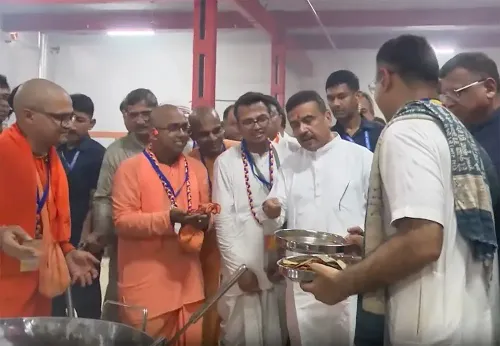
West Bengal Chief Minister Suvendu Adhikari announced on Thursday, 16 July that the International Society for Krishna Consciousness (ISKCON) will progressively be handed responsibility for mid-day meal services across all state-run schools in West Bengal. The rollout begins with schools under the Kolkata Municipal Corporation from 1 August, followed by Nadia district, before extending statewide.
Phased Rollout Plan
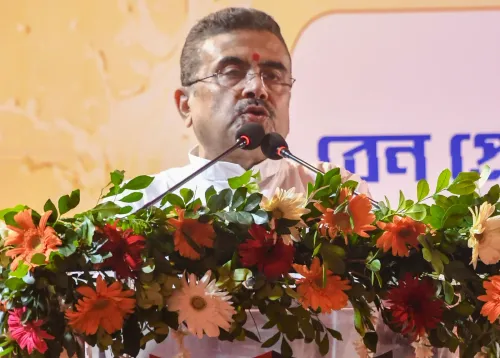
Adhikari made the announcement at the sidelines of a Ratha Yatra festival programme in Mecheda, his native East Midnapore district. He confirmed that ISKCON has already reached a preliminary agreement with the state government on the arrangement. 'ISKCON had already been given the responsibility of mid-day meal services in state-run schools within the Kolkata Municipal Corporation from August 1. Next, ISKCON will be given the responsibility for all state-run schools in Nadia district. Gradually the society will be given the same responsibility in all state-run schools in all districts in West Bengal,' he told reporters.
Nutrition Focus and the Egg Question
The announcement has reignited a longstanding debate over whether eggs — previously a staple of the mid-day meal programme — will continue to be served. Since ISKCON follows a strictly vegetarian ethos, questions have been raised about the nutritional adequacy of the revised menu for children from economically weaker sections. Adhikari assured that 'only nutritious food will be served to school students,' but stopped short of specifying what items would replace eggs on the menu. 'The students coming from ordinary families generally consume mid-day meals. ISKCON will provide them with nutritious food,' he said, without elaborating further.
Tackling Malnutrition and Corruption
The Chief Minister framed the shift as a two-pronged response to malnutrition and alleged financial irregularities. He stated that children receiving mid-day meals are primarily from 'middle-class, lower-middle-class and economically backward families,' and argued that the involvement of a mission-driven organisation like ISKCON would ensure both quality and accountability. 'There is a special need for nutritious food to eliminate malnutrition. That is exactly where ISKCON comes in,' Adhikari said. He also alleged that during the previous Mamata Banerjee-led All India Trinamool Congress (TMC) government, 'massive irregularities' had plagued the mid-day meal scheme, and claimed that ISKCON's involvement would 'weed out the possibilities of such irregularities henceforth.'
Broader Vision: Faith-Based Organisations in Governance
Adhikari positioned the ISKCON partnership as part of a wider governance philosophy centred on collaborating with organisations driven by 'selfless human service.' He named the Ramakrishna Math and Ramakrishna Mission and Bharat Sevashram Sangha as other bodies he intends to associate with in rebuilding West Bengal. Notably, this signals a deliberate pivot toward faith-affiliated civil society organisations in the delivery of state welfare schemes — a model that is likely to draw both support and scrutiny across the political spectrum.
What Comes Next
With the Kolkata Municipal Corporation schools set to transition from 1 August, the immediate test will be whether ISKCON can operationally match the scale and nutritional standards of the existing programme. The absence of clarity on the revised menu — particularly on protein sources — means the egg controversy is unlikely to subside until the government publishes a formal dietary framework. All eyes will be on the Nadia district rollout as the first large-scale indicator of how the model performs beyond Kolkata.
Point of View
Eggs are often the primary animal protein in their daily diet; removing them without a credible nutritional substitute risks worsening the very malnutrition Adhikari says he wants to eliminate. The CM's refusal to specify the revised menu at the time of announcement is a red flag. Beyond nutrition, the model raises a structural question: when faith-based organisations deliver state welfare, accountability mechanisms must be explicitly designed in — not assumed from the organisation's ethos. Bengal's mid-day meal irregularities under the previous government were real and documented, but the remedy cannot be opacity under a different banner.
NationPress
15 Oct 2026
Frequently Asked Questions
What has West Bengal CM Suvendu Adhikari announced about ISKCON and mid-day meals?
CM Adhikari announced on 16 July that ISKCON will gradually take over mid-day meal services in all state-run schools across West Bengal. The rollout starts with Kolkata Municipal Corporation schools from 1 August, followed by Nadia district, before expanding statewide.
Will eggs still be served in West Bengal school mid-day meals under ISKCON?
This remains unclear. Eggs were previously part of the mid-day meal menu, but ISKCON follows a strictly vegetarian tradition. CM Adhikari assured 'nutritious food' would be provided but did not specify whether eggs would be retained or what would replace them nutritionally.
Why is the West Bengal government partnering with ISKCON for school meals?
CM Adhikari cited two reasons: ensuring nutritious food for children from economically weaker families, and eliminating the alleged financial irregularities that he claims plagued the mid-day meal scheme under the previous TMC government. He described ISKCON's ethos as one of 'selfless human service.'
Which schools will be affected first by the ISKCON mid-day meal takeover?
Schools under the Kolkata Municipal Corporation will be the first to transition, from 1 August. Nadia district schools are next in the phased plan, after which the arrangement is intended to cover all districts in West Bengal.
Has ISKCON formally agreed to this arrangement with the West Bengal government?
Yes, according to CM Adhikari, ISKCON has reached a preliminary agreement with the state government to manage mid-day meal services. Full operational details and a formal dietary framework had not been publicly disclosed at the time of the announcement.