July 21 Martyrs' Day 2025: Bengal opposition blocs battle for ownership, Mamata under pressure
Synopsis
July 21 was once Mamata Banerjee's uncontested political stage — this year, four rival factions are fighting over it. With the TMC fractured, the Calcutta High Court blocking her preferred venue, and Congress dangling a conditional invitation that doubles as a trap, the annual Martyrs' Day rally has become the sharpest test yet of whether Mamata can still command the street.
Key Takeaways
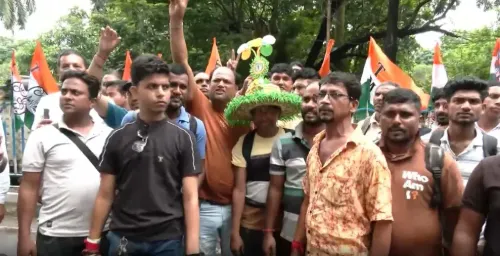
Four separate events are scheduled on 21 July 2025 in West Bengal, as rival political blocs contest ownership of Martyrs' Day .
The date commemorates a 1993 Youth Congress march led by Mamata Banerjee in which 13 people were killed after Kolkata Police opened fire on protesters.
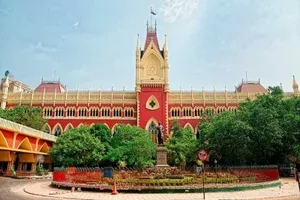
The Calcutta High Court denied permission for the traditional Victoria House venue, citing traffic and law-and-order concerns.
Congress has invited Mamata to its Shahid Minar event on condition she admits leaving the party was a 'mistake' — a demand widely seen as political leverage.
TMC has suffered significant defections of MLAs and MPs , weakening Mamata's organisational base ahead of the rally.
Turnout numbers and further defections on the day are expected to shape Bengal's opposition landscape in the months ahead.
Four separate events are scheduled in West Bengal this 21 July as rival political factions — including splintered Trinamool Congress (TMC) groups and the Indian National Congress (Congress) — compete to claim ownership of Martyrs' Day, a date that has defined Mamata Banerjee's political identity for over three decades. The contest is both a show-of-strength exercise and a referendum on who controls the moral legacy of the 1993 Youth Congress march that turned deadly on the streets of Kolkata.
The History Behind July 21
The date marks a 1993 Youth Congress procession led by Mamata Banerjee — then a Congress leader — demanding photo voter identity cards from the ruling Left Front government. Kolkata Police opened fire on protesters, killing 13 people, with several more injured in the ensuing stampede. The tragedy became the founding myth of Mamata's political persona, cementing her image as a fearless street fighter against an entrenched establishment.
Mamata later broke from Congress in 1997–1998 to form the Trinamool Congress, channelling that grassroots anger into a new political vehicle. For decades, July 21 remained her annual mass mobilisation ritual — a disciplined spectacle of loyalty held in the heart of Kolkata.
Why Four Events This Year
The TMC has fractured significantly, with several MLAs and MPs defecting to rival camps. This organisational erosion has opened space for competing factions to stake a claim on the same symbolic date. Rival TMC groupings, Congress, and other opposition blocs each see July 21 as a live test of their ability to mobilise people — and as a chance to capture the 'anti-establishment' mantle that Mamata once monopolised.
Notably, the Calcutta High Court refused permission for the traditional Victoria House venue, citing traffic and law-and-order concerns, and directed Mamata's faction to hold its event elsewhere. Her camp has resisted relocation to avoid ceding symbolic ground, but court-mandated restrictions on participant numbers and police conditions make mounting a mass show considerably harder.
Congress's Calculated Invitation
Congress leaders have publicly invited Mamata Banerjee to join their Shahid Minar event — but with a pointed condition: that she publicly acknowledge that leaving the Congress was a 'mistake'. The party argues the 1993 march was organised under the banner of its youth wing and that the historical narrative belongs to it.
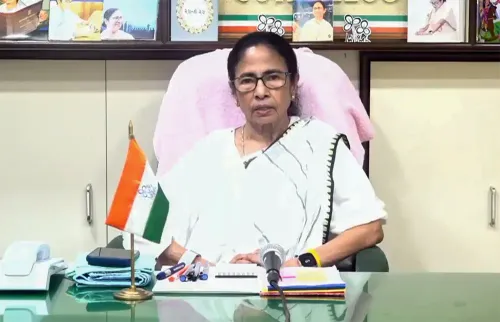
The invitation is simultaneously an olive branch and a political trap. With TMC weakened by defections, Congress calculates that a public admission from Mamata would delegitimise her split and attract disillusioned voters back to its fold. Speculation about a possible return of prominent leaders — including Mamata — to Congress had circulated in political corridors not long ago, though those rumours were subsequently dismissed. In recent Facebook video messages, Mamata has announced a fightback, signalling she has no intention of capitulating.
The Challenges Facing Mamata Banerjee
The septuagenarian leader confronts a qualitatively different landscape from the one she navigated in the 1990s. Her political assets — fearless leadership, personal charisma, a loyal core of grassroots workers, and the symbolic ownership of July 21 — remain intact in part. But organisational erosion, defections of close confidantes, legal and administrative constraints, and a changed public mood have collectively narrowed her room for manoeuvre.
A credible comeback, analysts argue, would require rebuilding organisational depth, articulating a political narrative that moves beyond nostalgia, and cultivating credible local leaders — a considerably taller order than in her earlier years.
What July 21 Will Reveal
All factions are under intense scrutiny, and turnout numbers will be compared closely — particularly given court-enforced limits on crowd size and police presence. Whether Mamata can convert the day's symbolism into disciplined, emotive mobilisation — and avoid further defections — remains the defining question. July 21, 2025 will function as a referendum on symbolic ownership as much as on raw organisational muscle, with the results likely to shape Bengal's opposition arithmetic in the months ahead.
Point of View
The symbolism Mamata has built over thirty years begins to erode in real time — and no Facebook video can substitute for boots on the ground.
NationPress
15 Oct 2026
Frequently Asked Questions
What is July 21 Martyrs' Day in West Bengal?
July 21 Martyrs' Day commemorates a 1993 Youth Congress march in Kolkata, led by Mamata Banerjee, during which Kolkata Police fired on protesters demanding photo voter identity cards from the Left Front government, killing 13 people. The date became central to Mamata's political identity and has since been observed as an annual mass rally by the Trinamool Congress.
Why are multiple groups holding separate events on July 21, 2025?
The Trinamool Congress has fractured, with several MLAs and MPs defecting to rival camps. This has allowed competing factions — including breakaway TMC groups and the Congress — to each stake a claim on the date's symbolic legacy, turning it into a four-way contest for organisational credibility and the 'anti-establishment' mantle.
Why was Mamata Banerjee's rally shifted from Victoria House?
The Calcutta High Court refused permission for the traditional Victoria House venue, citing traffic and law-and-order concerns, and directed Mamata's faction to hold its event at an alternative location. Her camp has resisted relocation to avoid ceding symbolic ground, but court-imposed restrictions on participant numbers have complicated plans for a large-scale show.
What is the Congress's condition for inviting Mamata Banerjee to its event?
Congress has invited Mamata to join its Shahid Minar event on the condition that she publicly admits leaving the Congress was a 'mistake.' The party argues the 1993 march was organised under its youth wing's banner and seeks to reclaim the historical narrative. Analysts view the demand as political leverage rather than a genuine reconciliation offer.
What challenges does Mamata Banerjee face heading into July 21?
Mamata faces organisational erosion from defections of close confidantes and MLAs, legal constraints on her preferred rally venue, and a changed electoral landscape. Rebuilding organisational depth, crafting a narrative beyond nostalgia, and developing credible local leaders are seen as prerequisites for a meaningful political comeback.