Iran violated Strait of Hormuz deal, faces US military strikes and blockade
Synopsis
The White House says Iran broke a signed agreement by attacking commercial ships in the Strait of Hormuz — and the US response is now a full naval blockade enforced by two aircraft carriers and 10,000 personnel. Diplomacy hasn't ended, but the terms have shifted sharply: deal or face continued strikes.
Key Takeaways
The White House accused Iran of violating a signed memorandum of understanding by attacking commercial vessels in the Strait of Hormuz .
President Trump authorised renewed military strikes in response to the breach, Press Secretary Karoline Leavitt confirmed on 17 July .
The US has reimposed a naval blockade on vessels entering and departing Iranian ports , enforced by two aircraft carriers , over 20 warships , and more than 10,000 military personnel.
In the first 24 hours , US CENTCOM redirected two compliant ships and disabled one non-compliant vessel.
Iran has reportedly continued to express interest in a deal with Washington despite the escalation; diplomatic contacts remain active.
Leavitt dismissed reports of a rift between Trump and Vice-President JD Vance , saying both are 'on the exact same page.'
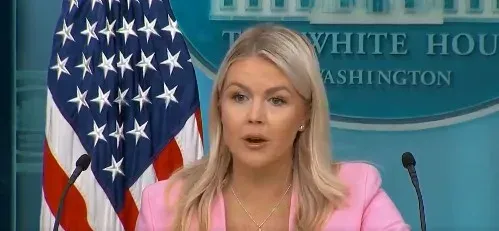
The White House on Thursday, 17 July accused Iran of breaching a memorandum of understanding with the United States by attacking commercial vessels in the Strait of Hormuz, with Press Secretary Karoline Leavitt confirming that President Donald Trump authorised renewed military strikes in direct response to Tehran's violations. Despite the escalation, diplomatic contacts between the two sides have not been severed.
What Iran Allegedly Violated
According to Leavitt, the memorandum of understanding — which Iran signed — explicitly prohibited Tehran from firing on commercial vessels transiting the Strait of Hormuz. She stated that Iran's attacks on shipping constituted a clear breach of that commitment. 'The reason for the recent strikes over the course of the last several days is because Iran violated the memorandum of understanding that we struck with them,' Leavitt said.
'Specifically in the memorandum of understanding that they signed, they were not to fire on commercial vessels moving through the Strait of Hormuz,' she added.
Trump's Response: Strikes and a Naval Blockade
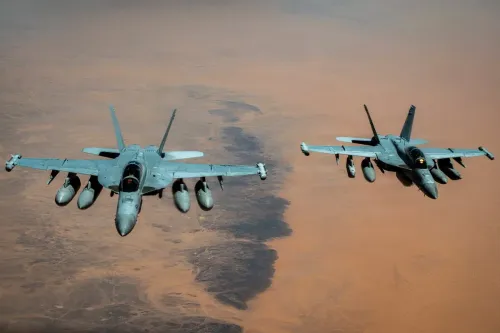
The US military response has been substantial. Leavitt announced that President Trump has reimposed a naval blockade on all vessels entering and departing Iranian ports. More than 10,000 American sailors, Marines, and airmen — backed by two aircraft carriers, over 20 warships, and dozens of aircraft — are enforcing the blockade, she said.
During the first 24 hours of the blockade, US CENTCOM reportedly redirected two compliant commercial vessels and disabled one non-compliant vessel. Leavitt stressed that the Strait of Hormuz remained open for ships not trading with Iranian ports. 'President Trump is not going to sit by and allow these active acts of terrorism to take place in the strait without ensuring Iran pays consequences for that,' she said.
Diplomacy Still Open, But Conditional
Despite the military escalation, Leavitt said Iran had continued to express interest in reaching a deal with Washington. 'Iran very much continues to talk to the United States of America and express that they want to make a deal with us, because they are suffering devastating blows on behalf of our United States military,' she said.
She noted that following Operation Epic Fury, the two sides had entered a diplomatic phase — but Iran subsequently violated the agreement, triggering the renewed strikes. 'The President is always open and willing to diplomacy. He is the peace through strength President,' Leavitt said, adding that talks were ongoing: 'They have expressed they still want to make a deal to the President. We're talking to them.'
No Rift Between Trump and Vance, White House Says
Leavitt pushed back on suggestions that conflicting public statements from President Trump and Vice-President JD Vance on Iran diplomacy reflected internal divisions. 'I can tell you the President, Vice-President, are on the exact same page,' she said. She added that Operation Epic Fury had left Iran's leadership 'fragmented and weakened.'
What Comes Next
The combination of active military strikes, a fully enforced naval blockade, and ongoing back-channel diplomacy places the US-Iran standoff at a critical juncture. The Strait of Hormuz — through which a significant share of global oil exports transits — remains a flashpoint. Whether Tehran chooses to return to compliance or escalate further will likely determine the next phase of this confrontation.
Point of View
So strikes are a consequence, not an escalation — is legally and rhetorically convenient, but it sidesteps a harder question: what verification mechanism, if any, was built into the memorandum of understanding? A deal that Tehran could breach within weeks of signing either lacked enforcement teeth or was never fully operationalised. The naval blockade is the more consequential move: blocking Iranian port traffic raises the risk of third-country entanglement, particularly for nations that have not joined US sanctions. If Iran's leadership is genuinely 'fragmented,' as Leavitt claims, it is unclear who on the Iranian side has the authority to conclude a durable agreement — making the diplomacy-while-striking posture a high-wire act with no obvious off-ramp.
NationPress
15 Oct 2026
Frequently Asked Questions
Why did the US launch military strikes on Iran?
The US launched strikes because Iran allegedly violated a memorandum of understanding by firing on commercial vessels in the Strait of Hormuz. White House Press Secretary Karoline Leavitt confirmed on 17 July that President Trump authorised the strikes as a direct consequence of that breach.
What is the US naval blockade on Iran?
President Trump has reimposed a naval blockade preventing ships from entering or departing Iranian ports. It is enforced by more than 10,000 US military personnel, two aircraft carriers, and over 20 warships; the Strait of Hormuz remains open to vessels not trading with Iran.
What was in the US-Iran memorandum of understanding?
According to the White House, the memorandum explicitly prohibited Iran from attacking commercial vessels transiting the Strait of Hormuz. Leavitt said Iran's strikes on shipping constituted a clear violation of that specific provision.
Is the US still open to diplomacy with Iran?
Yes, according to Leavitt. She said Iran has continued to express interest in reaching a deal with Washington and that diplomatic contacts remain active, even as military strikes continue. She described Trump as 'the peace through strength President.'
What was Operation Epic Fury?
Operation Epic Fury was a prior US military operation against Iran, after which the two sides reportedly entered a diplomatic phase. According to the White House, Iran subsequently violated the agreement reached during that phase, triggering the latest round of strikes.