Punjab Police marks 592 days of Yudh Nashian Virudh
Synopsis
Punjab Police's Yudh Nashian Virudh campaign hit Day 592 on October 15, 2026, with 6.6 kg of heroin seized, 254 intoxicant pills recovered, and the cumulative arrest tally reaching 85,226 drug smugglers. Twenty-six persons were additionally referred to de-addiction treatment.
Key Takeaways
Day 592 of the Yudh Nashian Virudh anti-drug campaign was reported by the Chief Minister's Office of Punjab on October 15, 2026 .
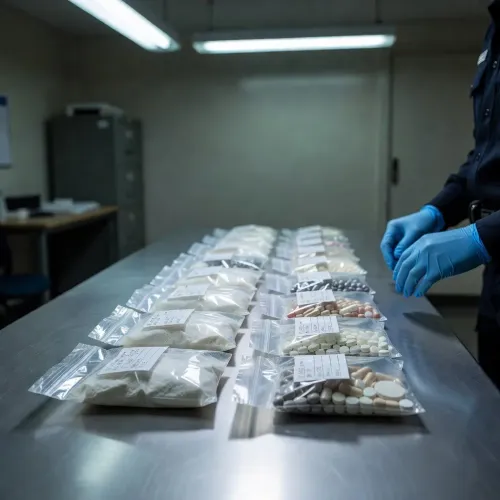
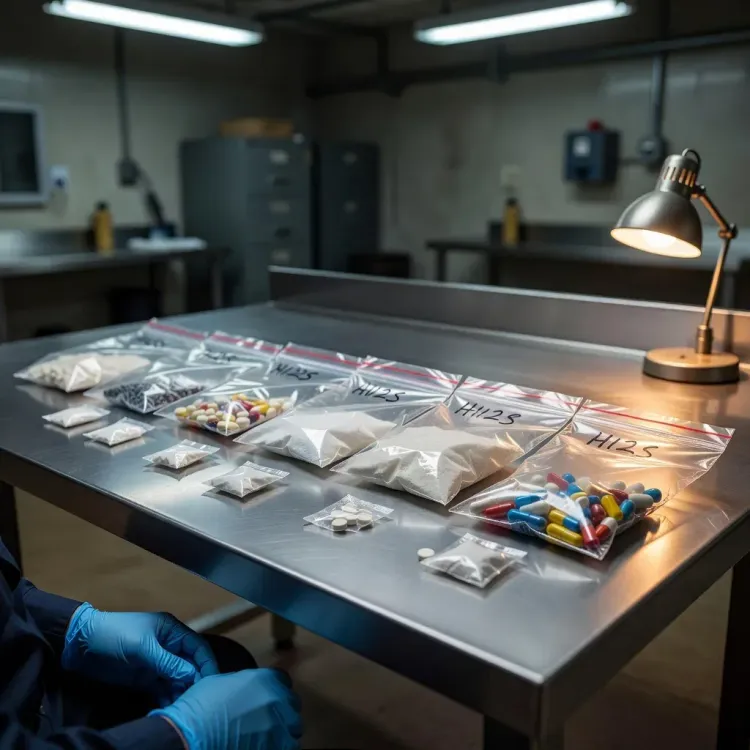
Punjab Police seized 6.6 kg of heroin and 254 intoxicant pills , along with ₹2,300 in drug money on this single day.
Cumulative arrests of drug smugglers since the campaign's launch have reached 85,226 over 592 days.
26 persons were convinced to voluntarily enter de-addiction and rehabilitation treatment on Day 592.
The campaign, launched by the Bhagwant Mann -led AAP government after March 2022, combines daily enforcement with parallel de-addiction referrals.
Punjab has faced entrenched cross-border and domestic drug supply networks for over two decades, making sustained operational continuity a key political and policy commitment.
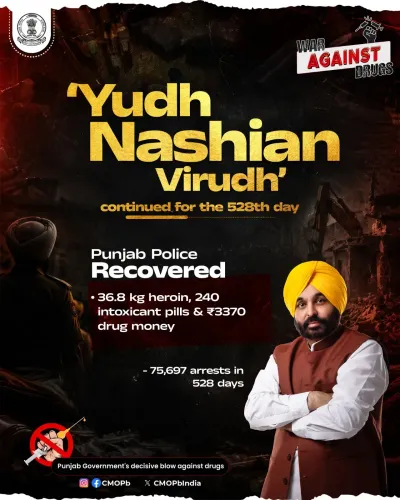
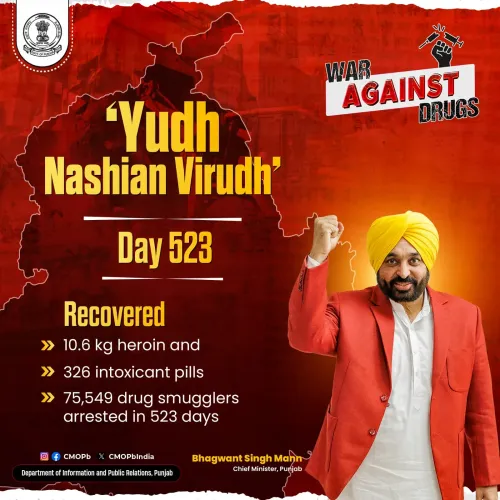
Nearly 600 consecutive days of relentless anti-narcotics operations — and Punjab's police machinery shows no sign of easing off. The Chief Minister's Office of Punjab announced on Thursday, October 15, 2026, that Day 592 of the Yudh Nashian Virudh (War Against Drugs) campaign had yielded fresh arrests, drug seizures, and — critically — 26 more individuals persuaded to begin de-addiction and rehabilitation treatment.
What Day 592 seized and who it caught
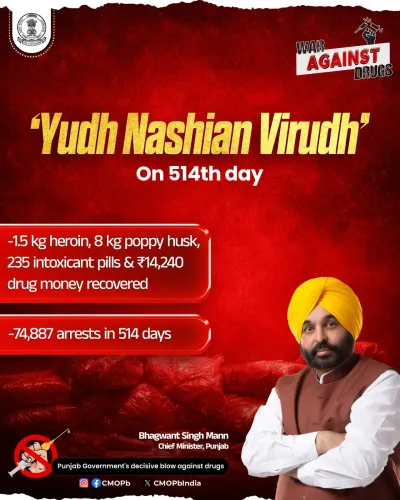
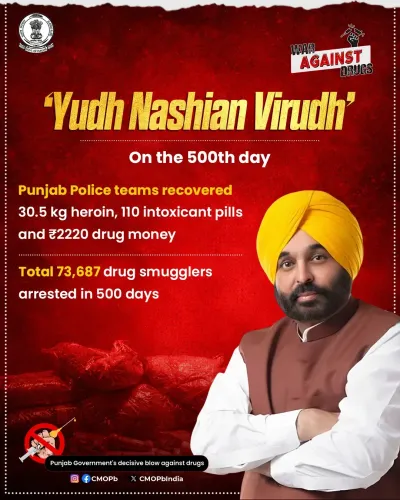
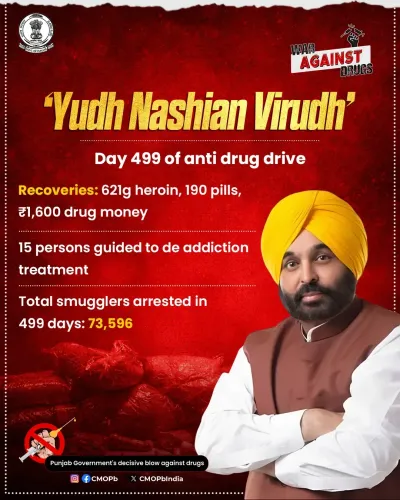
Punjab Police recovered 6.6 kg of heroin, 254 intoxicant pills, and ₹2,300 in drug money from smugglers detained on this single operational day. The haul is modest in isolation, but it arrives as one more data point in a relentless daily drumbeat of enforcement. Cumulative since the campaign's launch, the total number of drug smugglers arrested has climbed to 85,226 persons over 592 days — a figure the Chief Minister's Office packages as evidence of sustained institutional will rather than episodic crackdowns.
The 26 who chose a different path
Buried beneath the seizure numbers is the detail that arguably matters more to Punjab's long-term trajectory: 26 individuals were counselled and convinced by police personnel to voluntarily enter de-addiction and rehabilitation programmes on Day 592 alone. The campaign's design — pairing enforcement with outreach — attempts to treat drug use as a public-health crisis even while prosecuting supply as a criminal one. Over nearly two years of daily operations, those individual referrals accumulate into a parallel recovery pipeline running alongside the arrests.
The AAP government's bet on daily metrics
Chief Minister Bhagwant Mann's government, which took office in March 2022, made anti-drug enforcement a flagship commitment of the Aam Aadmi Party's Punjab agenda. Yudh Nashian Virudh — literally 'war against intoxicants' — was the operational vehicle: a structured, metrics-driven campaign that the state publishes data on daily, making accountability visible and measurable. Punjab's drug challenge is not new; the state has contended with cross-border and domestic supply networks for over two decades, with successive administrations cycling between large enforcement sweeps and periodic rehabilitation pushes. What the current campaign adds is continuity — the 592-day unbroken streak itself is part of the political messaging.
The state's Punjab Police functions as the primary field arm, with officers tasked not just with arrests but with the softer work of steering users toward government de-addiction centres. Whether the infrastructure of those centres — staffing, beds, medicines — keeps pace with rising referral numbers remains a live question for policymakers and health administrators alike.
At 85,226 arrests and counting, the question Punjab's government will eventually have to answer is whether the supply side of the equation is actually shrinking, or whether the numbers are running faster than the networks they're meant to dismantle. The daily counter ticks on.
Point of View
Countable political commitment. With 85,226 arrests logged, the AAP government is building a record it can defend at the next election cycle, but the metric also invites a harder question: whether sustained enforcement is visibly reducing drug availability on the ground, or whether the pipeline of new smugglers remains undiminished. The integration of de-addiction referrals into a police-led campaign reflects a broader national shift toward dual-track drug policy, but the adequacy of rehabilitation infrastructure in Punjab — beds, counsellors, follow-through — remains underreported and under-scrutinised. If the referral numbers grow faster than centre capacity, the humanitarian half of the campaign risks becoming a statistical footnote.
NationPress
15 Oct 2026
Frequently Asked Questions
What is Yudh Nashian Virudh?
Yudh Nashian Virudh ('War Against Drugs') is a sustained anti-narcotics campaign launched by the Punjab government under Chief Minister Bhagwant Mann after the AAP came to power in March 2022. It combines daily arrests of drug smugglers with efforts to direct drug users toward de-addiction and rehabilitation centres.
How many drug smugglers have been arrested in Punjab's anti-drug campaign?
As of Day 592 of the campaign (October 15, 2026), a cumulative total of 85,226 drug smugglers have been arrested by Punjab Police under the Yudh Nashian Virudh drive.
What drugs were seized by Punjab Police on Day 592?
On Day 592, Punjab Police recovered 6.6 kg of heroin , 254 intoxicant pills , and ₹2,300 in drug money from arrested smugglers.
Does Punjab Police also help drug addicts, or only arrest smugglers?
Yes. Alongside enforcement, the campaign includes a de-addiction outreach component. On Day 592 alone, police personnel convinced 26 individuals to voluntarily undergo de-addiction and rehabilitation treatment.
Why does Punjab have such a serious drug problem?
Punjab has contended with entrenched drug supply networks — both cross-border and domestic — for over two decades, driven in part by its geographic position and established trafficking routes. Successive state administrations have attempted varying combinations of enforcement and rehabilitation to address the crisis.