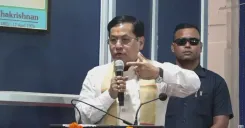
Giriraj Singh pushes for fair jute prices, NJB and JCI outreach
Synopsis
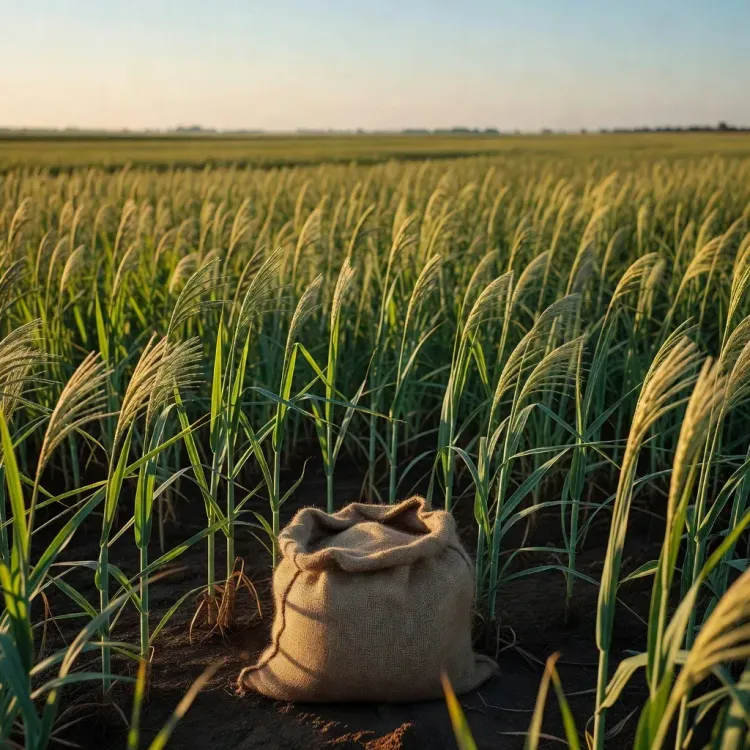
Union Textiles Minister Giriraj Singh on 15 October 2026 stressed making jute farming more profitable, spotlighting National Jute Board and Jute Corporation of India outreach to help growers access better cultivation practices and fair market prices.
Key Takeaways
Union Textiles Minister Giriraj Singh called for making jute cultivation more profitable and ensuring fair prices for farmers on 15 October 2026 .
The Jute Corporation of India , established in 1971 , procures jute at minimum support price to protect growers from distress sales.
The National Jute Board , constituted in 2009 under the National Jute Board Act 2008, coordinates development, research, and promotion of the jute sector.
Both institutions are running outreach initiatives to improve farmers' knowledge of cultivation techniques and marketing channels.
India accounts for approximately 60–70 per cent of global jute production, making farmer income support a matter of significant economic weight.
The next jute procurement season and any MSP revision by the Textiles Ministry will be the key indicators of follow-through on these commitments.
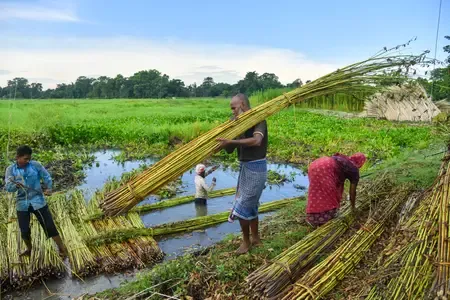
For millions of jute farmers clustered across the river deltas of West Bengal, Bihar, and Assam, the distance between a remunerative harvest and a distress sale has long been measured in access — access to markets, to information, and to a floor price that holds. On Thursday, 15 October 2026, Union Textiles Minister Giriraj Singh signalled a fresh push on all three fronts, highlighting the role of two key statutory institutions in lifting the fortunes of India's jute-growing communities.
Posting in Hindi on X, the minister stated: 'Making jute cultivation more profitable and ensuring farmers receive a fair price for their produce is crucial to strengthening this sector. Initiatives by the National Jute Board and the Jute Corporation of India are providing farmers with better knowledge of cultivation and marketing, which will help increase their income and give new momentum to the jute sector.'Two institutions, one mandate: protecting the jute grower
The architecture behind the minister's statement is decades old. The Jute Corporation of India (JCI), set up in 1971, was created for a single, urgent purpose: shielding jute growers from distress sales by procuring at a minimum support price (MSP) and intervening in the market when prices slide below that floor. More than half a century later, it remains the last line of financial defence for smallholder jute farmers when the open market turns hostile.
The National Jute Board (NJB), constituted in 2009 under the National Jute Board Act, 2008, took on the longer game — coordinating development programmes, funding research, and promoting jute products domestically and globally. Together, the two bodies represent the Ministry of Textiles' full toolkit for the sector: JCI holds the price floor; NJB drives the growth ceiling.
Extension, marketing knowledge, and the income gap
Singh's post draws attention to an often-overlooked part of the jute support system: vipaṇan kī jānkārī — marketing knowledge. Jute is a labour-intensive crop, and its growers are disproportionately concentrated in low-income pockets of eastern India. A farmer who can identify the right variety, the right harvest window, and the right buyer is structurally better placed than one who simply delivers raw fibre to the nearest trader and accepts whatever price is offered.
Successive governments have maintained procurement and extension mechanisms for jute as part of a broader effort to support farm incomes in traditional fibre crops — and, increasingly, to align jute's natural, biodegradable properties with the global pivot away from single-use plastics. That last angle gives the crop a tailwind that didn't exist a generation ago.
What the next procurement season will reveal
The real test of any ministerial statement on jute comes at the start of the procurement season, when JCI's field operations either reach farmers or don't, and when the MSP either reflects input-cost realities or falls short. The jute mill sector — the downstream buyer of raw fibre — watches the same numbers from the other direction, alert to how procurement prices affect their raw-material costs.
Any upward revision in the MSP for raw jute, or an expansion of NJB's on-ground awareness programmes, will be the concrete follow-through that converts today's message into measurable income change for the farmers Giriraj Singh is speaking about.
India grows roughly 60–70 per cent of the world's jute. The minister's point is simple and consequential: a crop with that kind of global weight should be delivering better returns to the people who grow it. Whether the institutions already in place can close that gap is the question the next season will answer.
Point of View
Which holds Begusarai and contests aggressively in jute-belt constituencies across West Bengal and Bihar, maintaining visible ownership of the jute support architecture carries electoral logic alongside economic rationale. The real measure will be whether the next MSP cycle and JCI procurement operations deliver the 'remunerative prices' the minister has now publicly championed — because those numbers, not the post, are what jute growers will judge.
NationPress
15 Oct 2026
Frequently Asked Questions
What is the Jute Corporation of India and what does it do for farmers?
The Jute Corporation of India (JCI) is a central public-sector undertaking established in 1971 to procure raw jute at the government-declared minimum support price, protecting farmers from being forced to sell at distress prices when market rates fall.
What is the National Jute Board and when was it set up?
The National Jute Board (NJB) is a statutory body constituted in 2009 under the National Jute Board Act 2008. It operates under the Ministry of Textiles and coordinates development programmes, research, and promotion for the entire jute industry.
Why is jute important to India's economy?
India produces roughly 60–70 per cent of the world's jute, making it the largest producer globally. The crop supports millions of smallholder farmers concentrated in eastern states like West Bengal, Bihar, and Assam, and feeds a significant domestic jute-mill industry.
What did Giriraj Singh say about jute farmers?
On 15 October 2026, Union Textiles Minister Giriraj Singh stated that making jute cultivation more profitable and ensuring farmers receive fair prices is crucial to strengthening the sector, and highlighted NJB and JCI efforts to provide growers with better cultivation and marketing knowledge.
What should jute farmers watch for next from the government?
Farmers and industry observers should monitor the next jute procurement season operations by the Jute Corporation of India and any revision in the minimum support price for raw jute announced by the Ministry of Textiles — these will be the clearest indicators of concrete follow-through.