Shivraj Singh Chouhan Vows Campaign to Boost Jute Quality, Farmer Prices
Synopsis
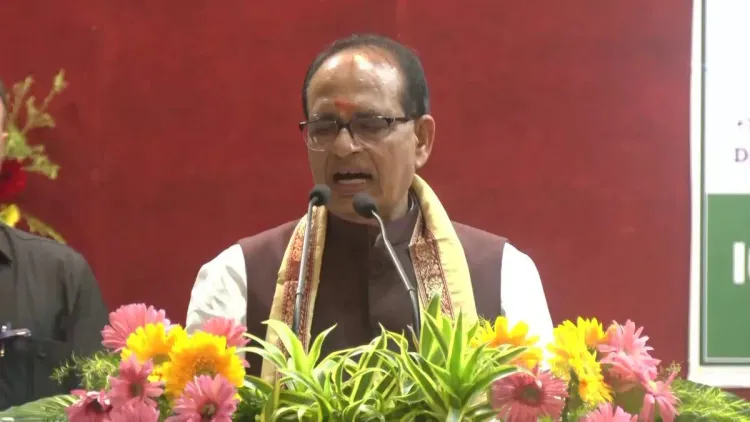
Union Agriculture Minister Shivraj Singh Chouhan on 14 July 2026 announced a dedicated campaign to raise jute productivity and fibre quality, arguing that better quality will drive higher market prices for farmers — a shift from MSP-only income support toward quality-led market realisation.
Key Takeaways
Shivraj Singh Chouhan announced a national campaign to boost jute productivity and fibre quality on 14 July 2026 .
The minister directly linked quality improvement to higher market prices, stating better quality will increase production and returns for farmers.
The initiative signals a policy emphasis on quality-led price realisation alongside existing Minimum Support Price mechanisms.
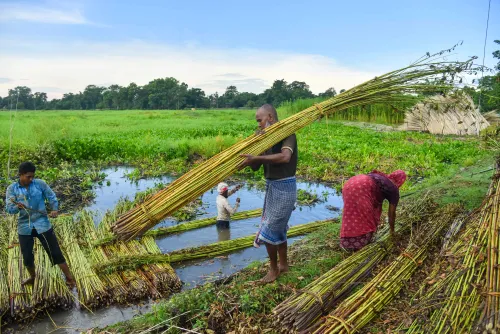
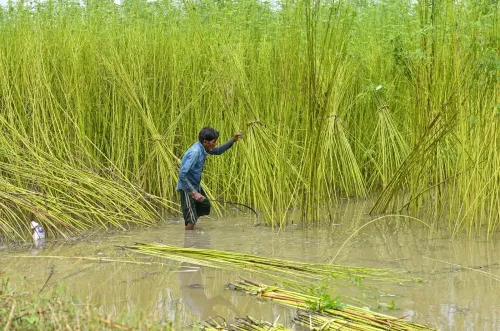
Jute cultivation is concentrated in West Bengal , Assam , and Bihar , where millions of smallholder farmers depend on the crop.
The Jute Corporation of India and state agriculture departments are expected to be key partners in rolling out the campaign.
India is among the world's largest producers of raw jute, and fibre quality is a persistent concern for both domestic processors and export markets.
Union Agriculture Minister Shivraj Singh Chouhan on Tuesday, 14 July 2026, pledged a dedicated campaign to raise jute productivity and fibre quality, directly linking better quality to higher market returns for jute-growing farmers across eastern India.
Context
Posting on X, Chouhan laid out a clear cause-and-effect chain: 'क्वालिटी अगर बेहतर होगी, तो उत्पादन बढ़ेगा और किसानों को बेहतर दाम भी मिलेंगे' ('If quality improves, production will rise and farmers will get better prices'). He announced that the ministry will launch a dedicated campaign — 'जूट की उत्पादकता बढ़ाने के लिए हम अभियान चलाएंगे' ('We will run a campaign to increase jute productivity') — to operationalise this vision.
The statement signals a policy pivot toward quality-led price realisation rather than relying solely on government-declared Minimum Support Prices (MSP) as the primary income cushion for growers.
Policy Backdrop
The Ministry of Agriculture and Farmers Welfare has long announced annual MSPs for jute ahead of each sowing season to provide a price floor. The Jute Corporation of India, the nodal government body for jute procurement and marketing, operates price-support operations in key growing states.
An earlier central initiative, the Jute Technology Mission, was designed to raise jute productivity, improve fibre quality, and strengthen the value chain through seed, extension, and technology interventions. Chouhan's announced campaign appears to revive and reinforce this quality-productivity-price linkage within the current government's agricultural framework.
Successive central governments have pursued targeted productivity programmes for commercial crops — including jute, cotton, and oilseeds — with the shared logic that higher-grade produce commands better open-market rates, reducing dependence on state procurement alone.
Stakeholders and Impact
Jute cultivation is concentrated in West Bengal, Assam, and Bihar, where millions of smallholder farmers depend on the crop for their primary income. A quality-improvement drive, if effectively implemented, could translate into higher prices at mandis and private mills, directly benefiting these growers.
The broader jute value chain — including mills, weavers, and exporters — also stands to gain if Indian jute fibre becomes more competitive in quality-sensitive international markets. India is among the world's largest producers and exporters of raw jute and jute goods, and fibre quality is a persistent concern raised by both domestic processors and overseas buyers.
State agriculture departments in the key jute-growing states will be critical implementation partners for any national campaign, given that extension services and seed distribution operate largely at the state level.
What's Next
The ministry is expected to detail the design, timeline, and budgetary outlay of the productivity campaign in consultation with state governments and the Jute Corporation of India ahead of the next jute sowing season. Coordination with state agriculture departments in West Bengal, Assam, and Bihar will be a key indicator of how quickly the campaign moves from announcement to field implementation.
The success of the initiative will ultimately be measured by whether quality improvements at the farm level translate into demonstrably higher market prices — closing the gap between MSP-based assurance and open-market realisation for jute farmers.
Point of View
Productivity, and price as a self-reinforcing cycle, the minister is aligning jute policy with the government's wider push to reduce dependence on state procurement. The real test will be implementation: previous central missions on jute have struggled with last-mile delivery of improved seeds and extension services in eastern states. Whether this campaign achieves measurable on-farm impact or remains an aspirational statement will depend heavily on coordination with West Bengal, Assam, and Bihar — states with complex political dynamics vis-à-vis the Centre.
NationPress
13 Oct 2026
Frequently Asked Questions
What did Shivraj Singh Chouhan announce about jute farmers?
Union Agriculture Minister Shivraj Singh Chouhan announced on 14 July 2026 that the government will launch a dedicated campaign to raise jute productivity and fibre quality, with the aim of securing better market prices for jute-growing farmers.
How does jute quality affect farmer prices in India?
Higher-grade jute fibre commands better prices from domestic mills and international buyers. When quality improves, farmers can realise higher open-market rates rather than depending solely on government Minimum Support Prices for their income.
Which states grow the most jute in India?
Jute cultivation in India is concentrated in West Bengal, Assam, and Bihar, where millions of smallholder farmers rely on the crop as a primary source of income.
What is the Jute Corporation of India?
The Jute Corporation of India is a government body responsible for jute procurement, marketing, and price-support operations, acting as a key institutional mechanism to protect farmer incomes when market prices fall below the MSP.
What was the Jute Technology Mission?
The Jute Technology Mission was a central government scheme designed to raise jute productivity, improve fibre quality, and strengthen the jute value chain through interventions in seeds, technology, and farmer extension services.