CM Himanta Promotes Assam Tea & Golf Trail in SDG Barta

Synopsis
Assam Chief Minister Himanta Biswa Sarma on 14 July 2026 promoted the state's Tea & Golf Trail through the fifth edition of SDG Barta, positioning the initiative as a model for sustainable tourism built on the state's vast plantation heritage.
Key Takeaways
Assam CM Himanta Biswa Sarma shared SDG Barta Edition 5 on 14 July 2026 , highlighting the Tea & Golf Trail .
The Tea & Golf Trail layers golf facilities onto existing tea estate land to attract high-value tourists without new land acquisition.
SDG Barta is the Assam government's publication series tracking state progress on UN Sustainable Development Goals adopted in 2015 .
Key stakeholders include tea garden workers, tourism operators, and local communities around Assam's estates.
Northeast Indian states have increasingly packaged heritage assets for high-value tourism; Assam's model mirrors similar tea-tourism linkages in other Indian regions and Sri Lanka .
Future SDG Barta editions are expected to carry measurable tourism performance indicators for the trail.
Assam Chief Minister Himanta Biswa Sarma on Tuesday, 14 July 2026, spotlighted the state's Tea & Golf Trail initiative, sharing the fifth edition of the government's SDG Barta publication and describing the programme as a pathway to a 'more sustainable and prosperous future' for Assam.
Context
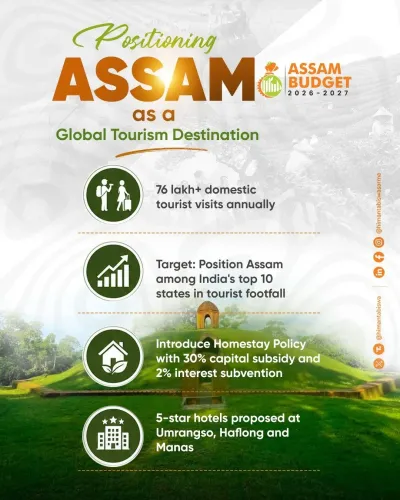
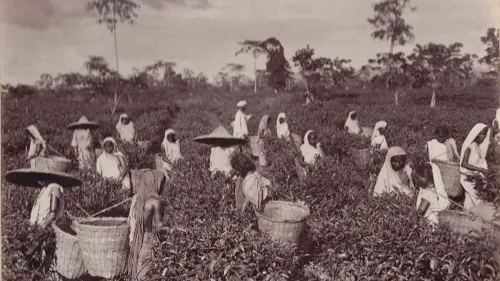
Assam is the world's largest tea-producing region, and its historic estates have long been viewed as untapped assets for high-value tourism. Chief Minister Sarma framed the initiative with the phrase 'Tee off while sipping tea, it's the Assam way,' signalling an effort to brand the state as a destination where plantation heritage and recreational sport coexist. The post directed followers to the latest edition of SDG Barta, the state government's publication series that tracks Assam's progress against the United Nations Sustainable Development Goals.
Policy Backdrop
India adopted the UN Sustainable Development Goals in 2015, and states were subsequently encouraged to develop localised reporting mechanisms. Assam's SDG Barta series is one such mechanism, documenting how state-level schemes align with global targets on responsible consumption, decent work, and economic growth. The Tea & Golf Trail fits within a broader strategy of diversifying estate economies without requiring large-scale new land acquisition, by layering recreational infrastructure onto existing plantation land.
Assam has run tea tourism programmes since at least the mid-2010s. The addition of golf facilities on tea estates represents an evolution of that model, targeting a higher-spending visitor segment while keeping the plantation landscape intact. Comparable tea-golf or tea-tourism linkages have been developed in other Indian tea regions and in Sri Lanka.
Stakeholders and Impact
The initiative touches several groups: tea garden workers, who may benefit from supplementary employment in hospitality and maintenance; tourism operators, who gain a distinctive product to market to domestic and international travellers; and local communities surrounding the estates, whose livelihoods are intertwined with the plantation economy. Northeast Indian states have increasingly packaged heritage assets for high-value tourism, and Assam's approach is part of that regional pattern.
By anchoring the trail's narrative within the SDG Barta framework, the state government also signals to investors and development partners that the programme is being monitored against measurable sustainability indicators, lending it institutional credibility beyond a standalone tourism pitch.
What's Next
Attention will now turn to the physical rollout of additional golf facilities across tea estates and to subsequent editions of SDG Barta that are expected to carry tourism-related performance indicators. The fifth edition's full content, now publicly linked by the Chief Minister, is likely to set benchmarks against which future progress will be measured. Whether the Tea & Golf Trail can meaningfully shift visitor numbers and estate revenues will be the practical test of a policy that is, for now, defined more by its branding than by verified outcome data.
Point of View
Chief Minister Sarma is doing something strategically deliberate: converting a leisure initiative into a governance narrative. This positions Assam not just as a travel destination but as a state that measures its development commitments — a pitch aimed as much at multilateral development partners as at domestic tourists. The Tea & Golf Trail also fits a wider Northeast India pattern of monetising colonial-era infrastructure rather than building anew, which carries both economic logic and political optics of stewardship. The real test will come when SDG Barta editions begin publishing hard indicators; until then, the initiative remains a well-branded aspiration.
NationPress
14 Jul 2026
Frequently Asked Questions
What is Assam's Tea & Golf Trail?
The Tea & Golf Trail is an Assam government initiative that combines visits to historic tea estates with golf facilities on plantation land, aiming to attract high-value tourists and diversify estate economies.
Why is Assam promoting tea tourism?
Assam is the world's largest tea-producing region and has run tea tourism programmes since the mid-2010s to generate supplementary revenue for estates and local communities without requiring new land acquisition.
How does the Tea & Golf Trail relate to sustainability goals?
The initiative is framed within Assam's SDG Barta reporting framework, linking it to UN goals on responsible consumption, decent work, and economic growth, which lends it credibility with investors and development partners.
Who benefits from the Tea & Golf Trail in Assam?
Primary beneficiaries include tea garden workers who may gain hospitality-related employment, tourism operators who gain a distinctive product, and local communities whose livelihoods are tied to the plantation economy.