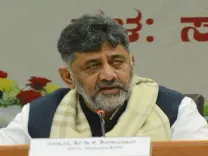
CM Shivakumar Writes to PM Modi Over Karnataka Drought
Synopsis
Chief Minister D.K. Shivakumar has written to Prime Minister Narendra Modi highlighting Karnataka's emerging drought due to monsoon deficit, reduced reservoir storage and delayed kharif sowing, urging immediate deputation of a Central Team and timely financial support for the state's farmers and water security.
Key Takeaways
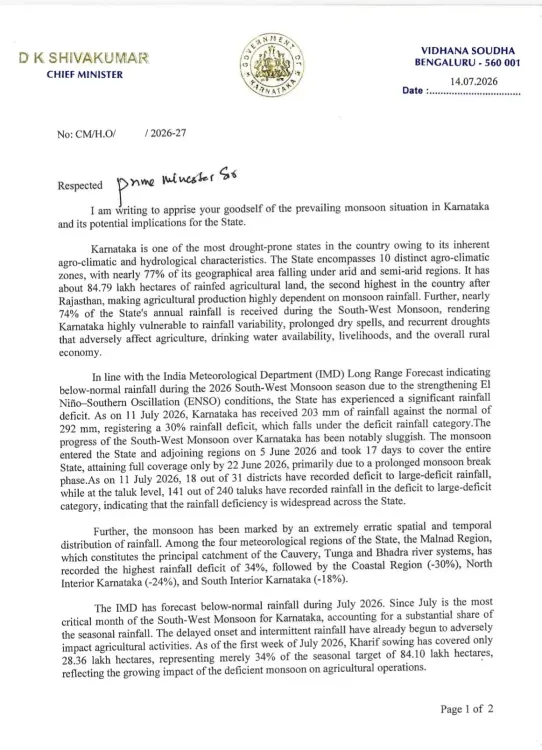
Shivakumar wrote to PM Narendra Modi on 14 July 2026 flagging an emerging drought in Karnataka .
The letter cites below-normal rainfall , reduced reservoir storage , and delayed kharif sowing as key stressors.
The Chief Minister has requested the immediate deputation of a Central Team to assess the ground situation.
The state has also sought timely financial and administrative support from the Centre for farmers and drinking water security.
The request follows the Disaster Management Act framework, the same route Karnataka used during the 2019 drought.
A Central Team's assessment would typically precede any release of funds from the National Disaster Response Fund .
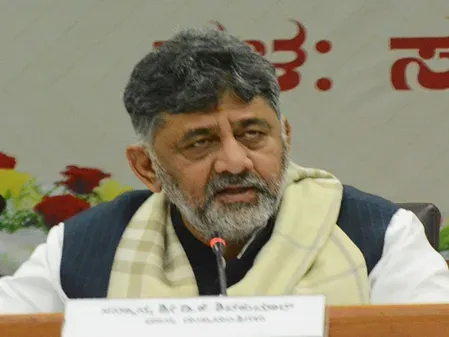
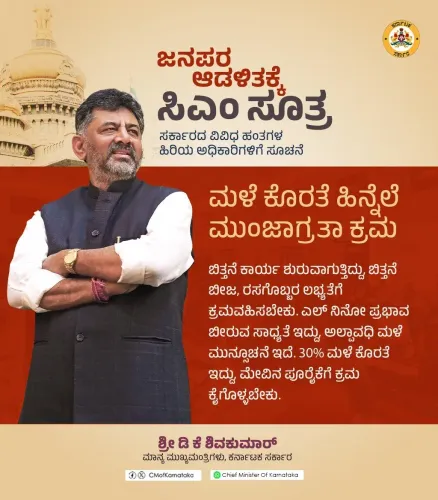
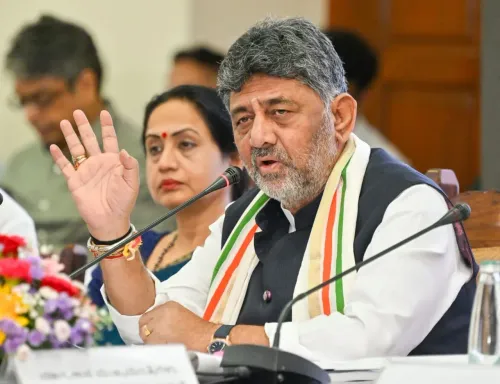
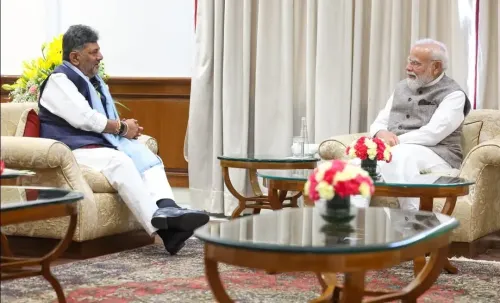
The Chief Minister's Office of Karnataka announced on Tuesday, 14 July 2026 that Chief Minister Shri D.K. Shivakumar has written to Prime Minister Shri Narendra Modi flagging an emerging drought situation across the state driven by a significant monsoon deficit, and has urged the Centre to immediately depute a team to assess conditions on the ground.
Context
In his letter, CM Shivakumar drew the Prime Minister's attention to a cluster of compounding stressors: below-normal rainfall, reduced reservoir storage, delayed kharif sowing, and growing pressure on both agriculture and drinking water security. The Chief Minister's Office stated that the CM has requested 'timely support to the state' in addition to the deputation of a Central Team. Karnataka, the office added, 'remains committed to taking all necessary measures to protect farmers, conserve water resources and mitigate the impact of the evolving situation.'
Policy Backdrop
The formal request follows an established federal procedure under the Disaster Management Act, under which states facing natural calamities can seek a Central assessment team whose findings typically inform decisions on financial assistance from national disaster funds. Karnataka invoked a similar mechanism in 2019, when the state declared drought across multiple districts after a monsoon shortfall and sought both central team assessment and support from national relief frameworks.
The Deccan plateau, which covers much of Karnataka, is historically susceptible to rainfall variability, making the state one of the more frequent users of this centre-state communication channel on monsoon-linked agricultural stress. Kharif crops — sown between June and July — are particularly vulnerable when the south-west monsoon underperforms in its early weeks, as delayed sowing compresses the growing season and reduces yield potential.
Stakeholders and Impact
Farmers and rural households across rain-fed districts of Karnataka are the most immediately affected. A monsoon deficit at this stage of the kharif calendar means sowing delays that can cascade into lower output, income stress, and — if reservoir levels remain depressed — potential shortfalls in drinking water supply heading into the dry months. The letter signals that the state administration considers the situation serious enough to warrant central eyes on the ground before conditions worsen further.
Urban centres that depend on Karnataka's major reservoirs for drinking water could also face supply constraints if the deficit persists through the remainder of the monsoon season. The state government's public communication of the letter is itself a political signal, ensuring visibility for the relief request and placing the onus of a timely response on the Prime Minister's Office.
What's Next
The key immediate development to watch is whether the Prime Minister's Office confirms the deputation of a Central Team and the timeline for its visit. The team's ground assessment would ordinarily precede any formal consideration of financial support from the National Disaster Response Fund or related mechanisms. Subsequent updates from the India Meteorological Department on monsoon progress over Karnataka will also shape how urgently the Centre responds. Should the deficit deepen in the weeks ahead, the state may move toward a formal district-level drought declaration, which would trigger a separate set of relief obligations under central norms.
Point of View
Early in the kharif season, is deliberate: a Central Team assessment now could unlock relief before crop losses become irreversible. How swiftly the PMO responds will be read as a signal of the Centre's federal responsiveness, particularly given that Karnataka and the Centre are governed by different political formations.
NationPress
14 Jul 2026
Frequently Asked Questions
Why has Karnataka CM written to PM Modi about drought?
Chief Minister D.K. Shivakumar wrote to PM Narendra Modi because Karnataka is facing an emerging drought driven by a significant monsoon deficit, which has led to reduced reservoir storage, delayed kharif sowing, and stress on both agriculture and drinking water supply.
What has Karnataka requested from the Central government?
Karnataka has requested the Centre to immediately depute a Central Team to assess the ground situation and extend timely financial and administrative support to help the state protect farmers and conserve water resources.
What is a Central Team in the context of drought relief in India?
A Central Team is a group of officials deputed by the Government of India to visit and assess the ground conditions in a state facing a natural calamity. Its report typically informs decisions on releasing funds from the National Disaster Response Fund.
Has Karnataka faced drought before due to monsoon failure?
Yes. In 2019, Karnataka declared drought across multiple districts after a monsoon shortfall and sought a similar central assessment team along with national relief support, reflecting the state's recurring vulnerability to rainfall variability.
How does a monsoon deficit affect kharif crops in Karnataka?
Kharif crops are sown between June and July and depend heavily on the south-west monsoon. A deficit at this stage causes sowing delays, compresses the growing season, and can significantly reduce yields, directly impacting farmer incomes across rain-fed districts.