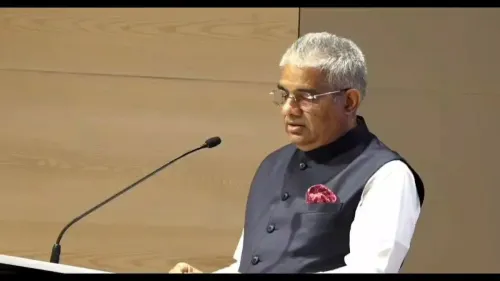
Bhupender Yadav Chairs GB Pant Society Meet, Releases 4 Himalayan Publications
Synopsis
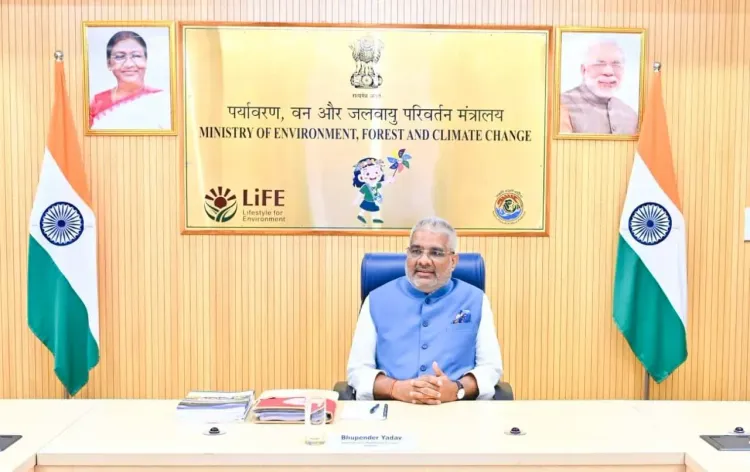
Union Environment Minister Bhupender Yadav chaired the 27th GB Pant Society meeting in Delhi, releasing four Himalayan research publications and stressing People's Biodiversity Registers and access-and-benefit-sharing rights to improve villagers' livelihoods, framed within India's Viksit Bharat 2047 ecological security goals.
Key Takeaways
Four publications released at the 27th GB Pant Society meeting: covering Bhagirathi Eco-sensitive Zone biodiversity, Gangotri Glaciated System, E-PBR Governance, and Ramsar Wetlands of the Indian Himalayan Region.
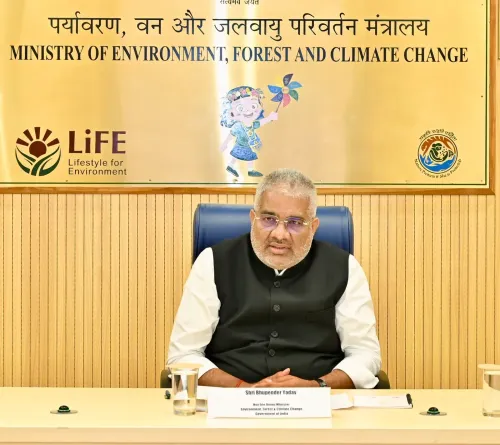
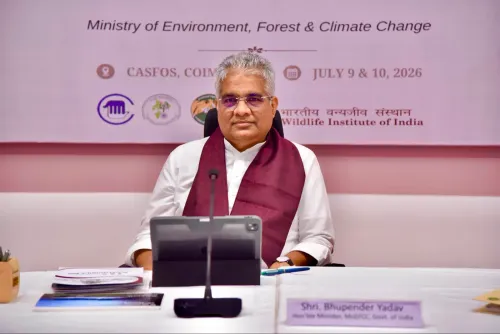
Union Minister Bhupender Yadav chaired the meeting in Delhi on October 15, 2026 .
Yadav emphasised People's Biodiversity Registers (PBRs) and access and benefit-sharing rights as tools to improve livelihoods of native Himalayan villagers.
The E-PBR Governance publication signals a push to digitise community biodiversity documentation across the Indian Himalayan Region.
Policy framework aims to balance ecological security with sustainable socio-economic growth in the Himalayan region by 2047 .
Pant National Institute of Himalayan Environment , established in 1988 , is the apex research body behind these knowledge products.
Four new scientific publications on the Indian Himalayan Region — covering everything from glacier systems to Ramsar wetlands — landed on the policy table in Delhi on Thursday, October 15, 2026, as Union Environment Minister Bhupender Yadav chaired the 27th Meeting of the GB Pant Society of Himalayan Environment and Development and used the platform to push for stronger community rights over biodiversity.
Four Publications That Expand the Knowledge Base
The minister formally released four knowledge documents that add to the research corpus of the G.B. Pant National Institute of Himalayan Environment, an autonomous body under the Ministry of Environment, Forest and Climate Change established in 1988 to drive scientific inquiry on mountain ecology. The publications are: 'Biodiversity and its Conservation Practices for Bhagirathi Eco-sensitive Zone', 'Gangotri Glaciated System', 'E-PBR Governance for the Indian Himalayan Region', and 'Ramsar Wetlands of the Indian Himalayan Region'. Each title zeroes in on a distinct pressure point — glacial retreat, wetland health, biodiversity loss, and the digital governance of community knowledge — that together map the stress the Himalayas are under.
The Gangotri glacier volume alone matters to the drinking and irrigation water supply of hundreds of millions of people downstream. A dedicated institutional study on the Gangotri glaciated system signals that the ministry is building an evidence base that goes beyond policy declarations.
People's Biodiversity Registers and the Livelihood Link
Yadav placed particular emphasis on access and benefit-sharing rights and the People's Biodiversity Register (PBR) as instruments to directly improve the livelihoods of native villagers in the Himalayan ecosystem. PBRs are community-level documentation tools mandated under the Biological Diversity Act, 2002, designed to record local biodiversity and traditional knowledge so that communities — not outside commercial interests — are first in line to benefit from that knowledge. The release of an E-PBR Governance framework for the Indian Himalayan Region suggests the government is now pushing the process onto digital rails, making records searchable, verifiable, and harder to bypass.
The emphasis is pointed: Himalayan villagers have long been custodians of rare plants and traditional remedies whose commercial value far exceeds any benefit they have historically received. A robust PBR and benefit-sharing regime is, in theory, the corrective.
The 2047 Horizon and Ecological Security
Yadav situated the meeting firmly within the government's long-range development vision, stating that under Prime Minister Narendra Modi there has been 'a concerted focus on the policy framework which focuses on balancing ecological security with sustainable socio-economic growth in the Indian Himalayan region by 2047.' That deadline — coinciding with India's centenary of independence — is central to the Viksit Bharat 2047 agenda, which the ruling dispensation has used as an organising framework for sectoral targets across infrastructure, health, and environment.
The Indian Himalayan Region spans multiple states and serves as the headwater of major river systems, a carbon sink, and a biodiversity hotspot. India is also a signatory to the Ramsar Convention on wetlands, and several Himalayan sites carry Ramsar status — making their documentation not just a domestic priority but an international obligation. The publication on Ramsar Wetlands of the Indian Himalayan Region feeds directly into that commitment.
The watch now shifts to whether E-PBR governance guidelines see genuine state-level adoption across Himalayan states — because a framework without implementation is just another report on a shelf.
Point of View
Which is a meaningful shift in emphasis. Framing Himalayan policy around the 2047 deadline aligns the environment ministry's agenda with the ruling party's Viksit Bharat narrative, giving ecological work a clear political timestamp. The E-PBR push is potentially significant: if Himalayan states actually implement digital registers, it could curb bio-piracy and channel benefit-sharing to communities who have historically been bypassed. The test, as always, is state-level follow-through — something a set of four publications, however authoritative, cannot guarantee on its own.
NationPress
15 Oct 2026
Frequently Asked Questions
What is the GB Pant Society of Himalayan Environment and Development?
It is the governing society of the G.B. Pant National Institute of Himalayan Environment, an autonomous research institute established in 1988 under the Ministry of Environment, Forest and Climate Change. The society oversees the institute's research mandate on mountain ecology and sustainable development in the Indian Himalayan Region.
What is a People's Biodiversity Register (PBR) and why does it matter?
A People's Biodiversity Register is a community-level document mandated under the Biological Diversity Act, 2002 that records local biodiversity, traditional knowledge, and practices. It matters because it establishes a community's prior knowledge claims, enabling them to assert access-and-benefit-sharing rights if that knowledge is commercially used.
What is E-PBR governance for the Indian Himalayan Region?
E-PBR refers to the digital version of the People's Biodiversity Register. The governance framework released at the meeting is aimed at standardising and digitising biodiversity documentation across Himalayan states, making records more accessible, verifiable, and enforceable under the benefit-sharing provisions of the Biological Diversity Act.
Why are Ramsar Wetlands in the Himalayas significant?
Ramsar Wetlands are internationally recognised under the Ramsar Convention for their ecological importance. Several Himalayan wetlands carry this designation, making their conservation both a domestic priority and an international obligation for India. They support unique biodiversity and regulate water flows for downstream populations.
What is India's 2047 vision for the Indian Himalayan Region?
Under the broader Viksit Bharat 2047 framework — India's centenary-of-independence development agenda — the government aims to balance ecological security with sustainable socio-economic growth in the Indian Himalayan Region. This includes strengthening biodiversity governance, community livelihoods, and climate resilience across Himalayan states.