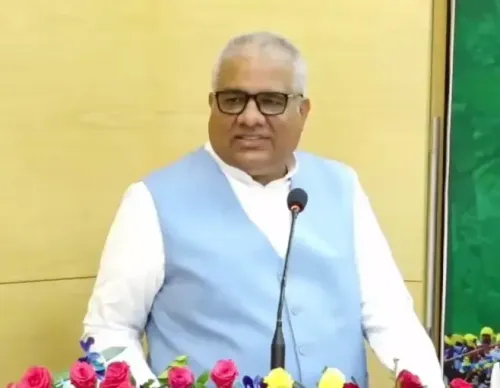
Bhupender Yadav Chairs Review of 11 Regional Forest Offices
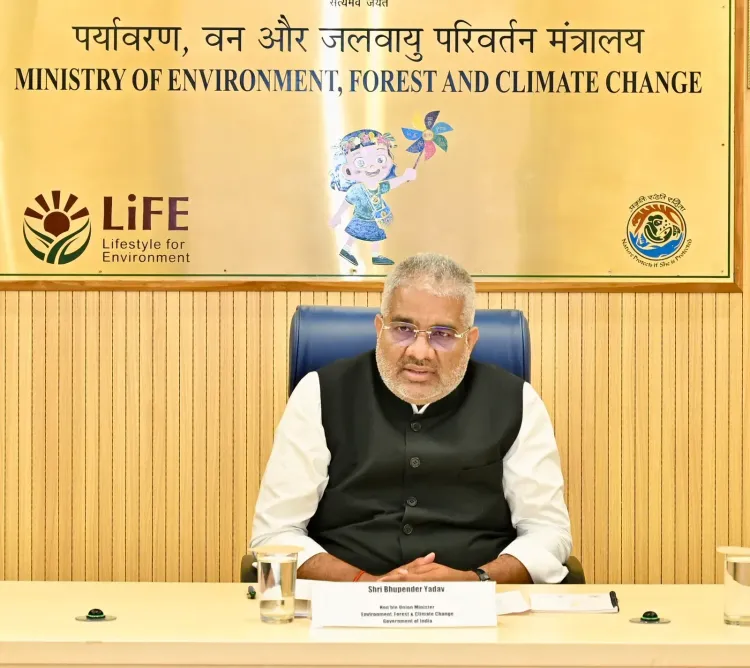
Synopsis
Union Environment Minister Bhupender Yadav chaired a review of regional officers and scientists from all 11 Regional Offices in Delhi on October 14, 2026, stressing a 'whole of government approach' to balance economic development with ecological security under India's forest laws.
Key Takeaways
Union Environment Minister Bhupender Yadav chaired a review meeting of regional officers and scientists from all 11 Regional Offices of the Ministry of Environment, Forest and Climate Change in Delhi on October 14, 2026 .
The regional offices are responsible for forest conservation, diversion of forest land, approval of working plans, and monitoring under central acts including the Forest (Conservation) Act, 1980 .
Yadav underlined a 'whole of government approach' to advance forest governance, calling for coordination between the environment ministry, other central ministries, and state agencies.
The meeting framed sustainable growth as requiring a balance between economic aspirations and ecological security — a tension embedded in India's forest policy since the National Forest Policy, 1988 .
The Compensatory Afforestation Fund Act, 2016 — implemented through regional monitoring — remains a key mechanism for offsetting approved forest land diversions.
Follow-up ministry circulars on working plan approvals and potential parliamentary debate on forest law amendments in the winter session are the next indicators to watch.
Forest governance in India runs on eleven dispersed regional nerve centres — and on Wednesday, October 14, 2026, Union Environment Minister Bhupender Yadav pulled all of them into one room. The Minister chaired a review meeting of regional officers and scientists from all 11 Regional Offices based in Delhi, focusing on the ministry's field-level machinery for forest conservation and land diversion decisions.
What the regional offices actually do — and why the review matters
These eleven offices are the operational backbone of India's forest regulatory system. They process forest clearance cases, approve working plans for state forest departments, handle the diversion of forest land for infrastructure and industrial projects, and carry out monitoring and compliance work under central legislation — including the Forest (Conservation) Act, 1980.
The stakes are significant. Every highway, mine, or transmission line that cuts through forest cover must pass through this approval chain. Delays here cascade into project cost overruns; shortcuts carry ecological consequences that outlast any government's tenure.
The 'whole of government' framing and what it signals
Yadav's most pointed message at the meeting was a call for a 'whole of government approach' — coordinating the environment ministry's functions tightly with other central ministries and state agencies rather than operating as a standalone regulatory silo. The Minister framed it as essential to 'striking a balance between economic aspirations and ecological security.'
That phrase carries real policy weight. India's National Forest Policy, 1988 set a target of 33 percent forest cover and embedded the principle that ecological security must accompany development. Four decades later, the tension between that principle and accelerating infrastructure demand has only deepened. The Compensatory Afforestation Fund Act, 2016 created a financial mechanism — funded by project proponents — to offset approved diversions, and regional offices are central to monitoring its implementation.
Field coordination at the centre of forest policy delivery
Successive governments have grappled with the same structural problem: strong central laws, uneven field-level enforcement. Regional offices sit at exactly that fault line — translating New Delhi's regulatory frameworks into on-the-ground outcomes across geographically and ecologically diverse states. A ministerial review of this scale signals an intent to sharpen that translation.
Watch for follow-up circulars from the ministry on working plan approval timelines, and any parliamentary debate on proposed amendments to forest conservation laws in the upcoming winter session — both will reveal how much of Wednesday's review room energy converts into policy action.
Point of View
' Yadav is signalling an intent to reduce inter-agency friction that has historically slowed both clearances and enforcement — a balancing act that will satisfy neither pure conservationists nor pure development advocates, which is precisely the political space the BJP government is trying to occupy on environment. The review comes as India's international climate commitments and domestic forest-cover targets demand demonstrable field action, raising pressure on regional offices to deliver on both fronts simultaneously. Whether Wednesday's directive translates into procedural reform or remains aspirational language will likely become visible in clearance timelines and compliance data over the next two quarters.
NationPress
14 Oct 2026
Frequently Asked Questions
What are the 11 Regional Offices of the Environment Ministry?
The Ministry of Environment, Forest and Climate Change operates 11 decentralised regional offices across India that process forest clearance cases, review working plans submitted by state forest departments, handle diversion of forest land for development projects, and monitor compliance with central forest laws including the Forest (Conservation) Act, 1980.
What is the 'whole of government approach' to forest governance?
The 'whole of government approach' refers to coordinating the environment ministry's functions with other central ministries and state government agencies rather than working as an isolated regulatory body. Bhupender Yadav used this term at the October 14 review meeting to stress integrated decision-making that balances development approvals with ecological protection.
What is the Forest (Conservation) Act, 1980?
The Forest (Conservation) Act, 1980 is the central Indian law that requires prior approval from the Union government before any forest land can be diverted for non-forest purposes such as mining, road construction, or industrial projects. India's regional environment offices are the primary field units that process such approvals.
What is the Compensatory Afforestation Fund and how does it work?
Created under the Compensatory Afforestation Fund Act, 2016, the fund pools money collected from project proponents who receive approval to divert forest land, using it to finance afforestation elsewhere. Regional offices of the environment ministry play a central role in monitoring compliance with compensatory afforestation conditions attached to clearances.
Why is balancing economic development and forest conservation a challenge in India?
India's National Forest Policy, 1988 set a target of 33 percent forest cover and requires that ecological security accompany development. In practice, demand for forest land diversion has grown with accelerating infrastructure and mining activity, creating pressure on the approval system to both facilitate growth and uphold conservation standards — the precise tension Yadav addressed in the October 14 review.