Bhupender Yadav launches JICA forest training project in Delhi
Synopsis
Union Environment Minister Bhupender Yadav launched a JICA-assisted project in New Delhi on September 25, 2026 to upgrade frontline forest staff training in scientific methods, emerging technologies, and community engagement — deepening decades of India-Japan forestry cooperation.
Key Takeaways
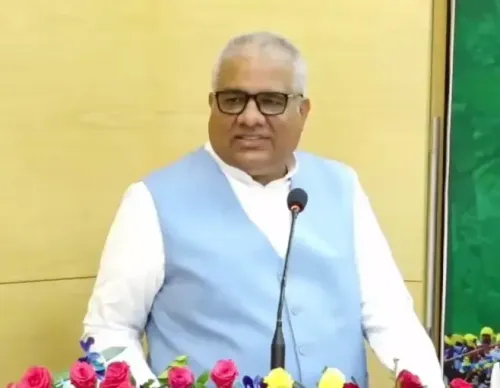
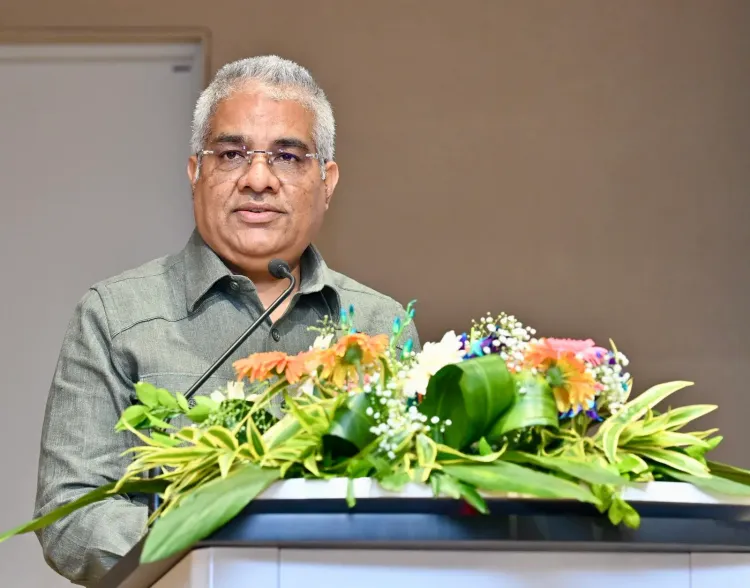
Union Environment Minister Bhupender Yadav addressed the Launch Workshop of the JICA-assisted 'Capacity Enhancement for Effective Forest Management' project in New Delhi on September 25, 2026 .
Yadav emphasised that training must go beyond classroom sessions to equip forest personnel with scientific knowledge, emerging technologies, and practical field skills.
The project also prioritises strengthening frontline workers' ability to engage with local communities and other stakeholders.
The initiative deepens the longstanding cooperation between MoEFCC and JICA , which dates to the 2000s across afforestation and participatory forest management programmes.
Key outcomes to watch include the rollout of training modules across participating states and any subsequent phases announced by the Ministry of Environment, Forest and Climate Change .
India's frontline forest workers — the men and women who manage over 700,000 square kilometres of forest on the ground — are getting a significant capacity upgrade. Union Environment Minister Bhupender Yadav on Friday, September 25, 2026, addressed the Launch Workshop of the JICA-assisted project 'Capacity Enhancement for Effective Forest Management' in New Delhi, marking a fresh chapter in decades of India-Japan cooperation in the forestry sector.
Beyond the classroom: what this project demands of forest personnel
Yadav used the platform to lay out a sharper vision of what modern forest training must deliver. Capacity enhancement, he said, 'is not confined to periodic classroom training' — it must equip personnel to apply scientific knowledge, emerging technologies, and practical skills directly in field conditions. Equally important, he stressed, is strengthening forest staff's ability to work alongside local communities and other stakeholders — a recognition that conservation today is as much a social challenge as a scientific one.
The framing matters. India's forest frontline — beat guards, range officers, and forest protection staff — have historically received training through traditional departmental courses. Folding in technology tools and community-engagement skills represents a meaningful shift in what the state expects from its conservation workforce.
India-Japan forestry cooperation: a relationship decades in the making
The project is the latest milestone in a cooperation thread that stretches back to the 2000s, when the Ministry of Environment, Forest and Climate Change (MoEFCC) and the Japan International Cooperation Agency (JICA) first partnered on afforestation and participatory forest management. JICA, Japan's official development assistance agency, has repeatedly brought technical expertise in biodiversity monitoring, remote sensing, and sustainable land management to India's state forest departments, which then handle ground-level implementation.
This latest project continues that pattern: Japanese technical inputs married to India's vast field implementation network across state forest departments. The partnership sits within the broader architecture of India's 1988 National Forest Policy, which has long championed scientific management and community participation as twin pillars of forest governance.
What comes next for India's forest training rollout
The workshop marks a launch, not a conclusion. The critical milestones to track now are the rollout of specific training modules across participating states and any subsequent phases or budget allocations that MoEFCC announces as the project gathers momentum. A project of this nature, blending Japanese methodology with India's on-ground scale, could set a template for how the country prepares its forest workforce for the climate pressures of the coming decade.
For a country that has committed to ambitious forest and tree cover targets under its climate pledges, the quality of the people protecting those forests is not a footnote — it is the whole story.
Point of View
It also serves as tangible evidence of deepening India-Japan bilateral cooperation beyond the headline defence and infrastructure deals. Yadav's insistence on community-engagement skills alongside technology training reflects a growing consensus that India cannot meet its forest cover targets through enforcement alone; social capital in forest-fringe villages is increasingly recognised as a conservation asset. The project's real test will come in implementation: whether training modules reach staff in ecologically stressed states where the need is greatest.
NationPress
25 Sept 2026
Frequently Asked Questions
What is the JICA-assisted 'Capacity Enhancement for Effective Forest Management' project?
It is a project assisted by the Japan International Cooperation Agency (JICA) in partnership with India's Ministry of Environment, Forest and Climate Change (MoEFCC) to train frontline forest workers in scientific methods, emerging technologies, and community engagement skills.
Who launched the JICA forest management project in India?
Union Environment Minister Bhupender Yadav addressed the Launch Workshop of the project in New Delhi on September 25, 2026 .
What is JICA and how is it involved in Indian forestry?
JICA is Japan's official development assistance agency. It has cooperated with India's MoEFCC on forestry programmes since the 2000s , bringing technical expertise in areas like afforestation, remote sensing, and participatory forest management.
Why is capacity building of frontline forest workers important in India?
India's frontline forest staff manage over 700,000 square kilometres of forest. Equipping them with modern scientific tools, technology skills, and community-engagement capabilities is essential for meeting national forest cover targets and climate commitments under the 1988 National Forest Policy .
What should we watch for as this forest training project rolls out?
Key milestones include the deployment of specific training modules across participating states, the identification of budget allocations, and any announcement of subsequent phases by MoEFCC .